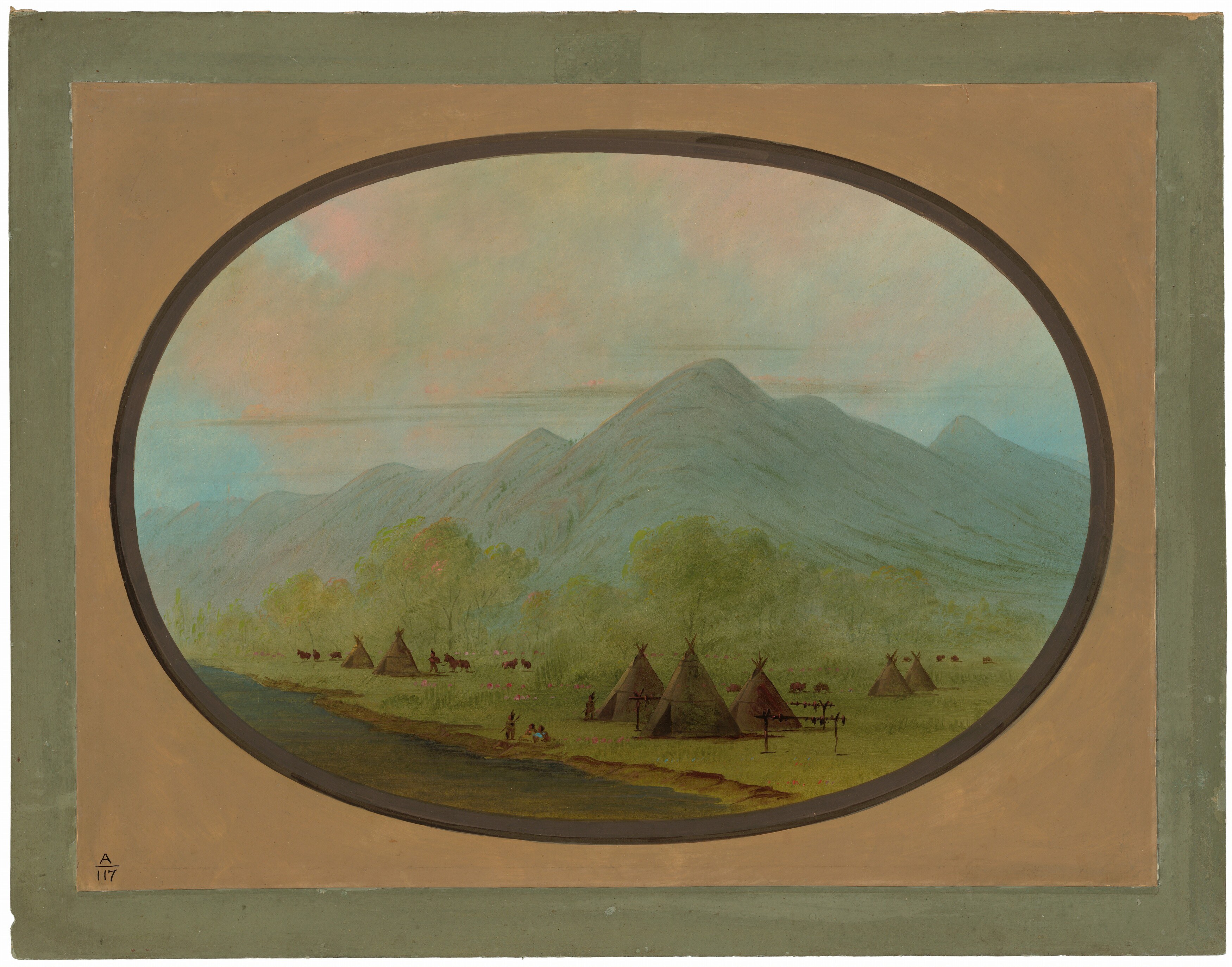
A Small Crow Village by Catlin, George
George Catlin, a lawyer-turned-painter, dedicated his career to documenting Native American life and the landscapes of the American frontier. "A Small Crow Village," painted between 1855 and 1869, is a quieter example of his prolific work, created in oil on card and mounted on paperboard.
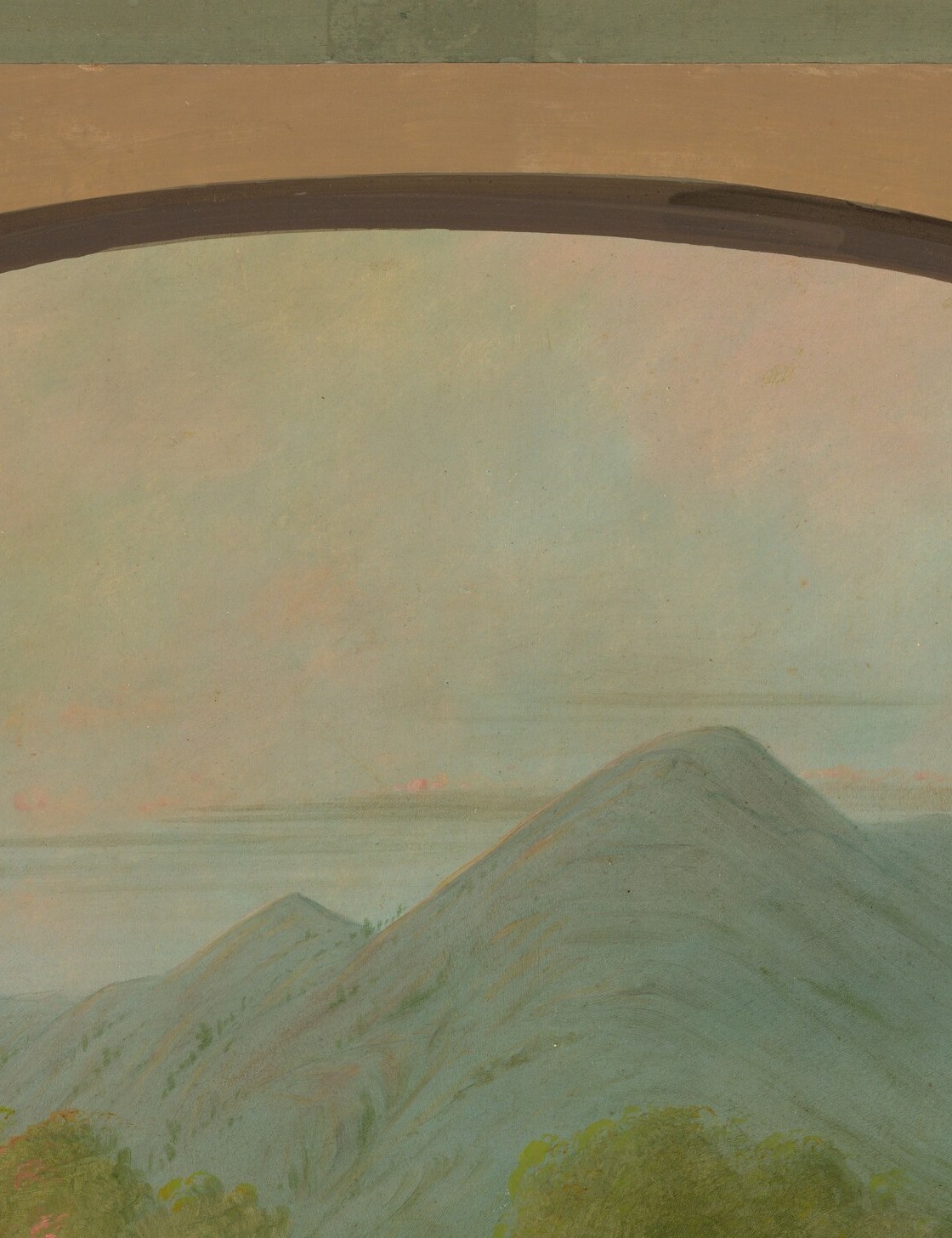
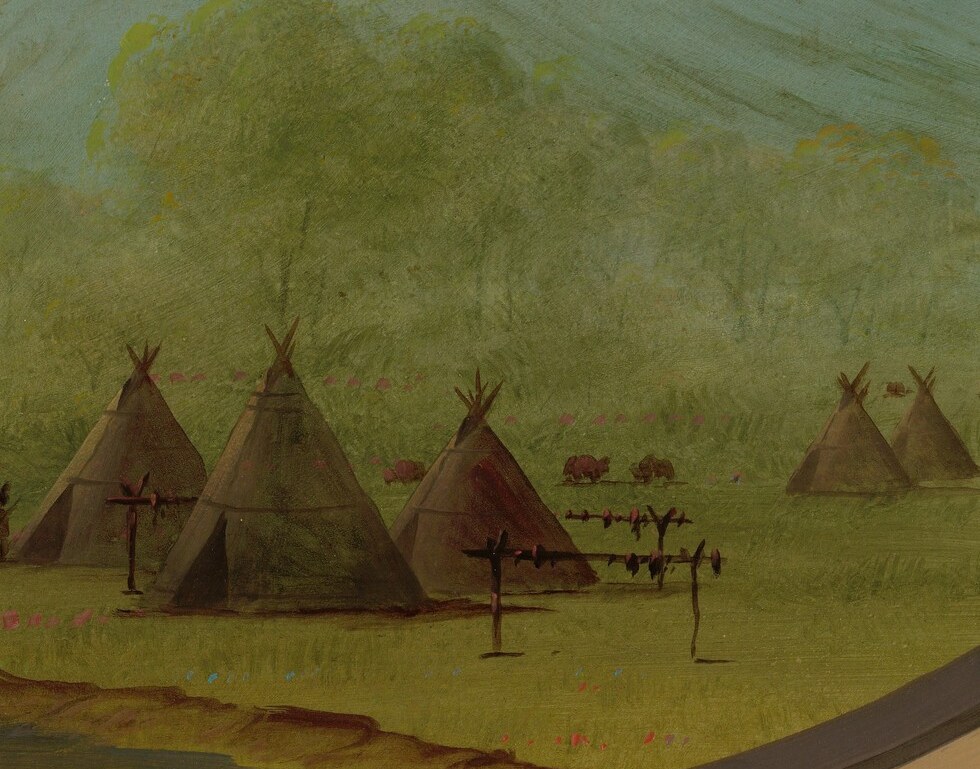
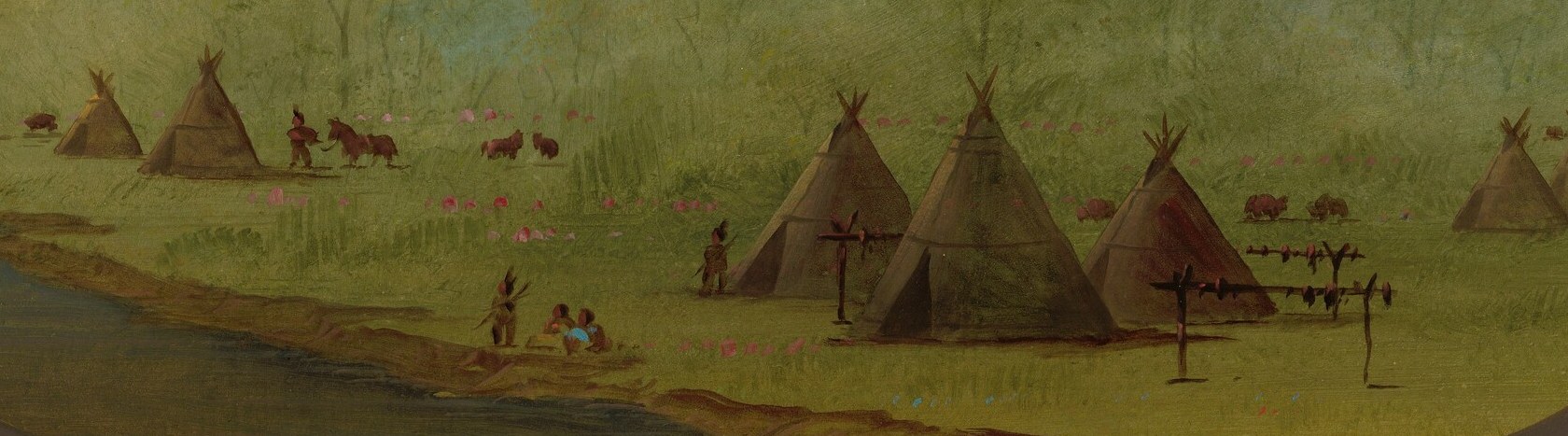
In this painting, notice the cluster of structures that appear to be tipis. While often associated with Plains tribes, these are likely permanent earthen lodges, indicating a settled village rather than a nomadic camp. The vast, hazy landscape emphasizes the scale and solitude of the American West.
Catlin made five extensive trips to the West in the 1830s, producing an invaluable record of Indigenous cultures and environments during a period of rapid change. His work, while sometimes romanticized, remains a vital historical and artistic document of a disappearing way of life.
What details do you notice that tell a story of permanence or transience in this landscape?
Details

Transcript
This painter was famous for documenting Native American life. He traveled the American West five times in the 1830s. Later, he painted this quiet scene, 'A Small Crow Village.' These are not tipis, but permanent earthen lodges. The light suggests dawn or dusk, a quiet moment in the vast landscape. His detailed studies of the frontier inspired later artists.