Portrait of a Young Woman by Cornelis de Vos
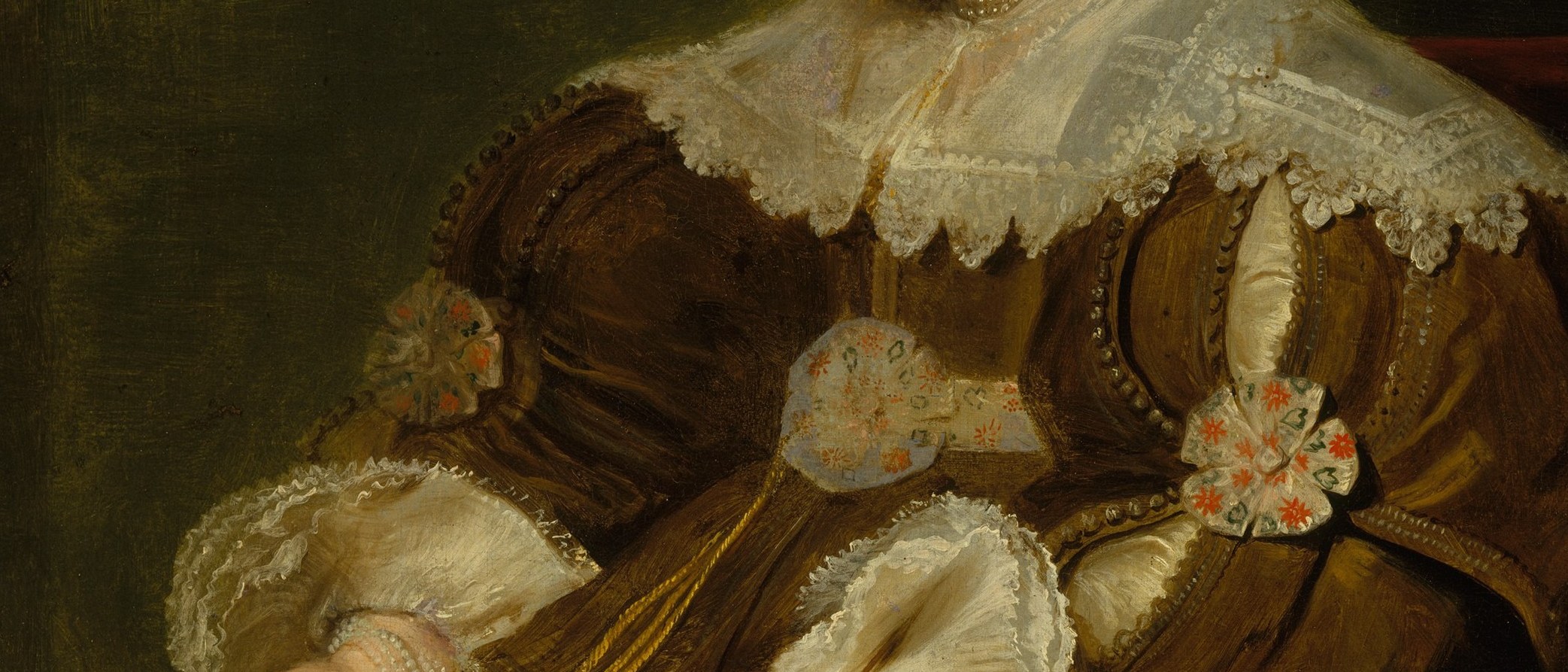
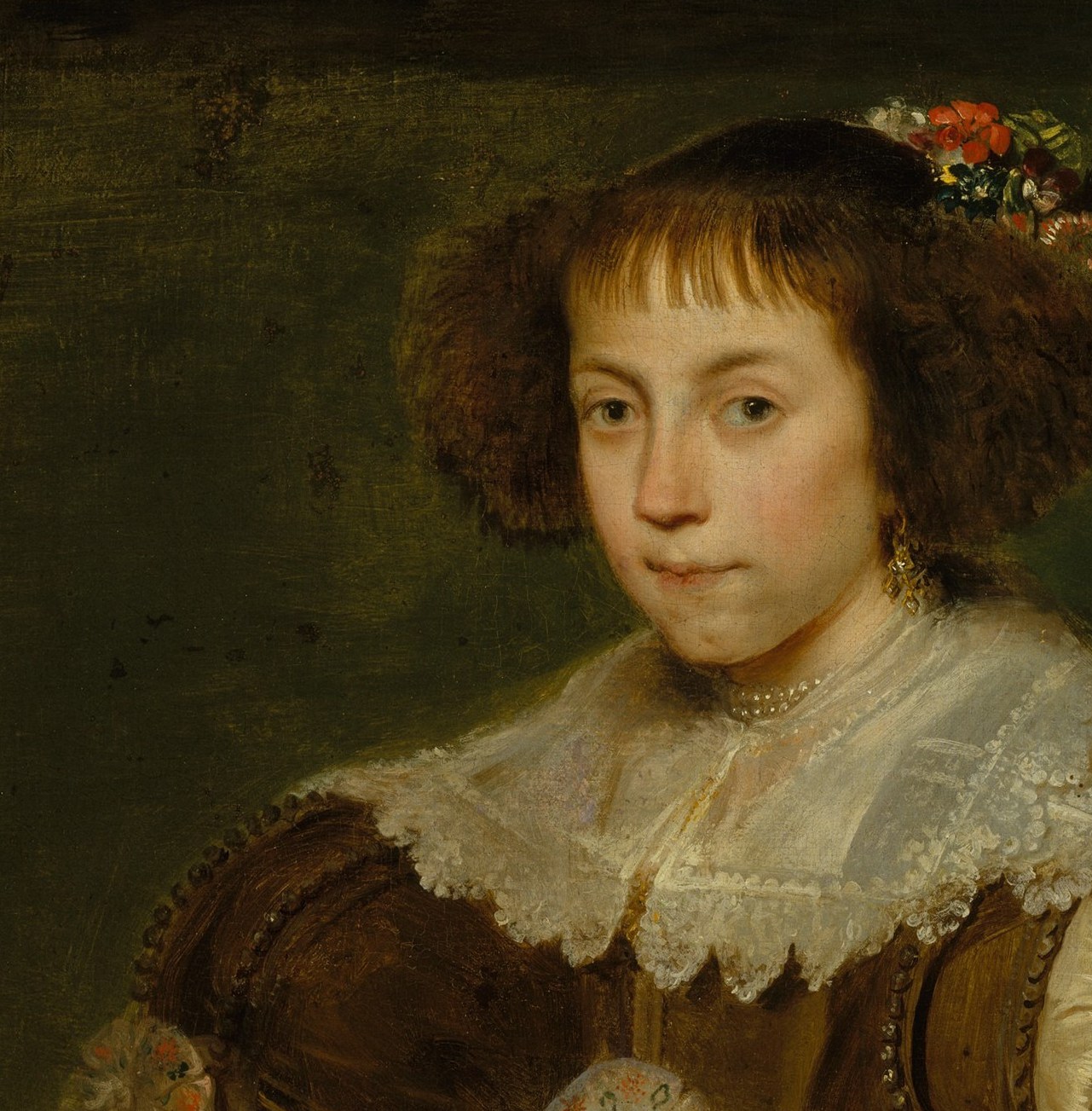
Cornelis de Vos painted this portrait in 1627 in Antwerp, then a booming center of trade and art. We don't know her name, but her clothing speaks for her. Every detail she wears was a legible code of wealth and refinement in Flemish society, starting with the lace collar, which was astonishingly expensive and worn only by the city's elite.
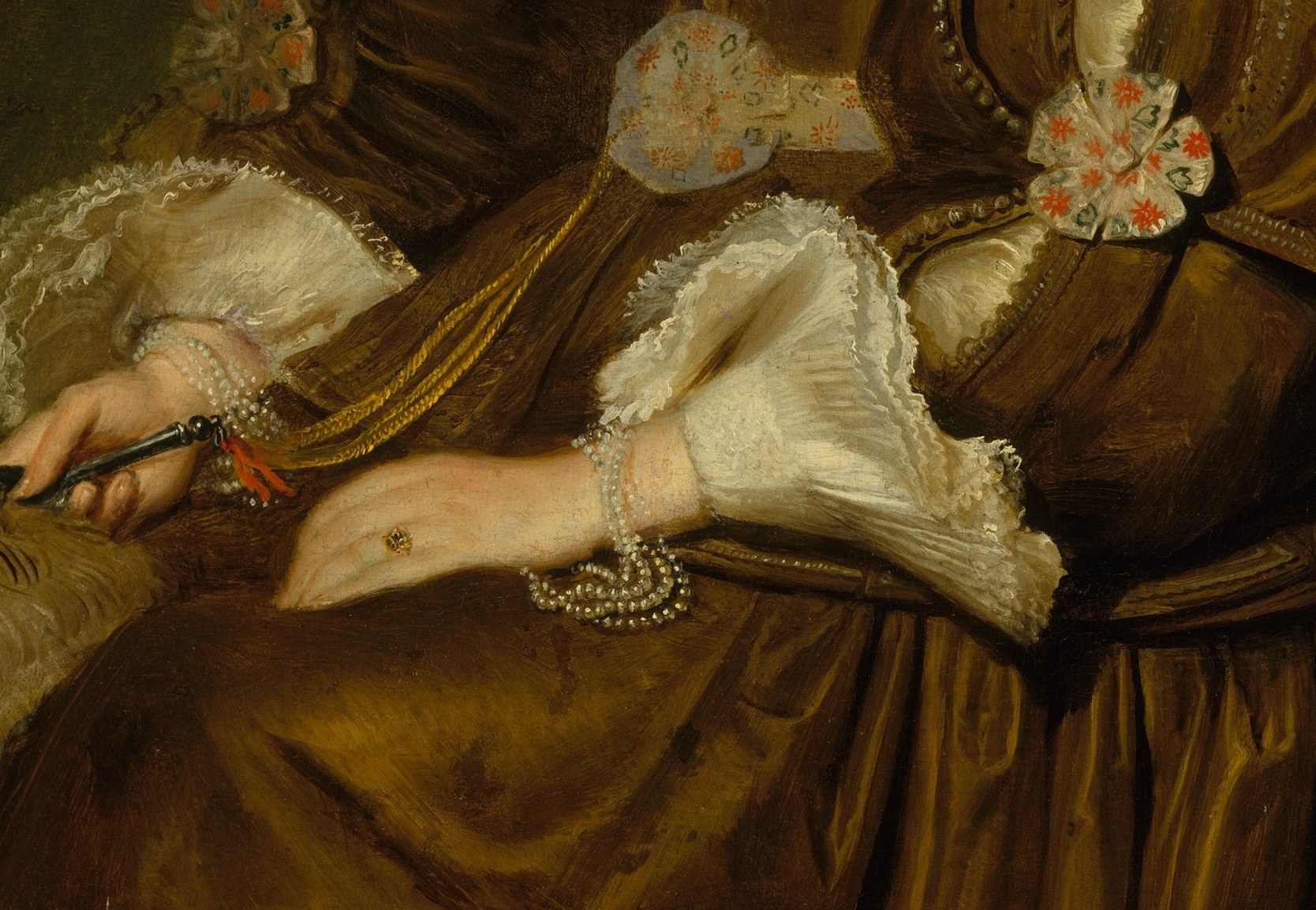
Look at the embroidery on her bodice. The red floral pattern continues seamlessly onto her sleeves; that consistency signals a professional workshop, not a family member darning at home. The folded fan in her hands is a luxury import but held at rest, suggesting an intimate rather than a ceremonial portrait.
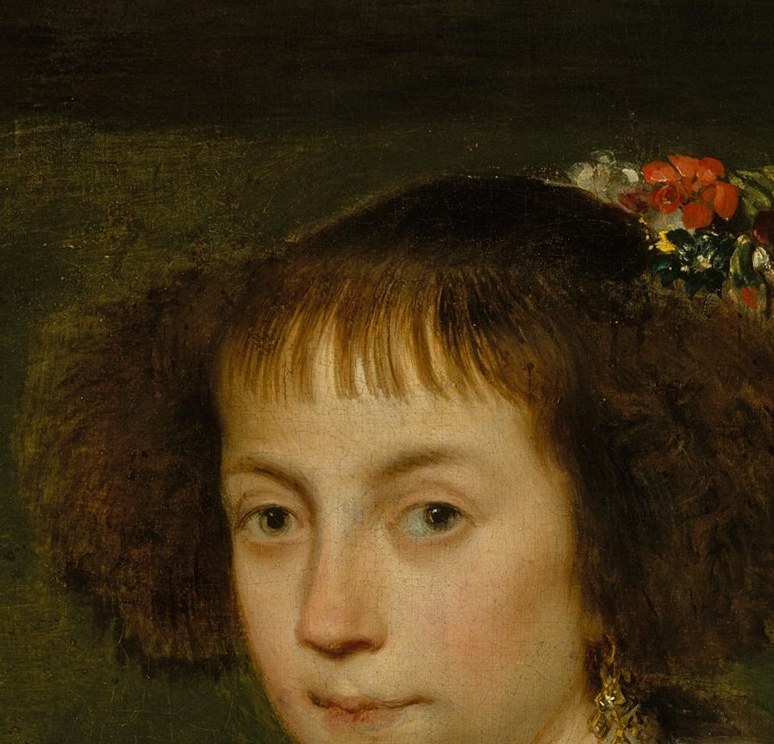
The small orange flower pinned in her hair is the quietest but most personal clue. Scholars have identified such blooms as possible markers of a marriage or engagement. Without a documented name, the flower remains our closest tie to her private identity.
De Vos was a leading portraitist in Rubens's circle, known for sensitive likenesses, especially of children. This painting now lives at The Metropolitan Museum of Art, still carrying her silent codes across four centuries. Next time you see a portrait this still, look at the objects at the edges.
Details

Transcript
You can read her status in the lace. This collar cost more than a worker earned in months. Red embroidery on dark wool: imported thread, professional work. The folded fan signals ease. She's not posing for ceremony. A small, warm flower pinned at the crown. Some scholars read it as a sign of engagement or marriage. Every thread places her. Every object announces her world.