The Assumption of the Virgin by Ambrogio Bergognone
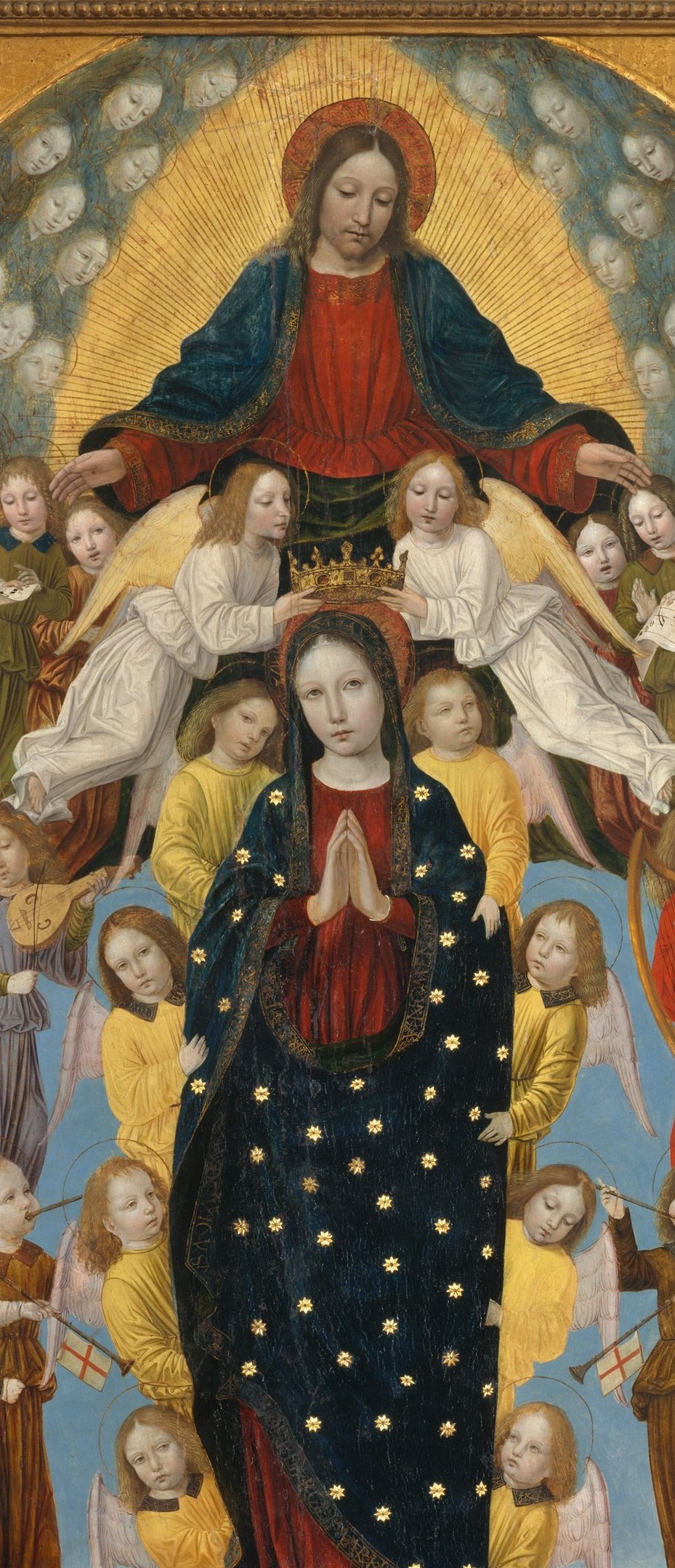
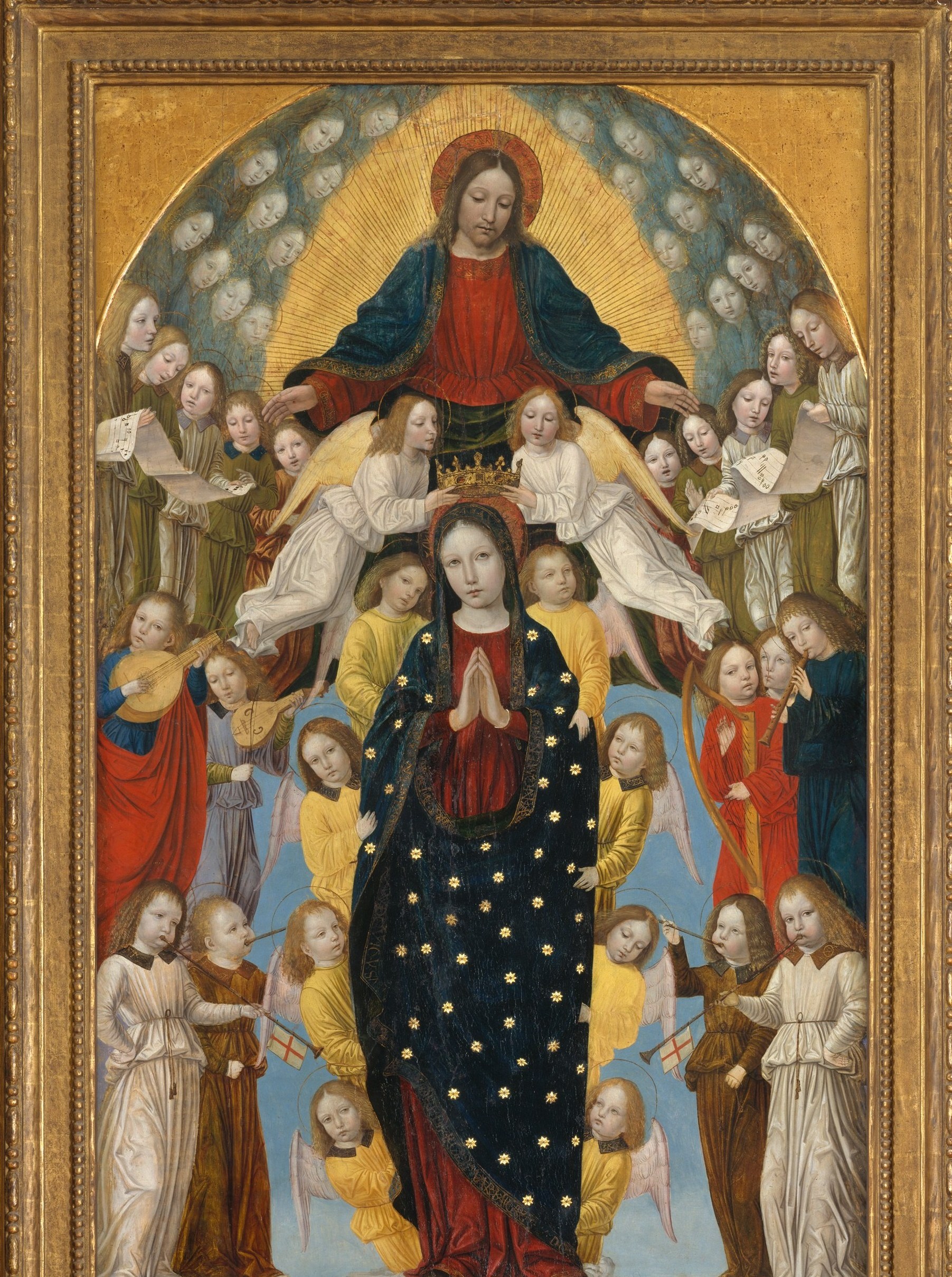
Ambrogio Bergognone painted "The Assumption of the Virgin" around 1511 for a church in Pavia, Italy, and it now lives at The Metropolitan Museum of Art in New York. Like many Renaissance altarpieces, it was cut from its original architectural frame and sold when its home church was suppressed. What survived the journey is a luminous, deeply calm vision of a miracle.
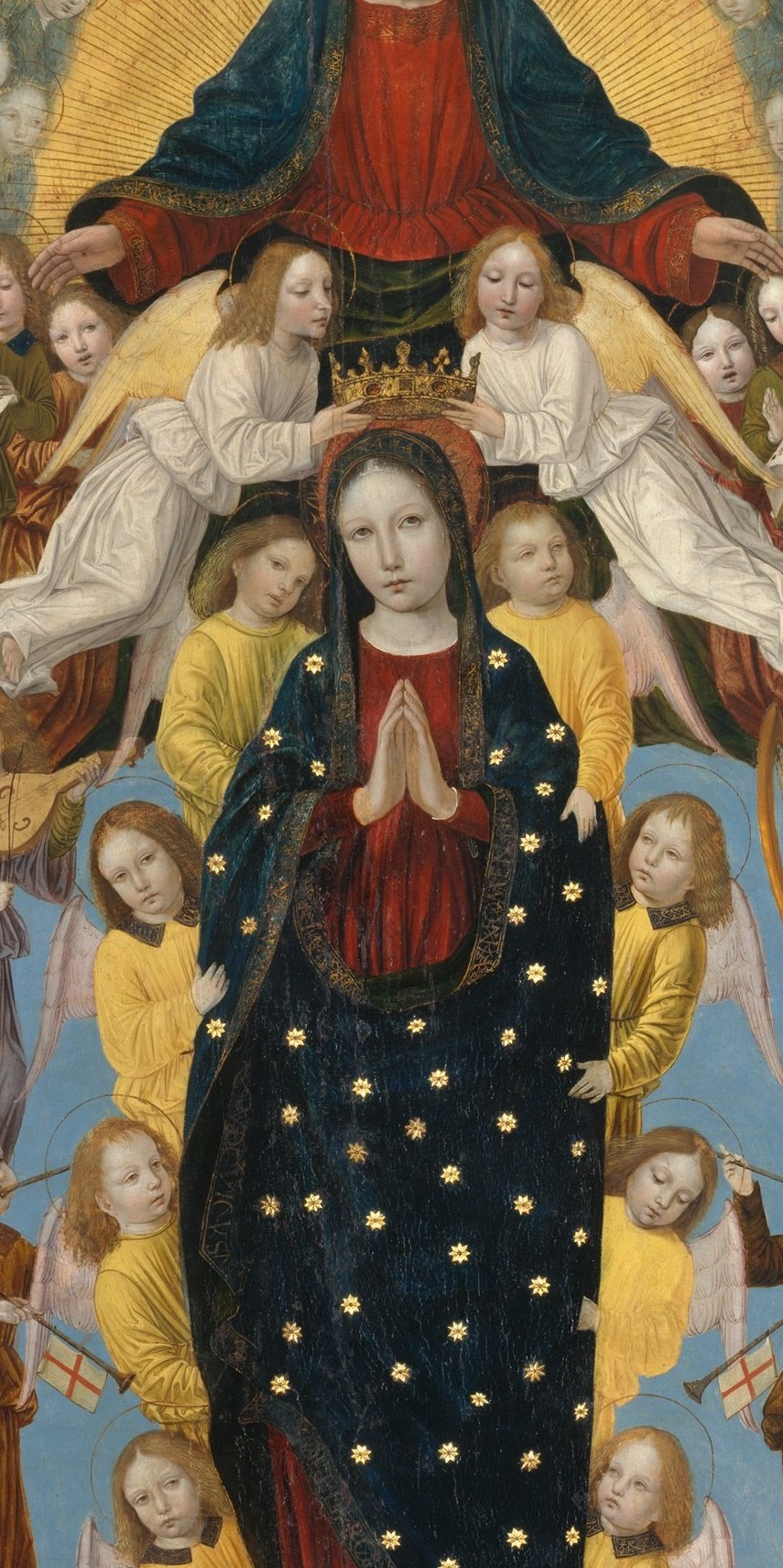
The first thing to notice is Mary's blue mantle, scattered with gold stars. Bergognone didn't paint those stars with a brush on top of dry paint. He pressed tiny pieces of gold leaf into still-wet gesso, one by one, so they sit slightly raised from the surface. Get close and they catch the light differently than the paint around them. Then look at the cloud band cutting across the middle. Above it, everything is gold and soft pink. Below it, the stone sarcophagus and the apostles' robes are earth tones. That line is the threshold between two worlds.
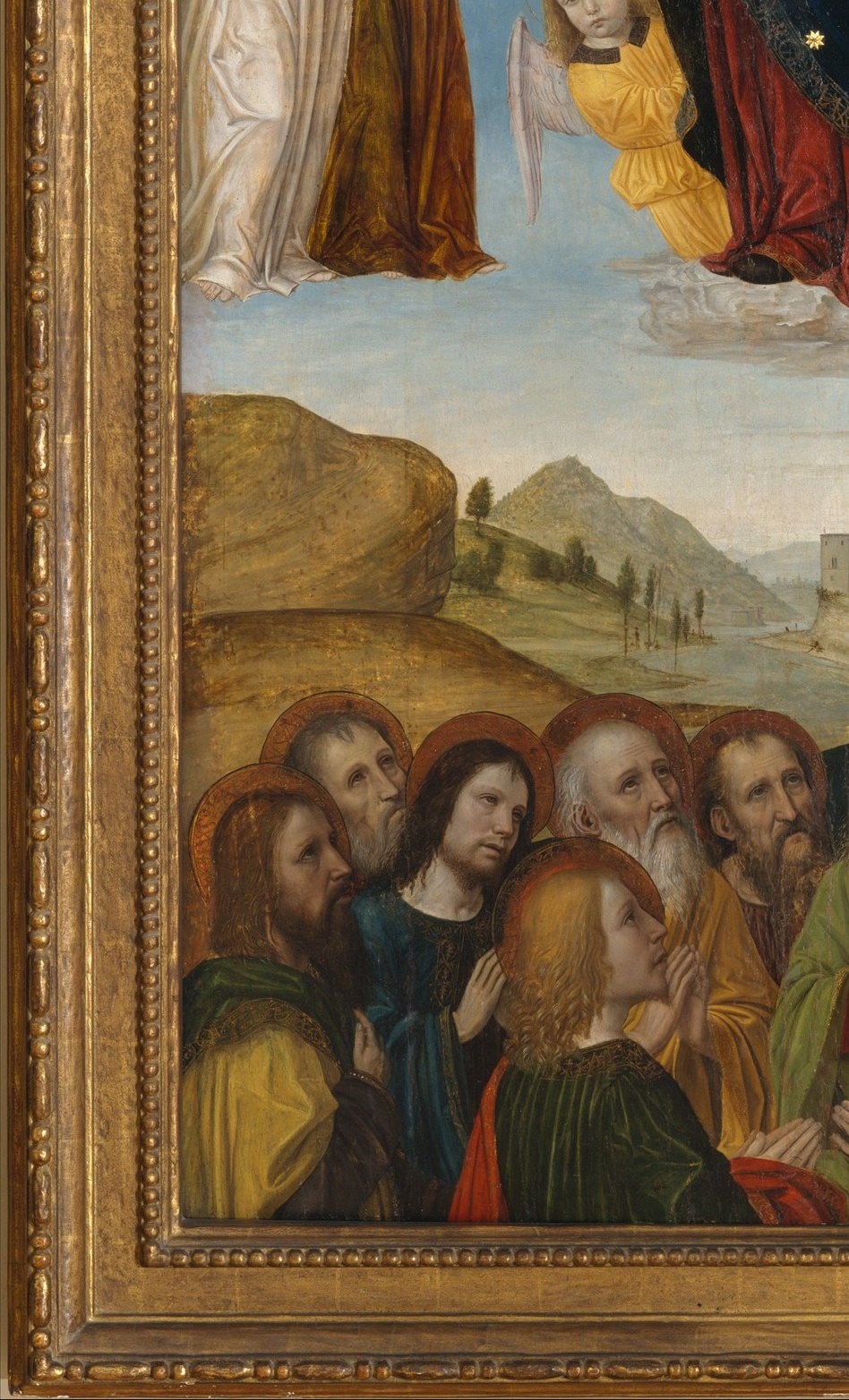
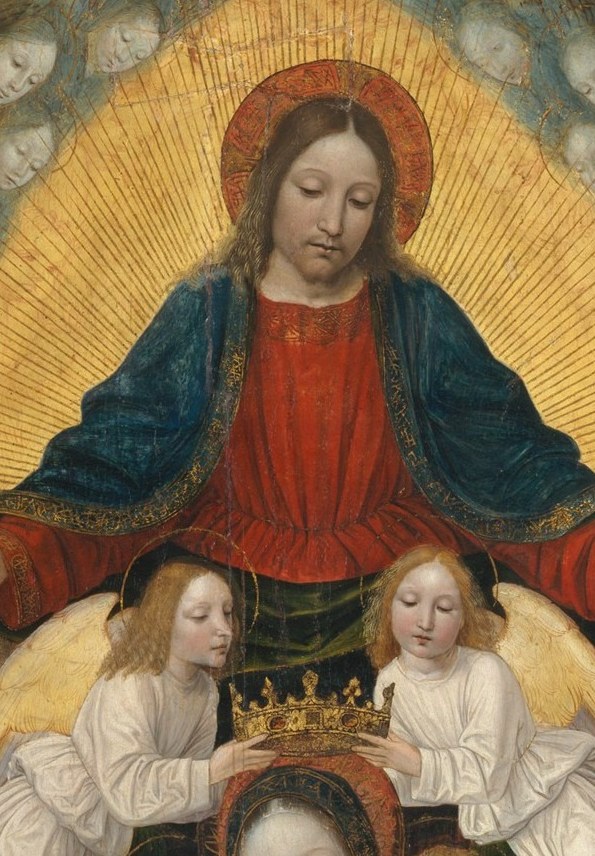
The apostles crowd both lower corners, pointing up and turning to each other in gestures of amazement. Their faces are specific, individual; Bergognone treated the human witnesses with as much care as the heavenly choir. The ring of angels around Mary creates a three-dimensional aureole, with bodies at different depths, some peering inward with expressions of curiosity that mirror our own. They look like they are just figuring out what they are seeing.
This was a Lombard painter working in the shadow of Leonardo, and you can feel it in the soft modeling of the faces and the careful atmospheric perspective in the distant landscape. Bergognone never became a household name, but for a quiet half hour in a gallery, he gives you everything: craft, conviction, and a sky full of hand-placed stars.
Details
Transcript
She rises on a field of hand-punched gold. Painting a single star meant pressing real gold leaf into wet gesso. Below, the apostles see what we see: a body becoming light. Bergognone made this for a church in Pavia, around 1511. When that church was suppressed, the altarpiece was cut from its frame and sold. Now it hangs in New York, still carrying its original gold.