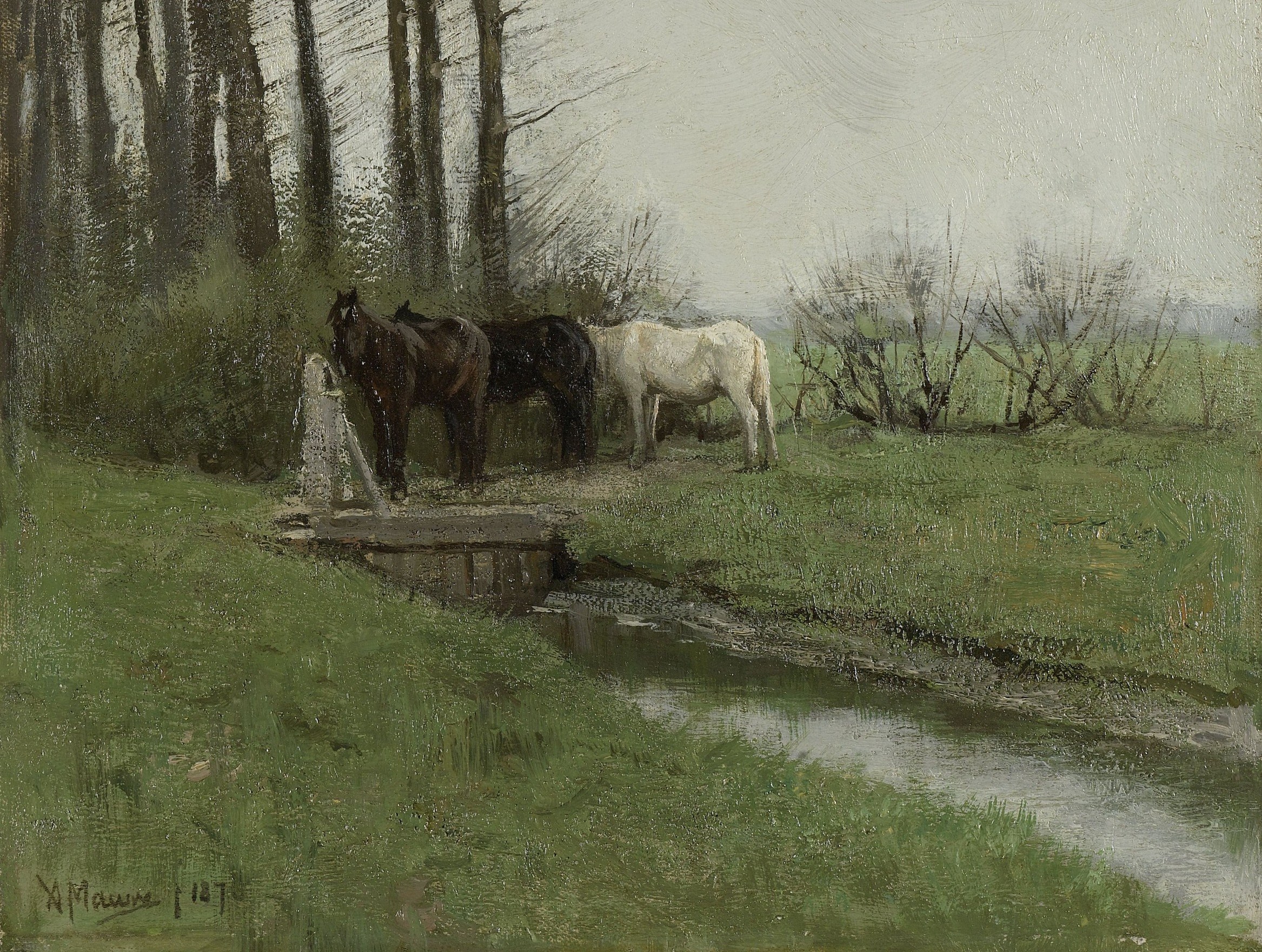
Horses near the fence. by Anton Mauve
This is "Horses near the Fence," painted in 1890 by the Dutch realist Anton Mauve, now in the Rijksmuseum. Mauve was a leading light of the Hague School and the cousin-in-law of Vincent van Gogh, who deeply admired his dedication to rural subjects.
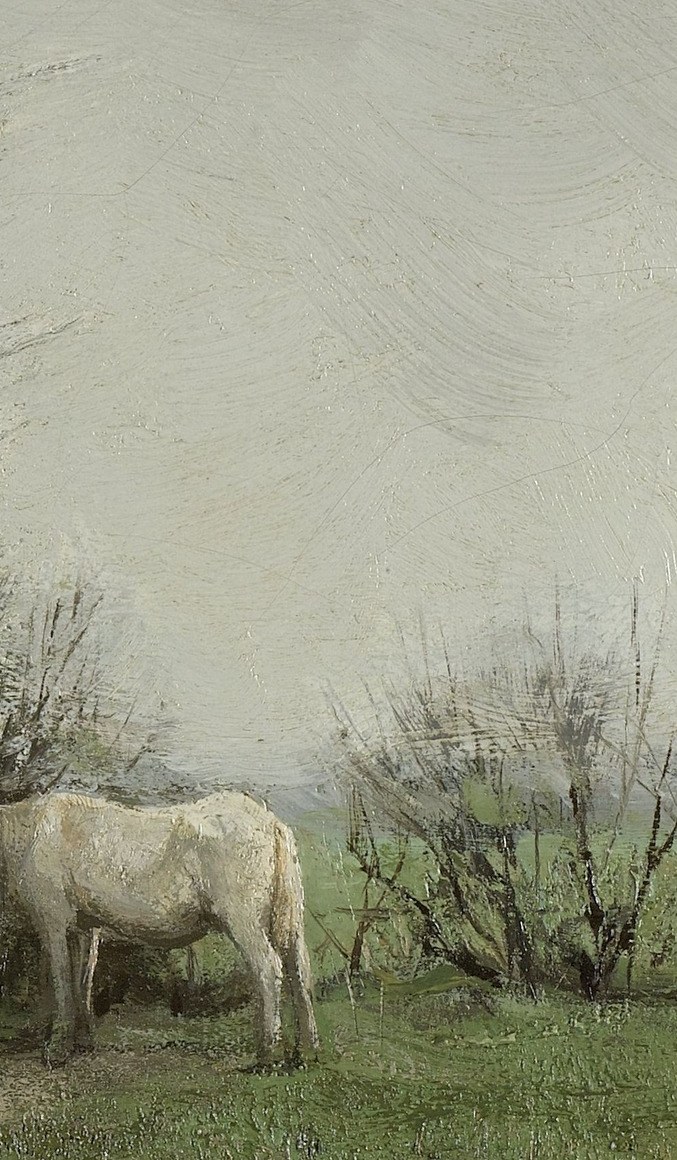
Your eye almost certainly went to the white horse first. Mauve wanted it that way. He anchored the entire composition on that cream-coloured animal, then surrounded it with dark bay horses, black tree trunks, and heavy shadows to make it glow. The painting is a quiet lesson in tonal control.
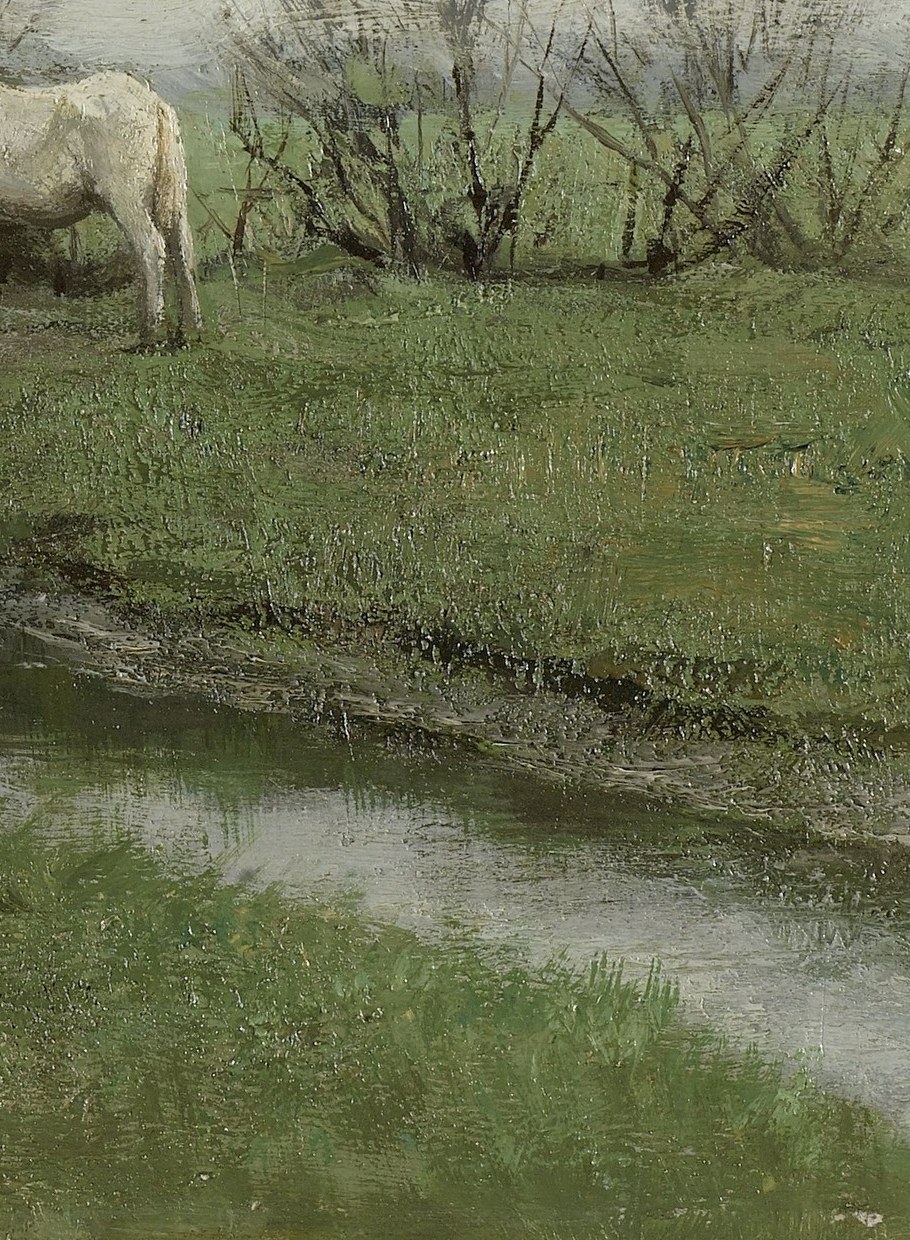
But there is a hidden structural secret. Look at the bottom right corner for a small curving ditch or path. It is barely noticeable, yet it is the only significant diagonal in the lower half of the canvas. Without that modest little line pulling your eye back toward the horizon, the composition would feel flat and blocked. This is the kind of invisible craft the Hague School excelled at.
Mauve died just two years before he painted this, a master at the height of his powers, still showing the rest of us where to look.
Details
Transcript
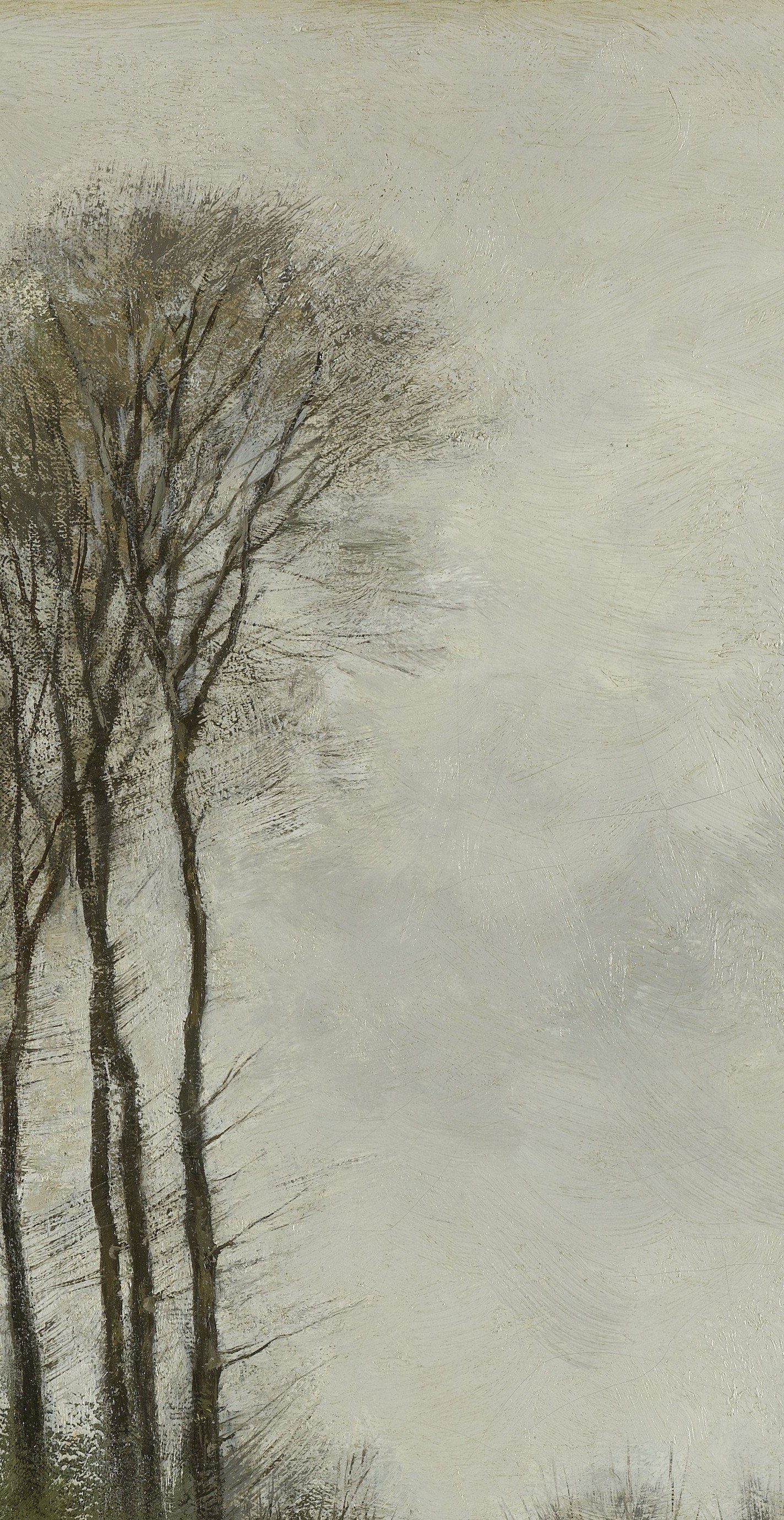
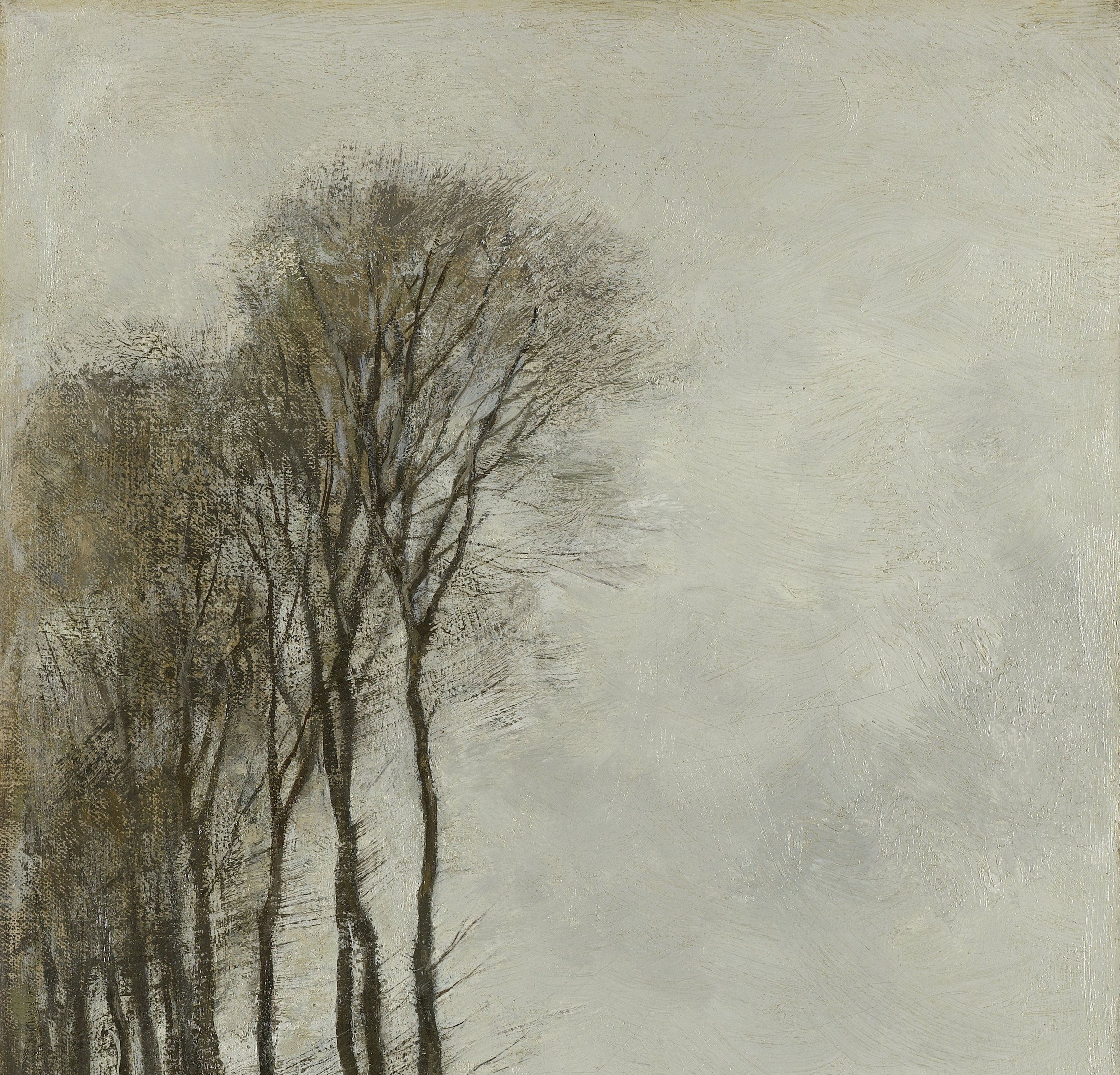
First, your eye lands on the white horse. It is the single brightest object in the whole painting. Mauve placed it against dark horses and bare trees for maximum contrast. His cousin-in-law, Vincent van Gogh, studied this kind of tonal control. The sky is a masterclass in wet-into-wet blending. Now look to the lower right corner. A small ditch curves away into the field. Without this tiny diagonal, your eye would stall on the fence forever.