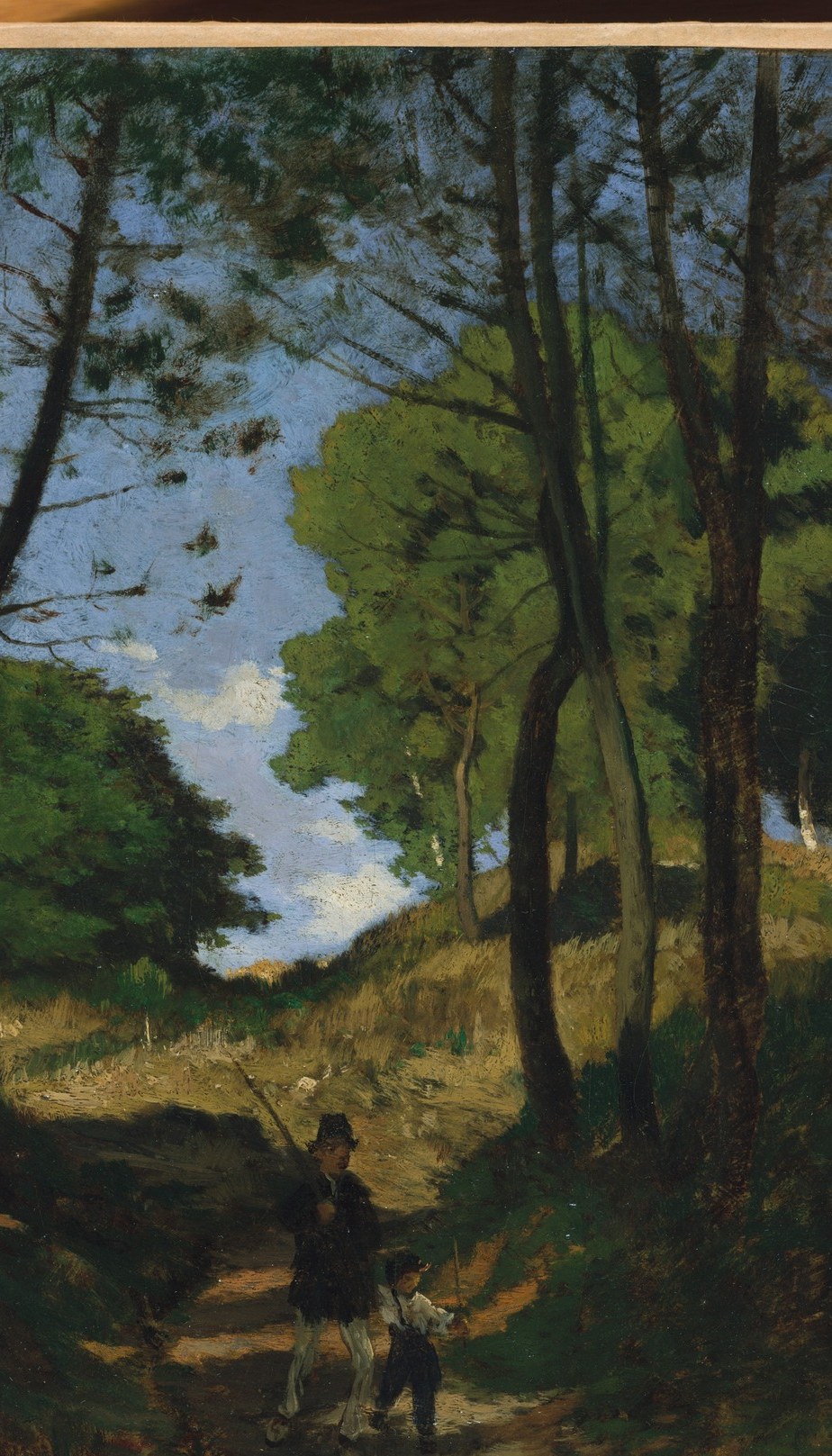
Fir Trees in Les Trembleaux, near Marlotte (Sapins aux Trembleaux à Marlotte) by Henri Harpignies
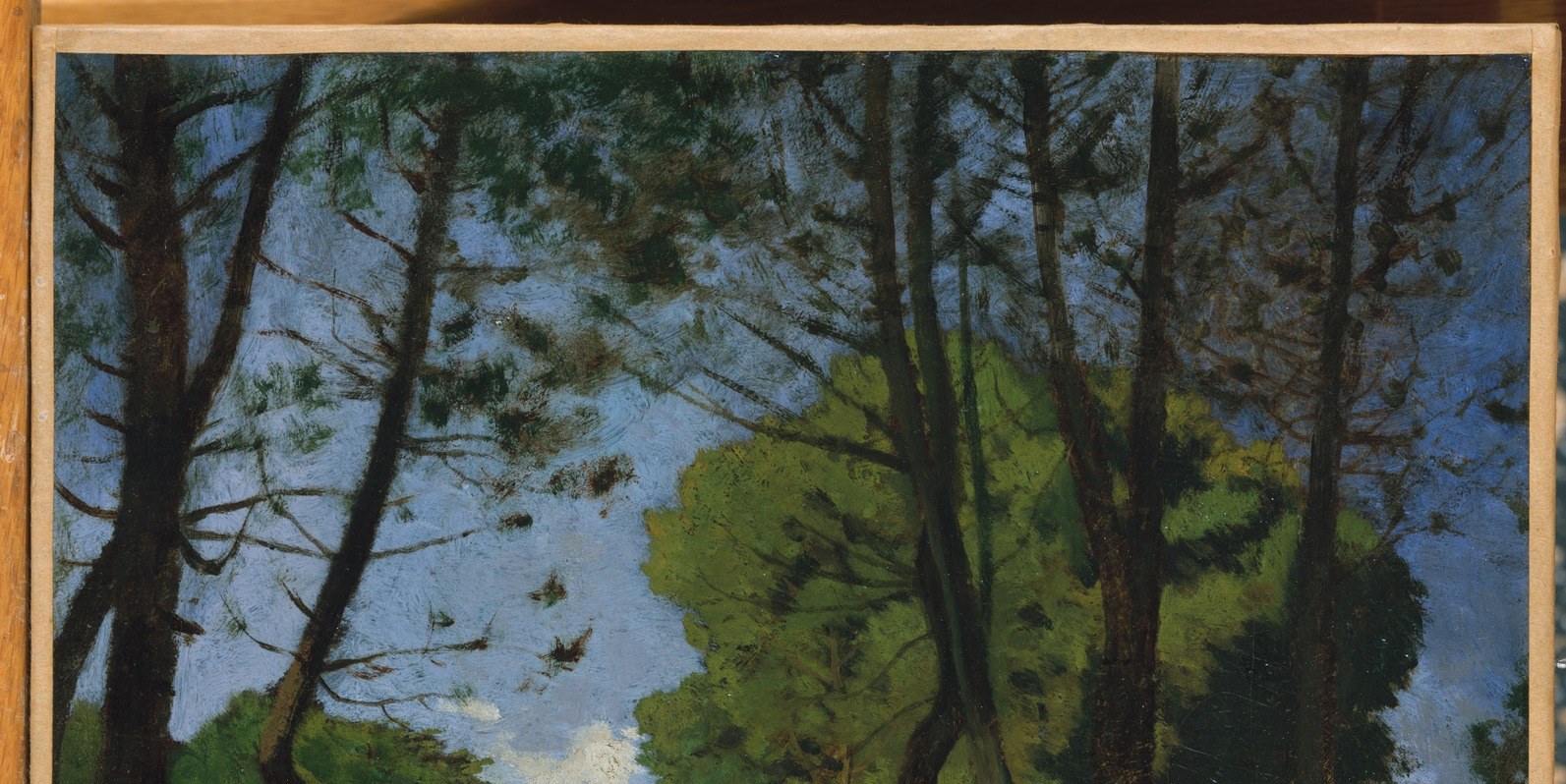
Henri Harpignies painted Fir Trees in Les Trembleaux, near Marlotte in 1854, and he quietly wrote himself into the scene. The work hangs at The Metropolitan Museum of Art and is a masterclass in the Barbizon school's quiet insistence that a real forest was more worthy than a studio fantasy.
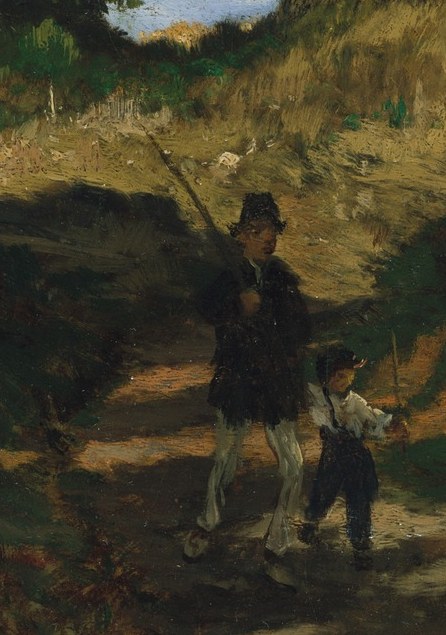
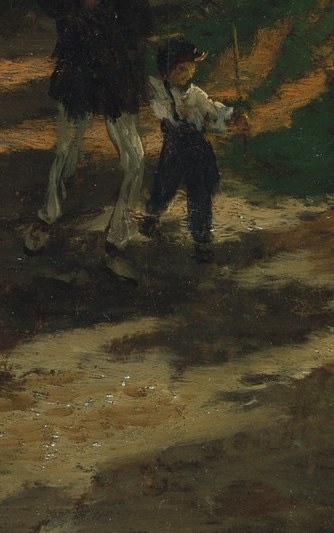
Look for two tiny figures on the sunlit dirt path. The seated man is the painter himself, working en plein air. A boy stands farther down the road, perhaps an apprentice or a companion, watching the canvas take shape. Around them, fir trunks rise like columns, and two gaps in the canopy flood the forest floor with midday light.
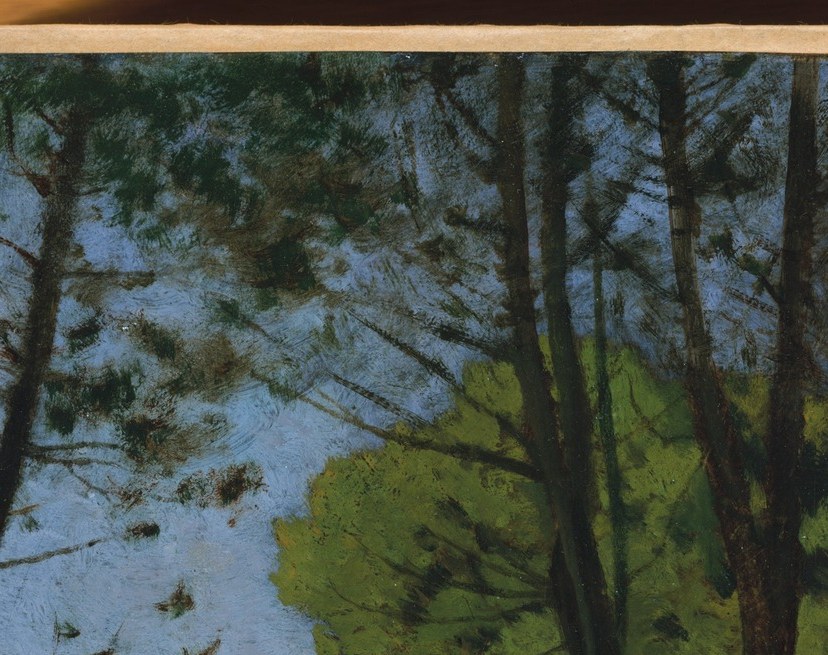
Harpignies lived from 1819 to 1916, a near-century that spanned the birth of photography and the dawn of modern art. The Barbizon painters rejected academic formulas and went outside to look. That commitment is visible in every brushstroke here: the way fir needles filter light differently from broad leaves, the specific ochre of a sunlit bank, the deep shadow pooled at the base of the trees.
It is a painting about painting. A man sits inside the landscape he is recording, and a boy watches. One hundred and seventy years later, we watch them both.
Details
Transcript
A path cuts through tall firs. Midday light. Sun drenches the dirt road. The trees hold the dark. Now find the man seated on the path. He is painting this exact forest. Harpignies put himself in the picture. A boy stands further down, watching him work.