清 傳弘仁 寺橋山色圖 卷|River Scene in Winter by Hongren|Unidentified artist
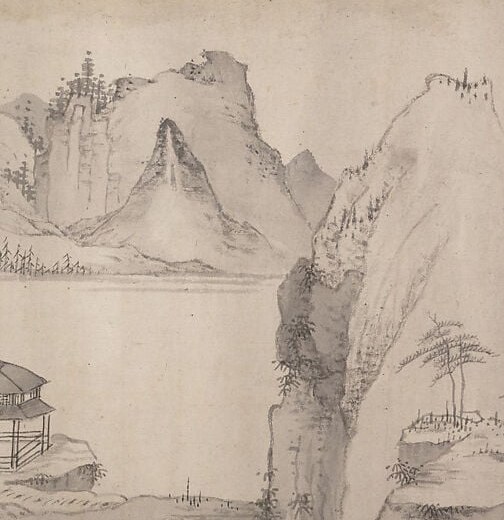
Hongren painted "River Scene in Winter" in 1661, seventeen years after the Ming dynasty collapsed and the Qing took power. A former Ming loyalist, he had already retreated into monastic life by this time. The handscroll, ink on paper, now belongs to the Metropolitan Museum of Art.
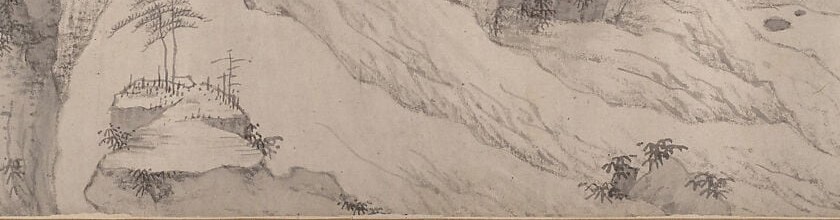
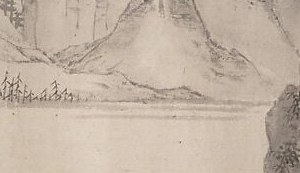
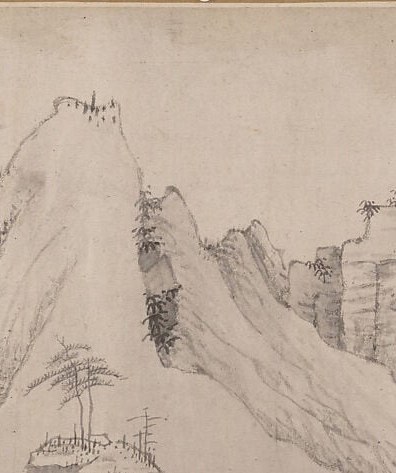
What to notice first is the river. It is blank paper. Chinese aesthetics calls this a "resonant void", an emptiness that carries more weight than what surrounds it. That unpainted space fills nearly a third of the composition. A single wooden bridge crosses it, the only human-built structure in the scene. Above it, crystalline rock faces rise in angular facets, and small pines cling to the exposed ledges.
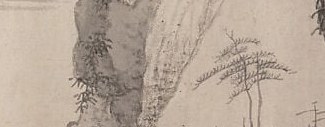
Those pines are a classical symbol of steadfast loyalty, evergreens that keep their needles through winter. A Ming loyalist painting them on the most inhospitable ledge, in a landscape stripped of softness, is not decorative. It is a moral and political statement rendered in ink.
The whole scroll reads as a meditation on loss and endurance. Every element, the fractured foreground rocks, the bare calligraphic trees, the mist dissolving into unknowable distance, was chosen by a man who had watched his world end and chose to keep painting.
Details
Transcript
The painter was a Ming loyalist who became a monk. He made this in 1661. Seventeen years after his world fell. Look at the river. It is unpainted paper. Blankness occupies a third of the scroll. A single wooden bridge crosses the frozen void. He painted pines on the harshest cliff ledge. Evergreens in winter: a symbol of steadfast loyalty.