Dawn by Gaspare Diziani
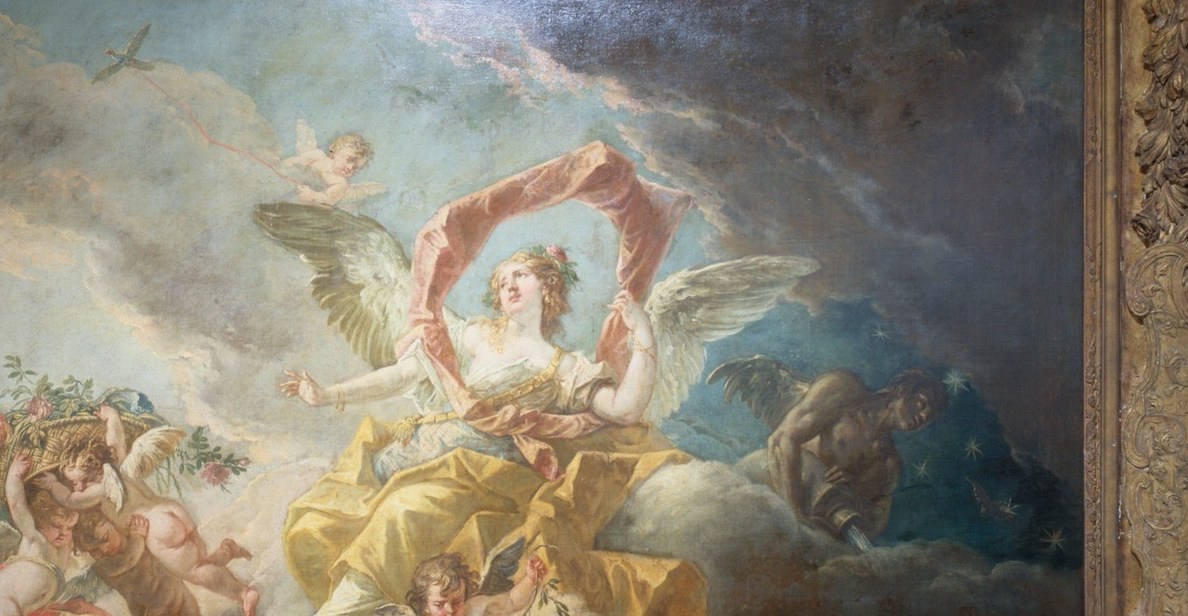
Gaspare Diziani's *Dawn*, painted in oil around 1738 and housed at The Metropolitan Museum of Art, uses symbolic imagery to depict the transition from night to day. The painting exemplifies the Rococo style with its ethereal atmosphere and playful putti.
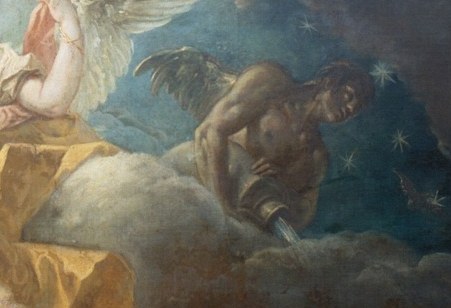
Observe the soft, golden glow in the sky, representing hope and the start of a new day. Contrasting this is the dark, muscular figure in the background, possibly symbolizing the fading night or a distant star.
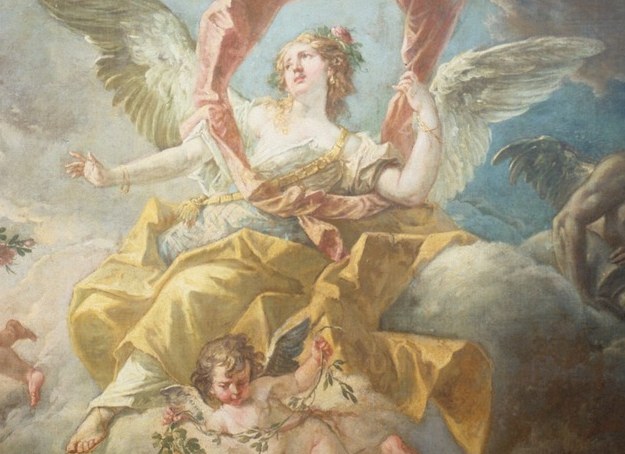
The central figure, likely Aurora, wears a wreath of flowers, a potent symbol of time's cyclical nature and the beauty of morning. Her serene expression conveys a sense of divine presence as she heralds the day's arrival.
Diziani masterfully employs color and form to create a luminous and airy scene, capturing the joyous awakening of nature.
Details
Transcript
Dawn breaks. Look at the sky's soft glow. This glow represents hope and new beginnings. Night is fading. See the dark figure. This figure may show night or a fading star. The central figure wears a wreath of flowers. Her wreath symbolizes time's cycle and morning. Look at her face, serene and divine. This figure personifies dawn, arriving with joy.