Madonna and Child with Angels and Cherubim by Giovanni, Matteo di
This serene 15th-century masterpiece, "Madonna and Child with Angels and Cherubim" by Matteo di Giovanni, painted around 1462, is a testament to the devotional art of its time. You can find this piece at a museum near you.
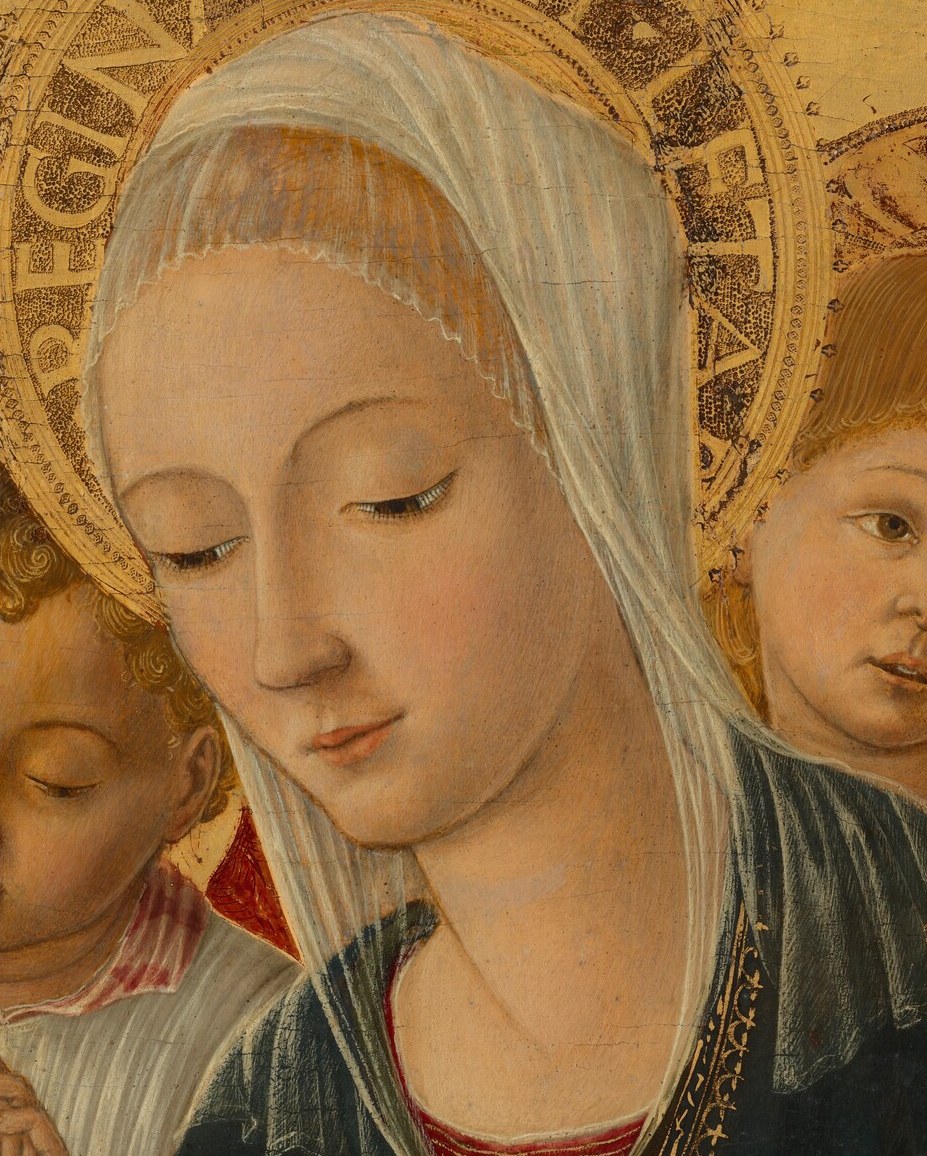
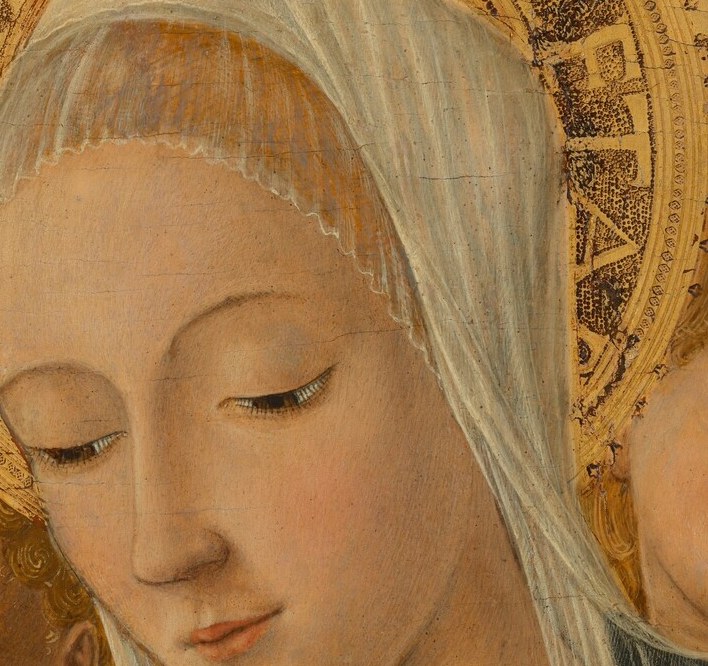
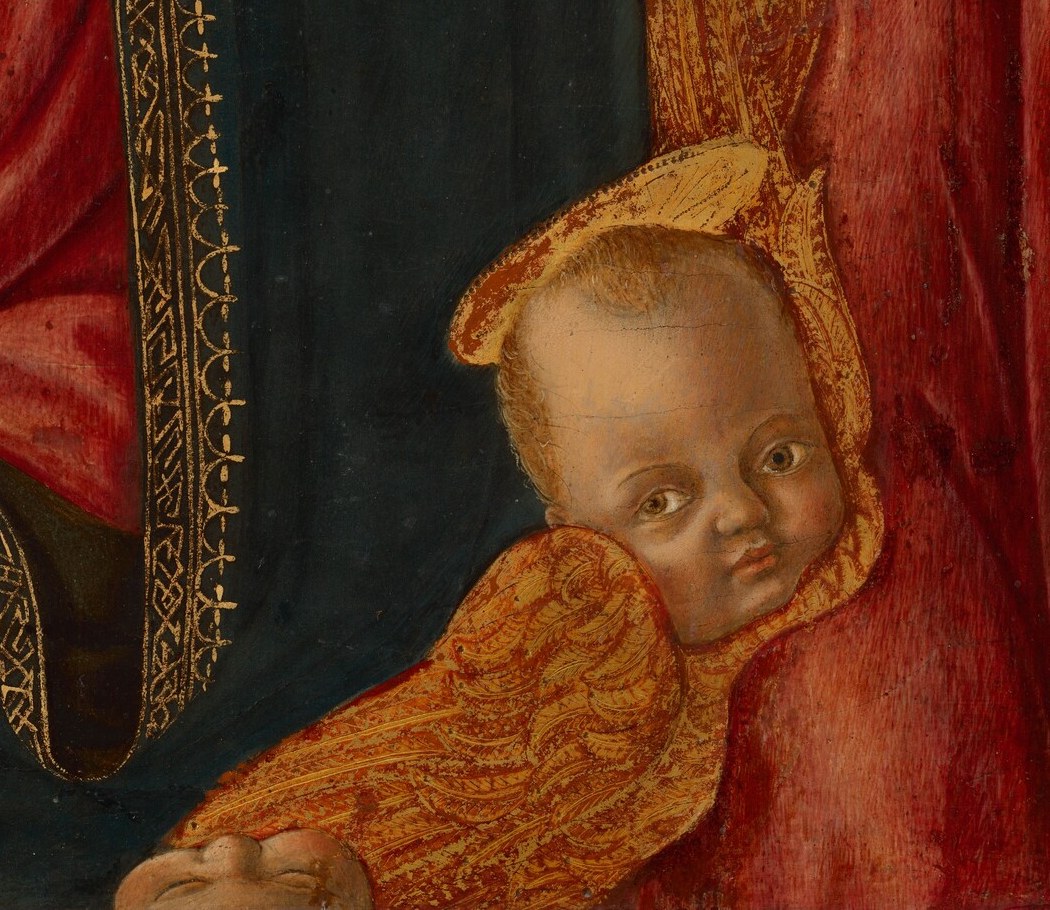
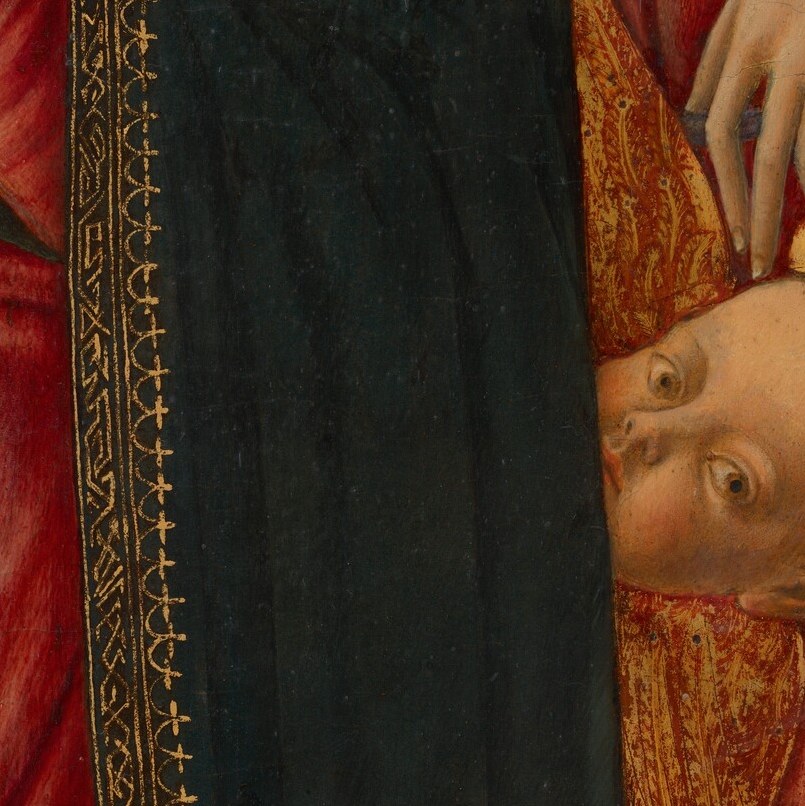
While the main figures of the Virgin Mary and infant Jesus command attention, closer inspection reveals a wealth of intricate details. From the delicate inscription on the Madonna's halo, proclaiming her "Queen of Heaven," to the playful cherubim peeking from the corners, the painting invites viewers to linger.
Executed in tempera on a poplar panel, the work showcases the luminous quality of the medium. The extensive use of gold leaf, particularly in the halos and robes, not only signifies the sacredness of the figures but also reflects the opulence of commissioned religious art during the Italian Renaissance. Matteo di Giovanni's meticulous technique creates a vibrant and reverent depiction of this timeless sacred theme.
What hidden details do you discover in older paintings?
Details
Transcript
This painting looks calm, but it's full of hidden life. Look closely at the Madonna's halo, at the words. It reads 'Regina Coeli': Queen of Heaven. The painter used gold leaf throughout, a luxurious material. And more angels are watching, almost hidden. They add a touch of earthly charm to the divine scene.