The Battle of Waterloo by Jan Willem Pieneman
This is Jan Willem Pieneman's The Battle of Waterloo, painted around 1824. It captures a pivotal moment at the end of the Napoleonic Wars, focusing on the Allied leaders. The Duke of Wellington himself sat for Pieneman to ensure accuracy.
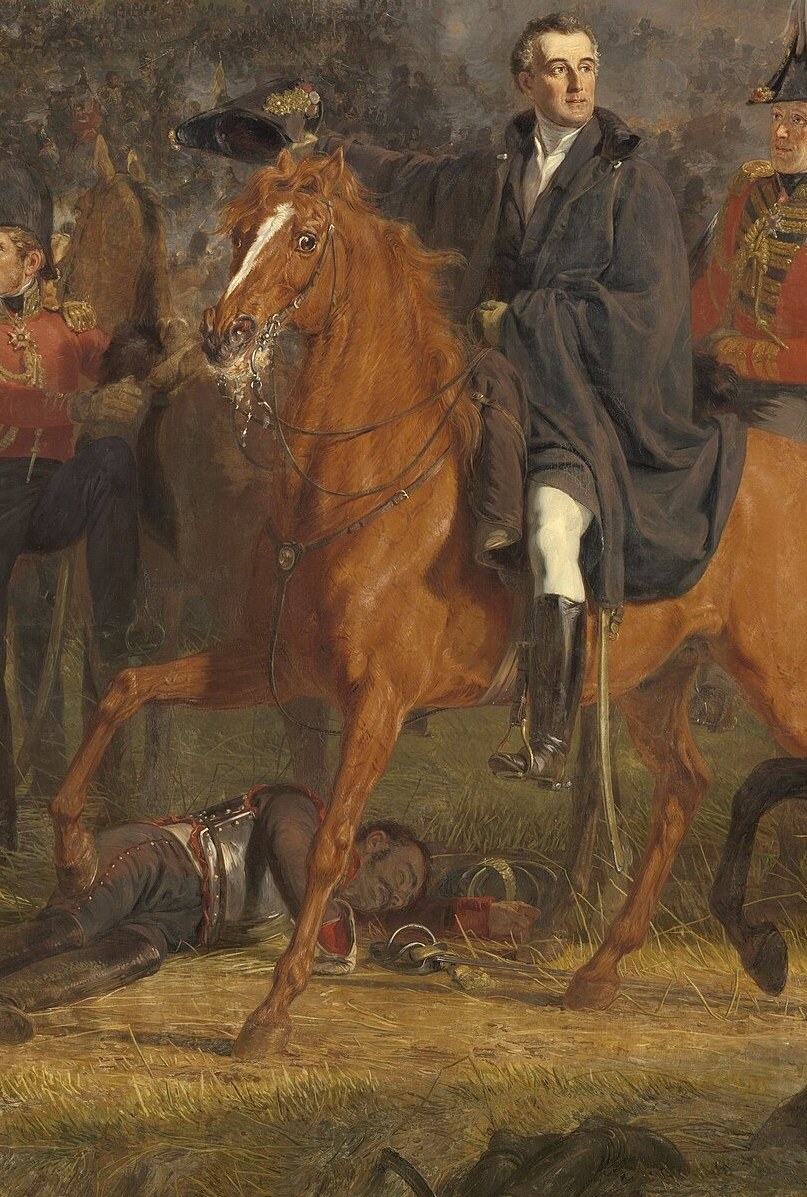
Look at the resolute face of Wellington, and the alert stance of his horse Copenhagen. Note the determined gaze of the young Prince of Orange beside him, a contrast to the fallen soldier in the foreground whose vacant stare emphasizes the brutal cost of war.
Pieneman traveled to London to study the commanders and their mounts, even setting up a studio in Wellington's Apsley House. He worked from battle plans to depict this historic victory that ended Napoleon's reign.
The painting serves as both a commemoration of triumph and a sober reminder of the human price of such monumental events.
Details
Transcript
This commander looks resolute. The battle rages around him. His horse, Copenhagen, stands alert and powerful. The young Prince of Orange seems bravely determined. A soldier lies dead in the foreground. The Duke sat for his portrait in London. His slumped posture shows the toll of command. Distant smoke hides the vastness of the conflict. The painter studied the actual battle plans.