The Lamentation by http://www.wikidata.org/.well-known/genid/44a524dbcc20d99869b6ebd4d5aac9b0
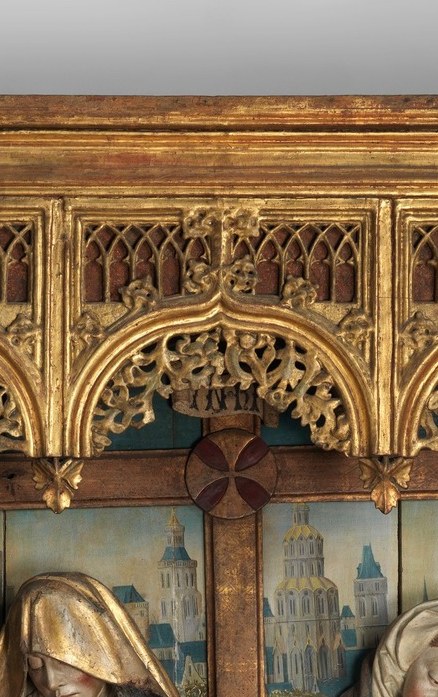
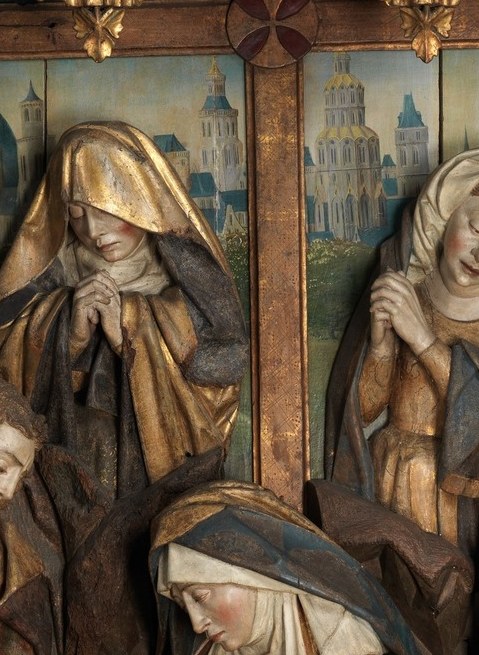
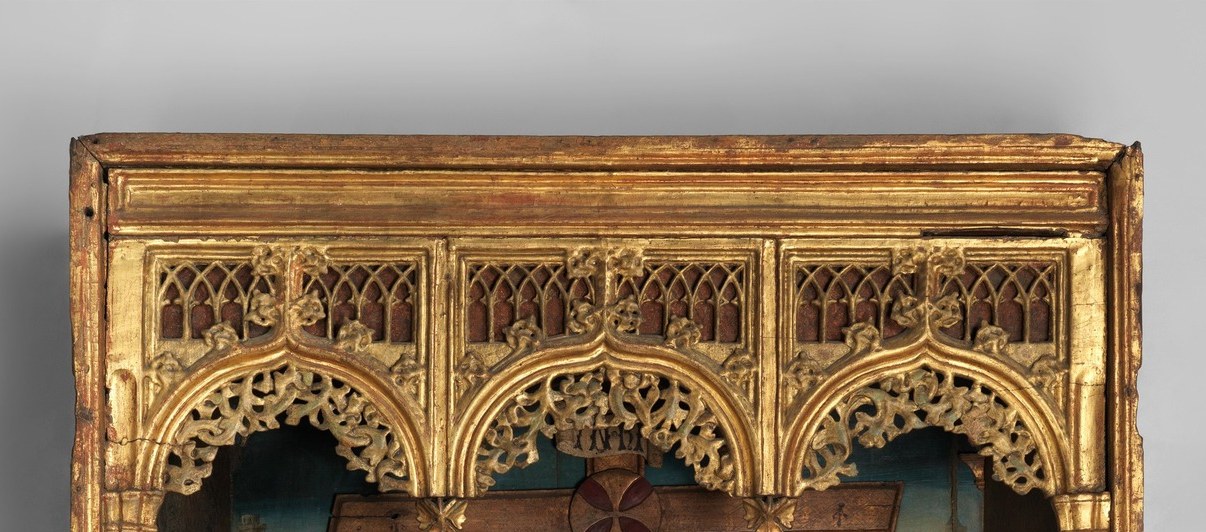
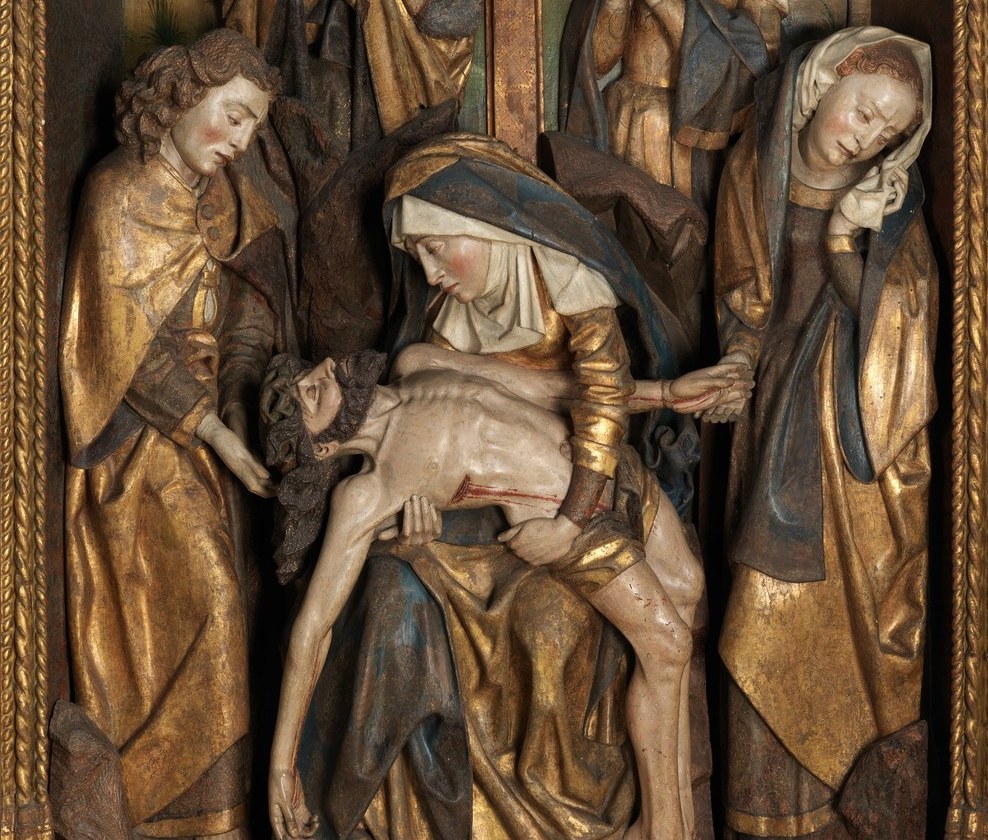
The Lamentation is a late-15th-century wood relief altarpiece, made in a German or Netherlandish workshop around 1480. Its makers cut the figures from limewood or oak, then painted the flesh and the wound directly onto the carved surface. The technical feat here is the fusion of carved polychrome sculpture with a painted backdrop: a flat panel holds the sky and the cross while the grieving figures step into real, dimensional space in front of it.
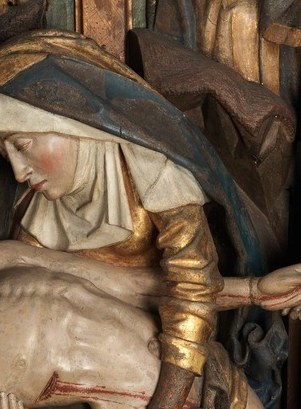
Let your eye move from the blue-grey sky to the carved faces, and then to the dark red wound on Christ's torso. That wound is not carved into the wood; it is painted on top of the already-carved chest. By splitting the illusion of depth between painted background and sculpted foreground, the workshop makes the body feel truly present, and the painted blood becomes the detail a viewer could not look away from.
This kind of mixed-media altarpiece was deeply devotional. In a late-Gothic church interior, candlelight would have moved across the gilded frame and polychromed faces, animating them. The cross painted behind Christ ties the physical carved body to the theological event, while the layered technique asks a worshipper to see the passion as both eternal symbol and physical fact.
What other painted wounds do you know that sit on top of carved skin, not inside a canvas?
Details
Transcript
Look first at the painted sky and the cross behind it. That is a flat, painted panel. Two-dimensional. Not carved. But these figures are carved wood. They step forward in real depth. Now look at Christ's side. The wound appears to be painted. The painter added blood directly onto the carved surface. Sculpture and painting, fused to make the suffering more real.