The Church of Souain by Vallotton, Félix
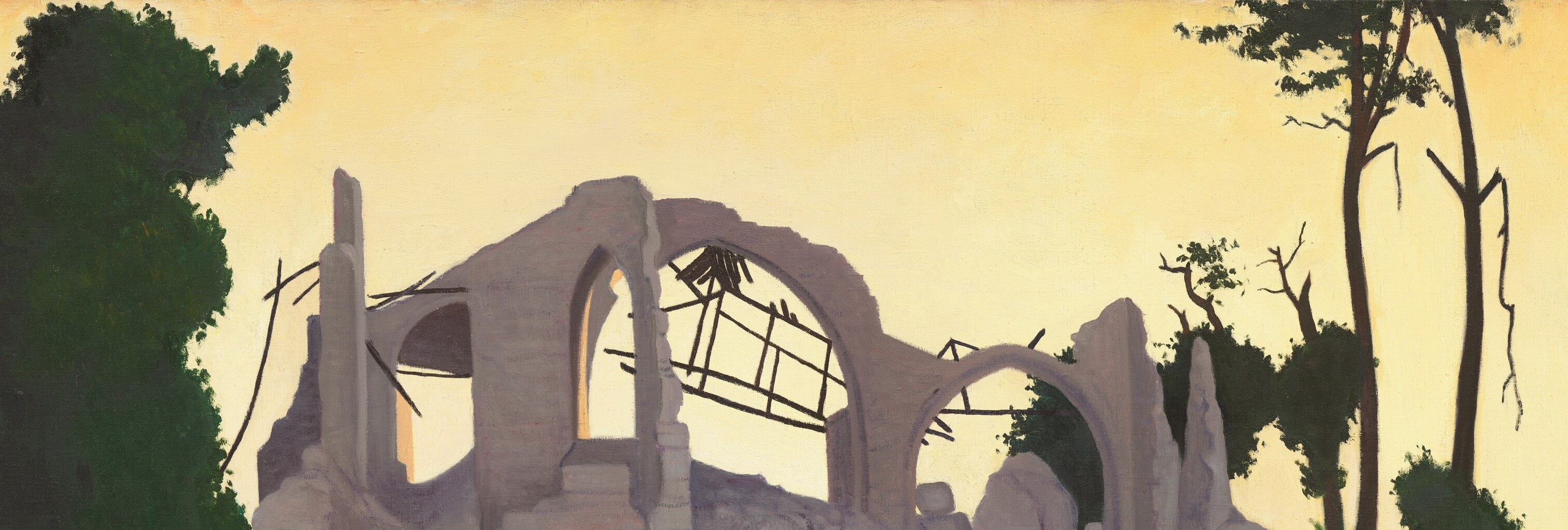
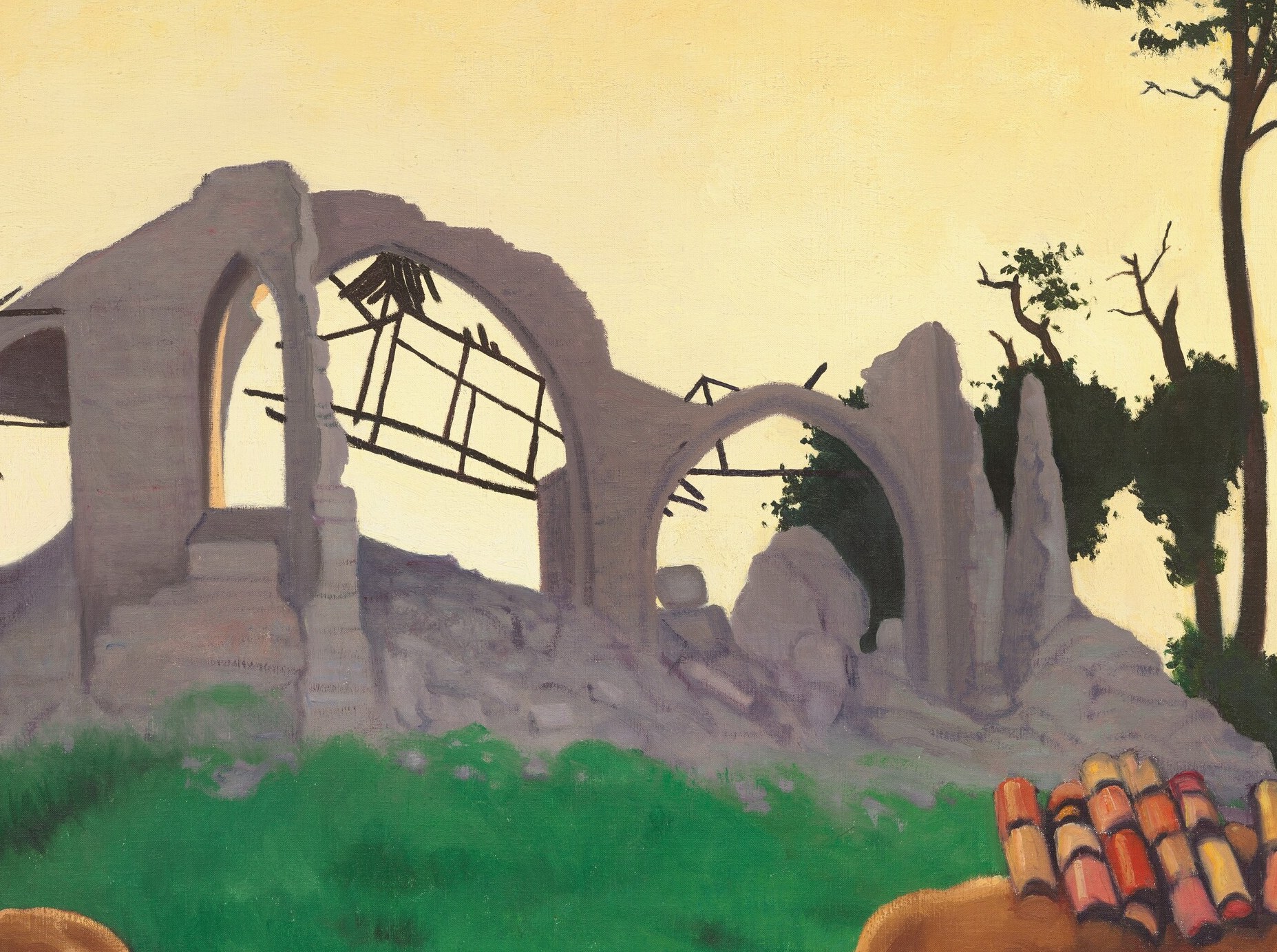
Félix Vallotton's "The Church of Souain" (1917) is one of the most quietly radical war paintings to come out of World War I. It refuses nearly everything a viewer might expect: no soldiers, no dramatic explosions, no narrative of heroism. Just a ruined church and a sky the color of a healing bruise, rendered in the flat, graphic style Vallotton perfected with the Nabis in the 1890s.
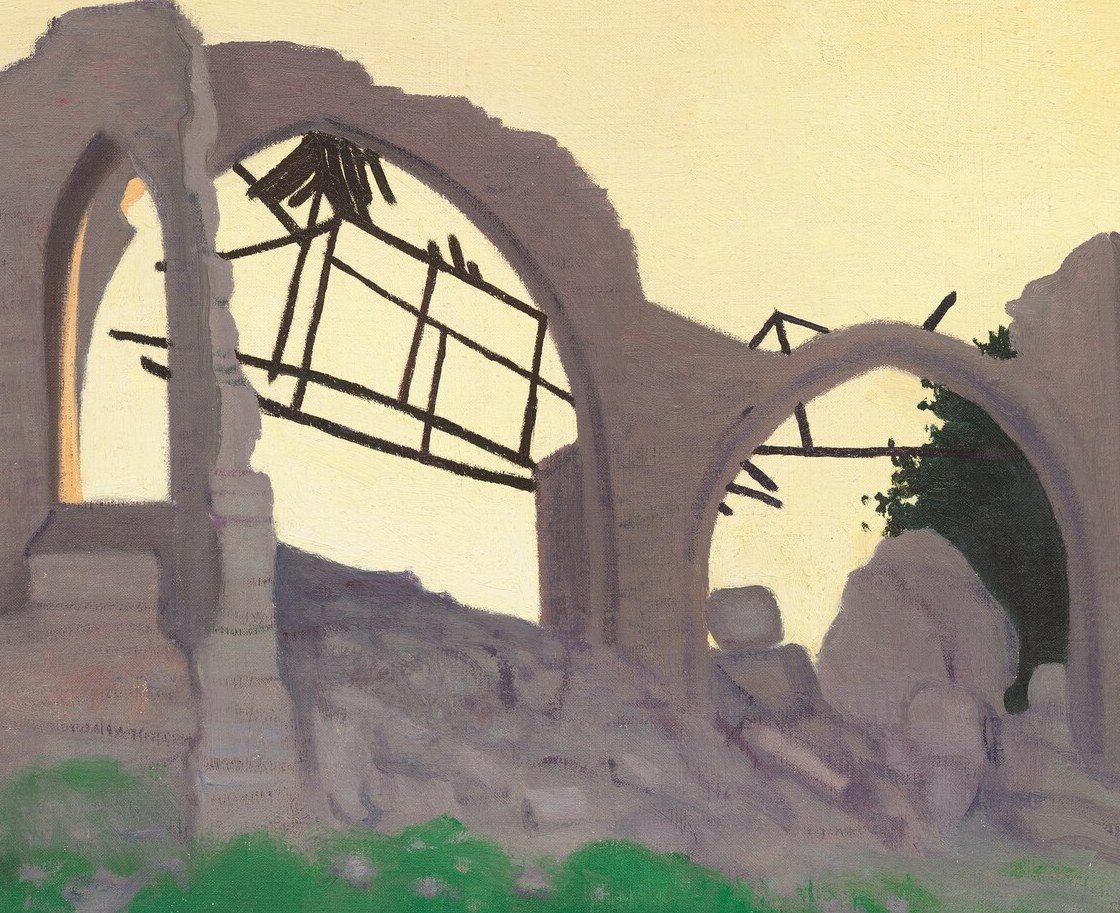
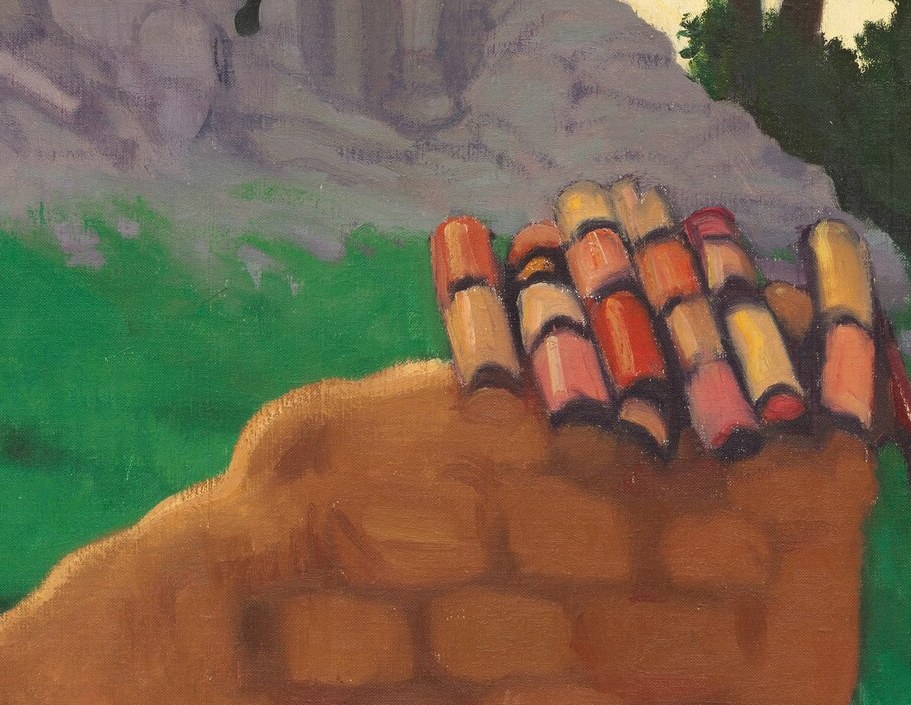
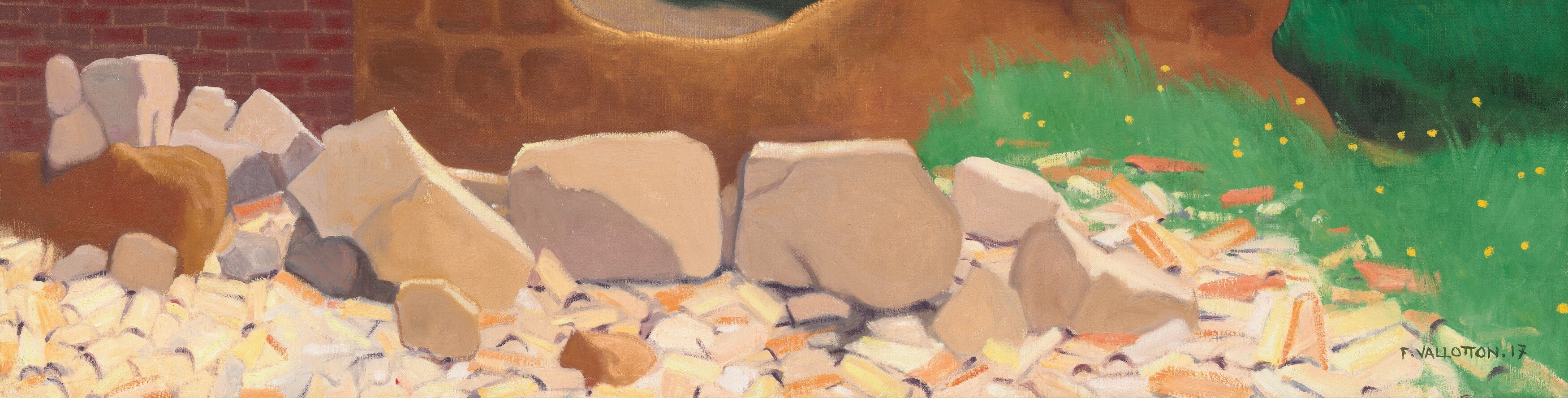
Look at how the ruined facade becomes an empty skull, its arched window framing nothing but the same oppressive yellow sky. Then find the small cluster of color on the earthen mound, the only saturated reds and blues in the entire canvas. This is likely a wreath or floral tribute left on what reads as a mass grave. Vallotton gives it to you without commentary, a detail you could easily scroll past.
Vallotton was a Swiss expatriate who had become a French citizen. When the war broke out, he was nearly fifty, too old for combat duty, but he volunteered to visit the front lines as an official war painter. What he found at Souain, a village completely destroyed in the Champagne region, disturbed him profoundly. He chose not to paint the fight but the long, stunned silence that follows. The result was a body of work that many in the French art establishment found uncomfortable: too cold, too graphic, insufficiently patriotic in its refusal to show action.
This painting sits now in a museum, but it was made in the mud. Vallotton wrote that his war landscapes were painted from memory, not from sketches, because the experience had burned into him. The toxic yellow sky isn't a sunrise. It's the light of a world that has just seen itself end. What does it do to a painter to witness this and then render it so calmly?
Details
Transcript
Look at the sky. It isn't gray. Vallotton painted it a flat, hot yellow. He was sent to the front in 1917, as a painter. He found this church with its back broken. Push through the arch. There is nothing waiting. A small cluster of color sits on the dirt mound. A wreath, flowers, or maybe uniform scraps. The painting was not meant to console you.