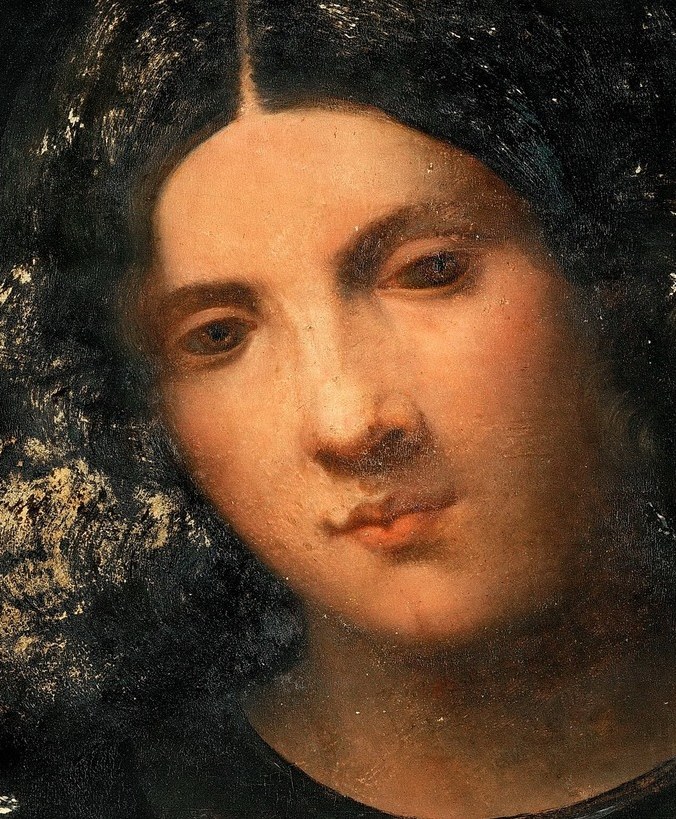
David with the Head of Goliath by Giorgione
Giorgione's 'David with the Head of Goliath,' painted around 1510 and housed at the Kunsthistorisches Museum, uses a subtle detail to convey a powerful message about victory and defeat.
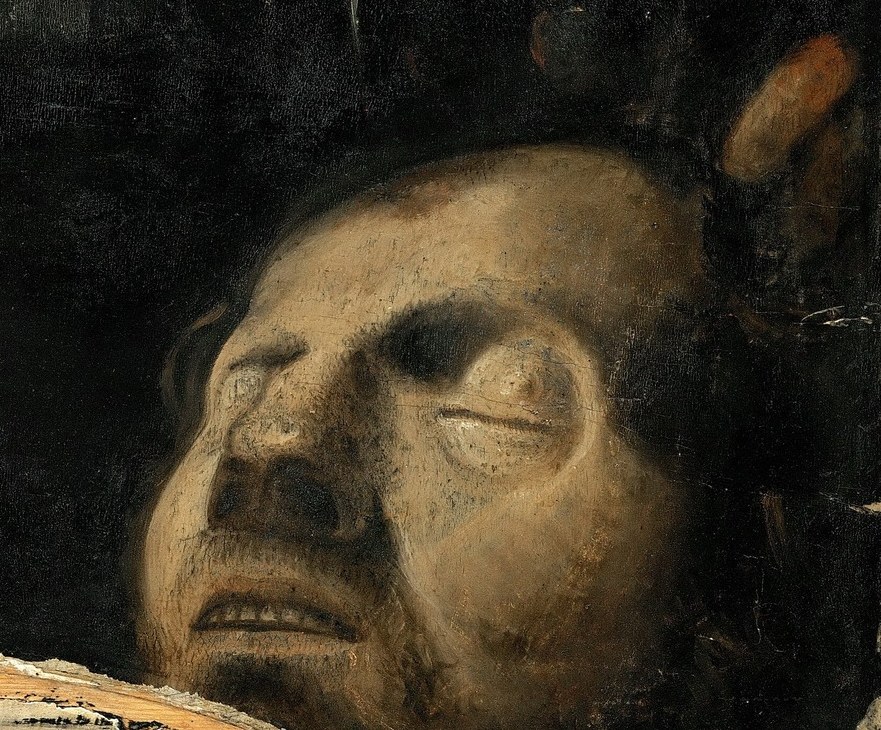
While David's youthful triumph is clear, the painter draws our attention to Goliath's severed head. The closed eye, a small but significant detail, ensures the viewer understands the finality of Goliath's defeat, underscoring themes of divine justice.
Giorgione, a master of chiaroscuro, painted this work on poplar wood. He often used soft modeling and restrained color to create a quiet, contemplative mood in his figures, distinguishing his style in vibrant Renaissance Venice. His works were typically smaller, made for private collectors rather than public display.
This painting, though its early ownership is not fully documented, has been attributed to Giorgione's mature period. What other subtle details do you notice that add to its meaning?
Details
Transcript
This painting shows David, victorious over Goliath. The painter used subtle shadow to make figures glow. David holds the sword, and his foe's severed head. Focus on Goliath's eye. It is closed. A closed eye in painting means death and finality. This detail ensures viewers understand Goliath's end.