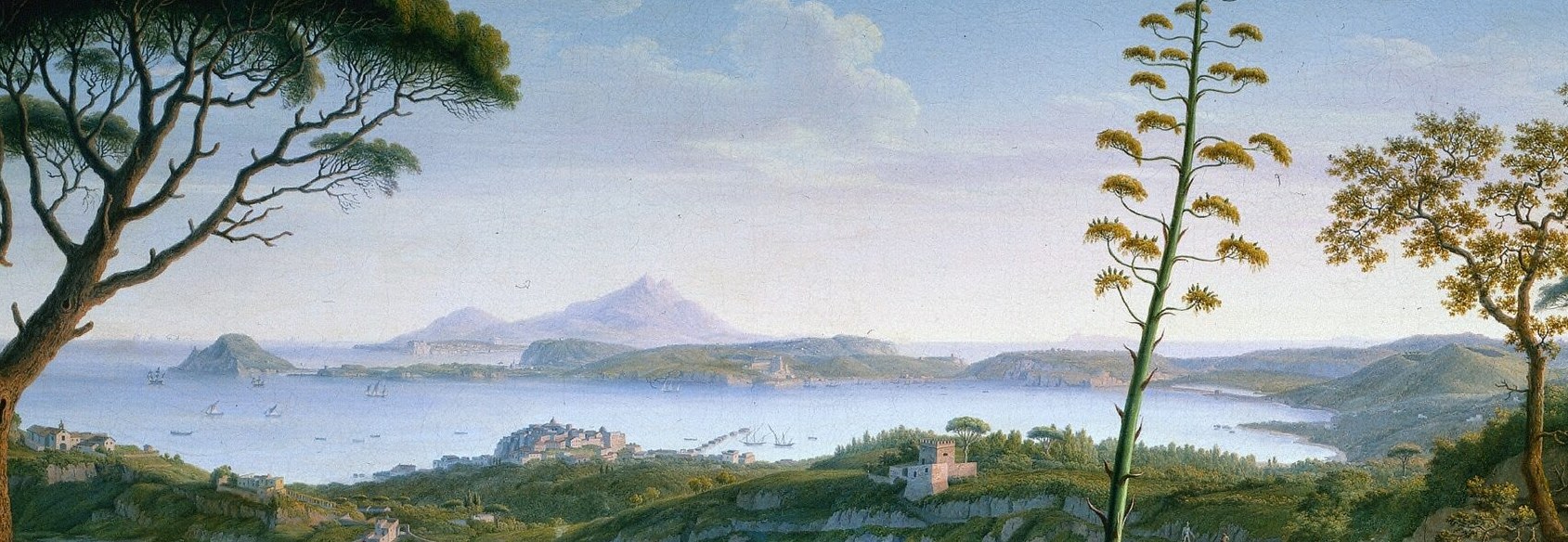
View of the Gulf of Pozzuoli from Solfatara by Jacob Philipp Hackert
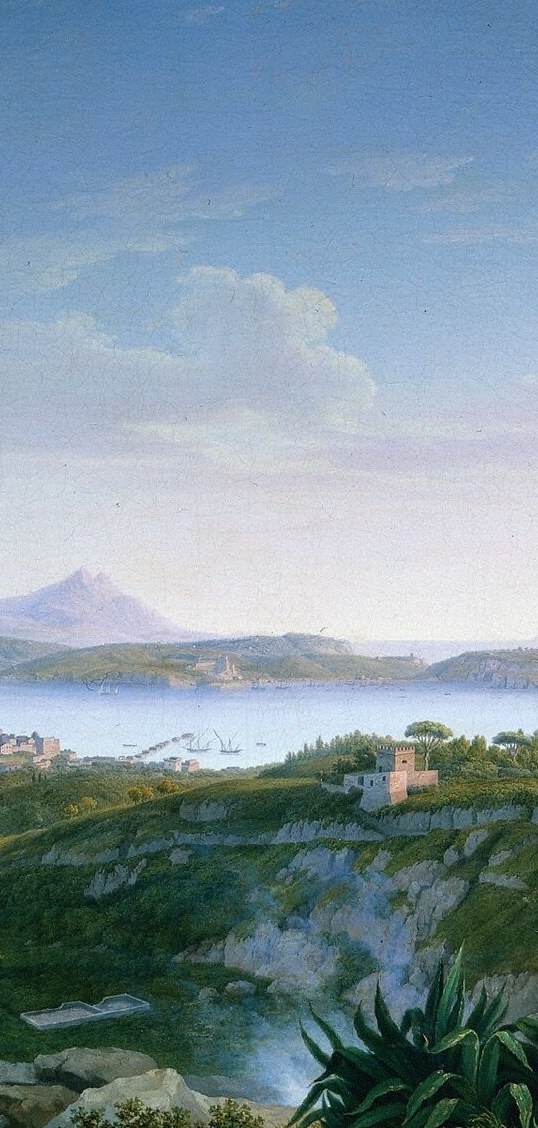
Jacob Philipp Hackert’s "View of the Gulf of Pozzuoli from Solfatara" (1803) at a private collection, is more than just a beautiful landscape. It’s a subtle commentary on Naples at the turn of the 19th century, using specific elements as visual metaphors.
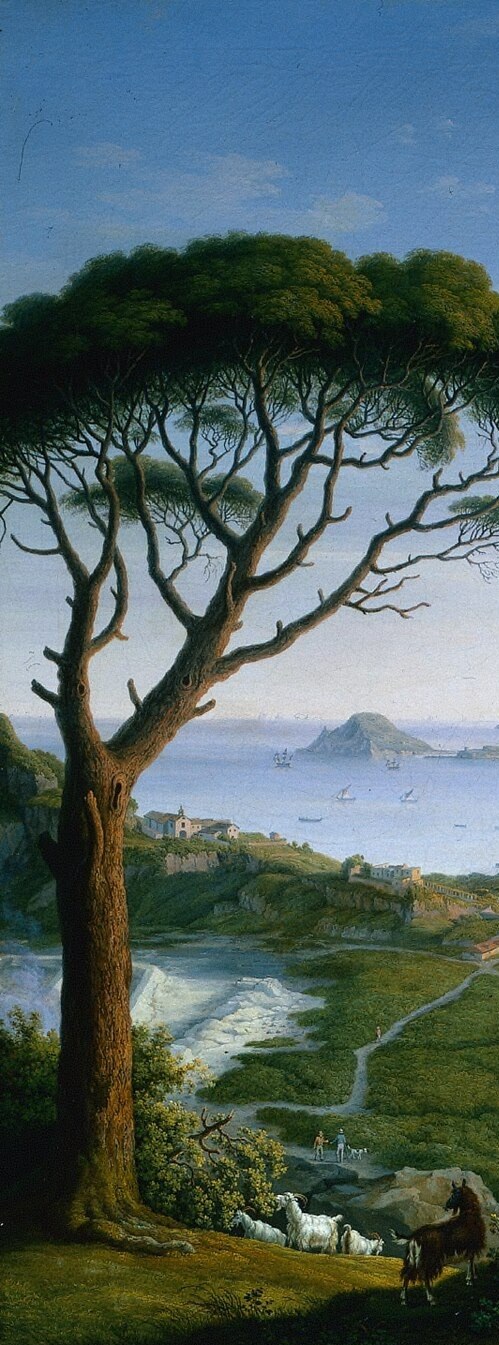
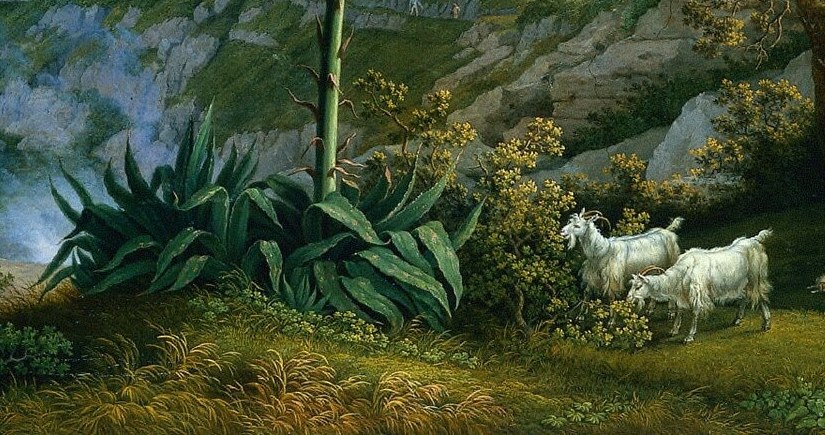
The painting foregrounds an agave plant, a striking import from the Americas, symbolizing newness, exoticism, and flourishing trade. Adjacent to it, the stone pine, with its distinctive Roman silhouette, represents the region's rich classical heritage and enduring traditions. Look also for the white goats, pastoral figures that signify peace and abundance, further enriching this symbolic landscape.
Hackert, a prominent landscape painter, spent much of his career in Italy, capturing its natural beauty with a keen eye for detail and atmosphere. This work, created in 1803, reflects a period when Naples, an ancient port city, was navigating between its historical identity and emerging global connections.
What hidden meanings do you think other landscape paintings might hold?
Details

Transcript
This isn't just a view of Naples, it's a coded message. Look at this spiky plant, an agave from the Americas. It stands for exotic imports, new life, and prosperity. Now look at the elegant stone pine, a classical Roman symbol. It represents enduring tradition and the region's ancient past. These grazing white goats are symbols of peace and plenty. Together, they paint a portrait of Naples, 1803: old, new, and thriving.