Sifting Meal, Tomb of Rekhmire by Nina M. Davies
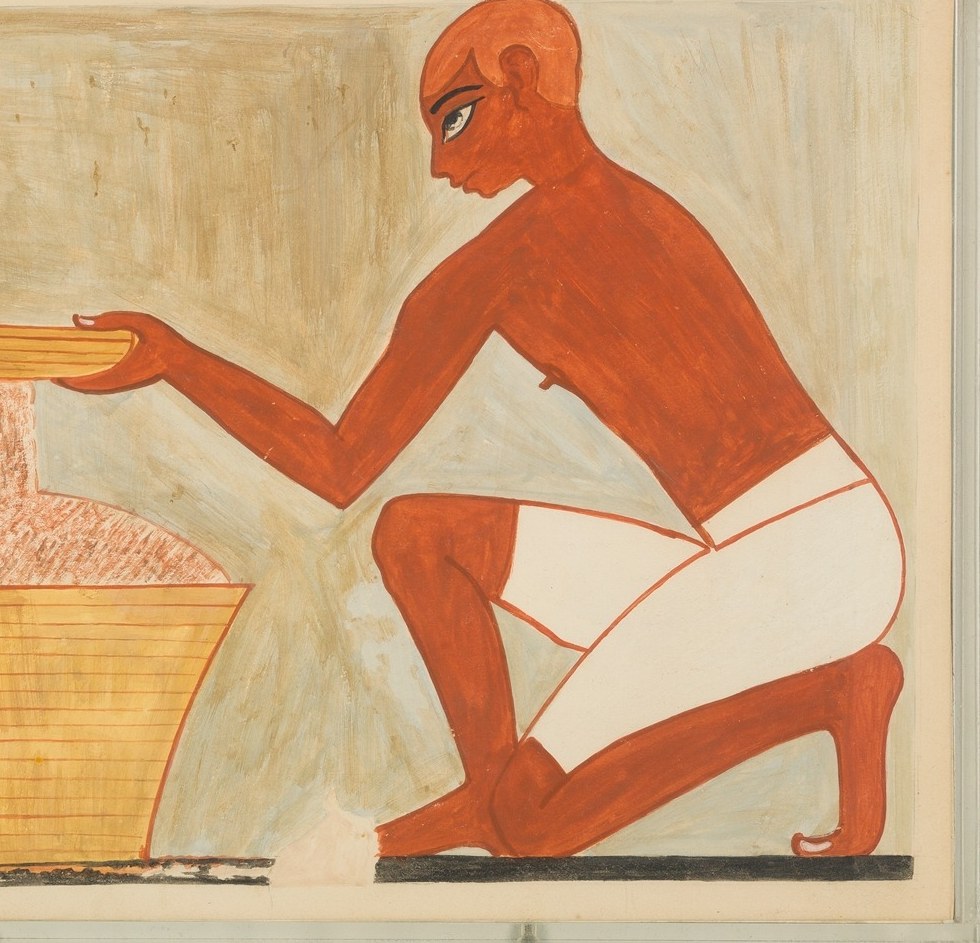
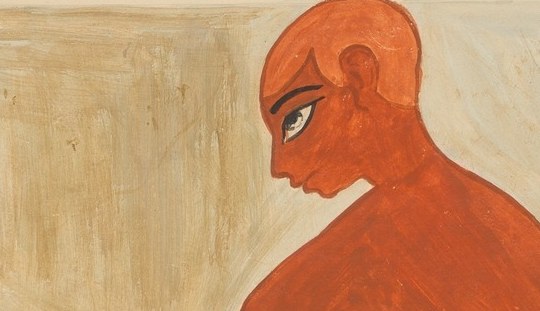
This looks like a fragment lifted straight from a 3,500-year-old Egyptian tomb. It is not. Sifting Meal, Tomb of Rekhmire is a tempera-on-paper copy painted in 1936 by the British Egyptologist Nina M. Davies. It hangs today in The Metropolitan Museum of Art, but its twin is a fragile plaster wall in a dark burial chamber near Luxor, slowly crumbling into dust.
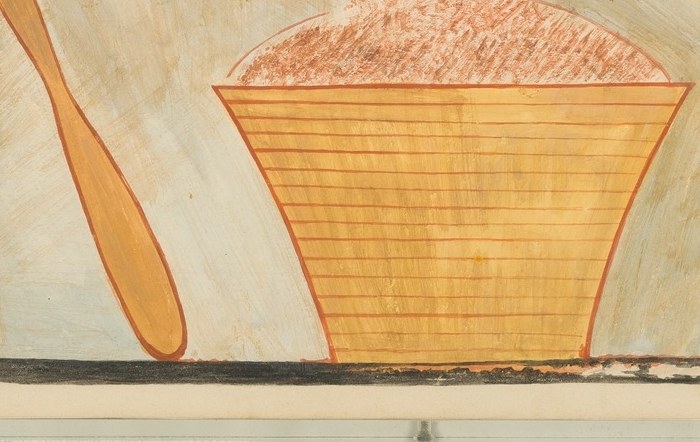
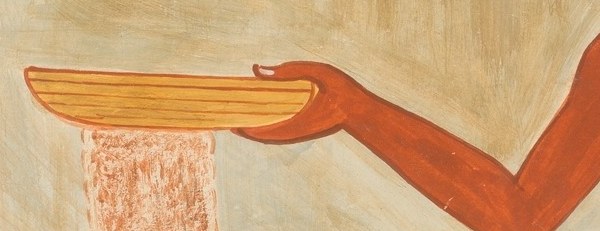
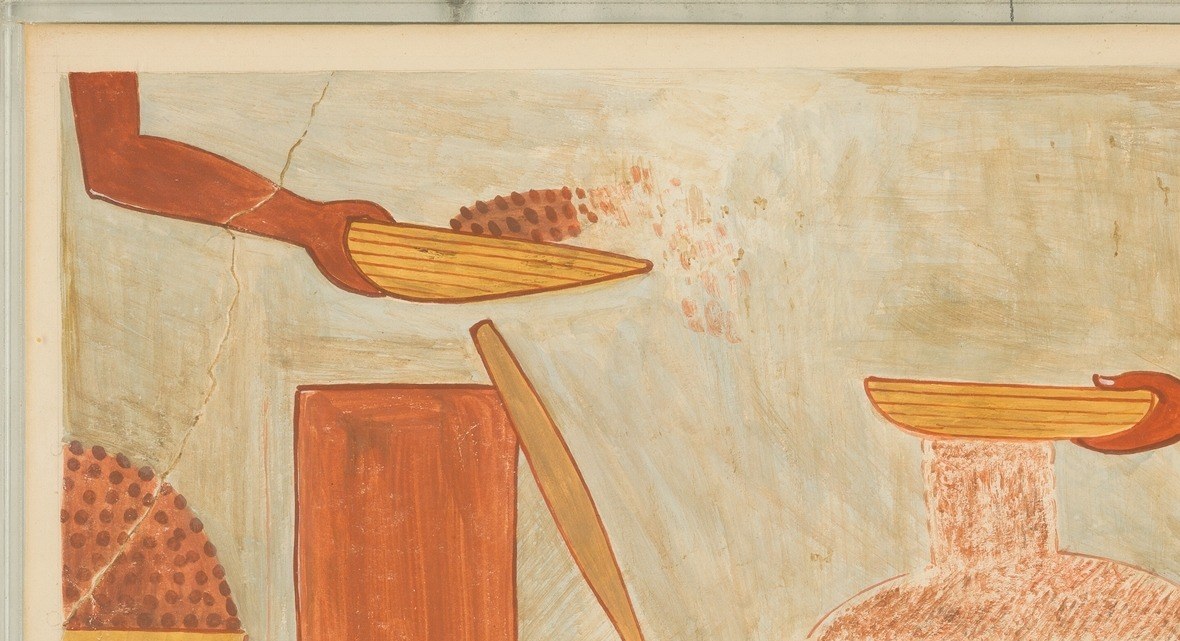
Look closely at the basket on the lower left. Davies did not just sketch its outline. She painted the individual weave of the reeds, recording an ancient craft technique with the precision of an archaeologist and the hand of an artist. Now look at the grain resting on the flat sieve. With the faintest brushwork, she captured the texture of powdered meal about to cascade into the red storage bin. These are not dramatic choices. They are documentary ones.
Nina Davies and her husband Norman worked for decades inside the tombs of the Theban necropolis, tracing scenes onto paper by candlelight before the paintings faded from exposure. The Tomb of Rekhmire, an 18th-Dynasty vizier's burial, holds some of the most detailed scenes of daily life in ancient Egypt. Davies' copies are now studied as primary sources because the originals have deteriorated so severely. Her hand has quietly become our eye into that world.
What does it mean when a copy becomes the original's survival?
Details
Transcript
A man sifts grain, frozen in the flat profile of ancient Egypt. Look at the weave of the basket beneath the sieve. Every reed is a precise record of a craft thousands of years old. Look now at the grain resting on the sieve. This isn't a tomb wall. It's tempera on paper, painted in 1936. A British woman copied this from a dark chamber in the Valley of the Kings. Nina Davies spent decades preserving Egypt's fragile walls before they vanished.