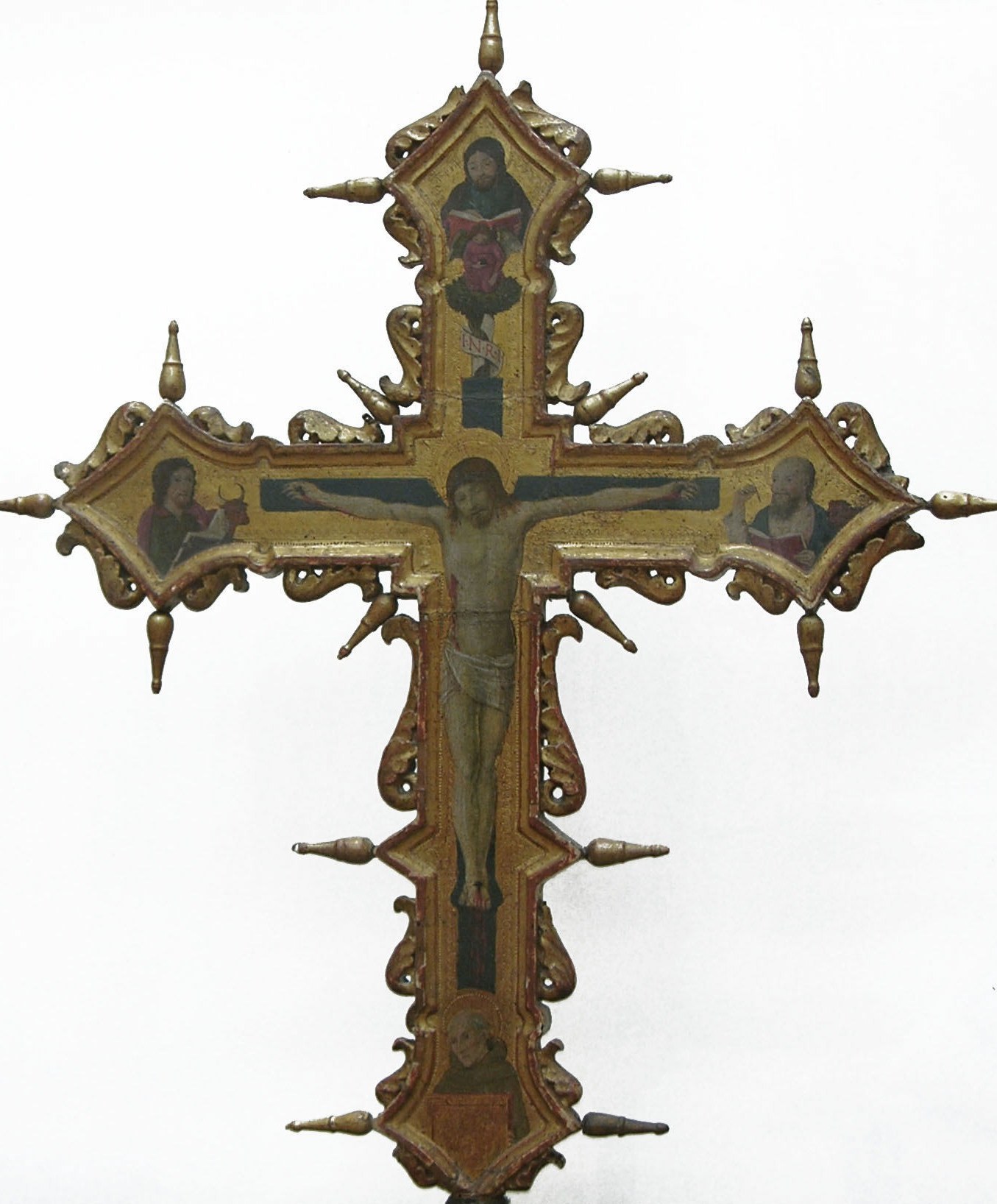
Processional Crucifix by Pietro di Francesco degli Orioli
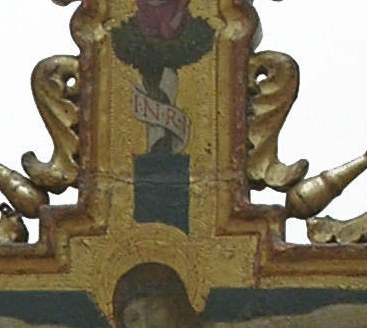
Pietro di Francesco degli Orioli painted this processional crucifix in Siena around 1480. Tempera on panel, meant not for a church wall but for movement. During feast days, clergy carried it upright through the streets, the gold leaf throwing sunlight back at the crowd. It was civic theater as much as liturgy.
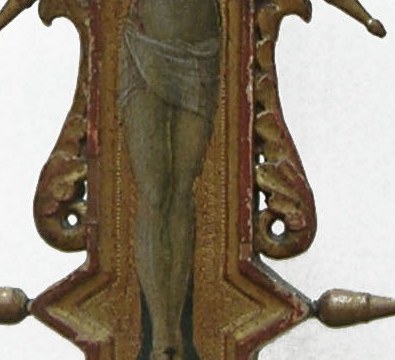
Look first at Christ's face. Orioli chose stillness over suffering, a serene acceptance that marks this as distinctly Sienese. Then look at the white loincloth. Tempera made from egg yolk dries in minutes. Those precise, flowing folds had to be laid down fast, with no second chances, and they survive here intact after five centuries.
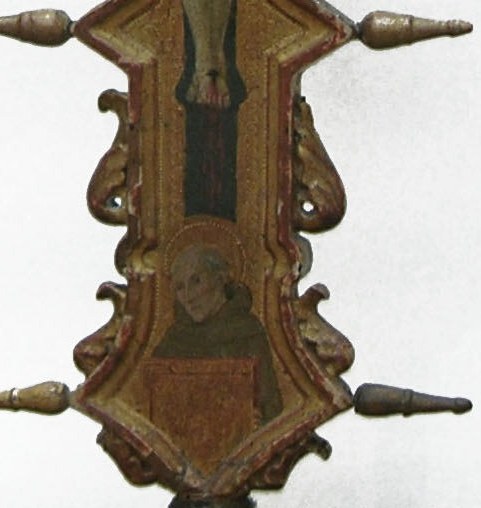
Now glance at the very bottom terminal of the cross, the panel most easily missed. It likely holds Mary Magdalene or a kneeling patron, a witness placed where only someone holding the cross or pausing in prayer would ever see it. The two flanking figures hold books, probably evangelists, forming a small private audience within a public object.
Pietro di Francesco degli Orioli died young, around 1496, and left a small body of work. This crucifix is an object built to move through a city, and in a sense it still does: it carries a whole civic world with it.
Details

Transcript
It was not made for a wall. This cross was carried, upright, through the streets of Siena. Gold leaf caught the sun while the whole city watched. The painter gave Christ a face of utter stillness. No agony, no twisting body. A Sienese acceptance of death. Seen up close, the loincloth is a test of speed and nerve. Tempera dries fast. Those white folds were painted in a single sitting. Below Christ, overlooked by the crowd: a single witness.