Flood at Port-Marly by Sisley, Alfred
Alfred Sisley's "Flood at Port-Marly," painted in 1872, is a record of a disaster told through absolute stillness. The tea-brown water filling the foreground is not a river or a canal, it is the main street of Port-Marly, a small town on the Seine west of Paris, submerged by seasonal flooding. The painting hangs in the National Gallery of Art in Washington, D.C.
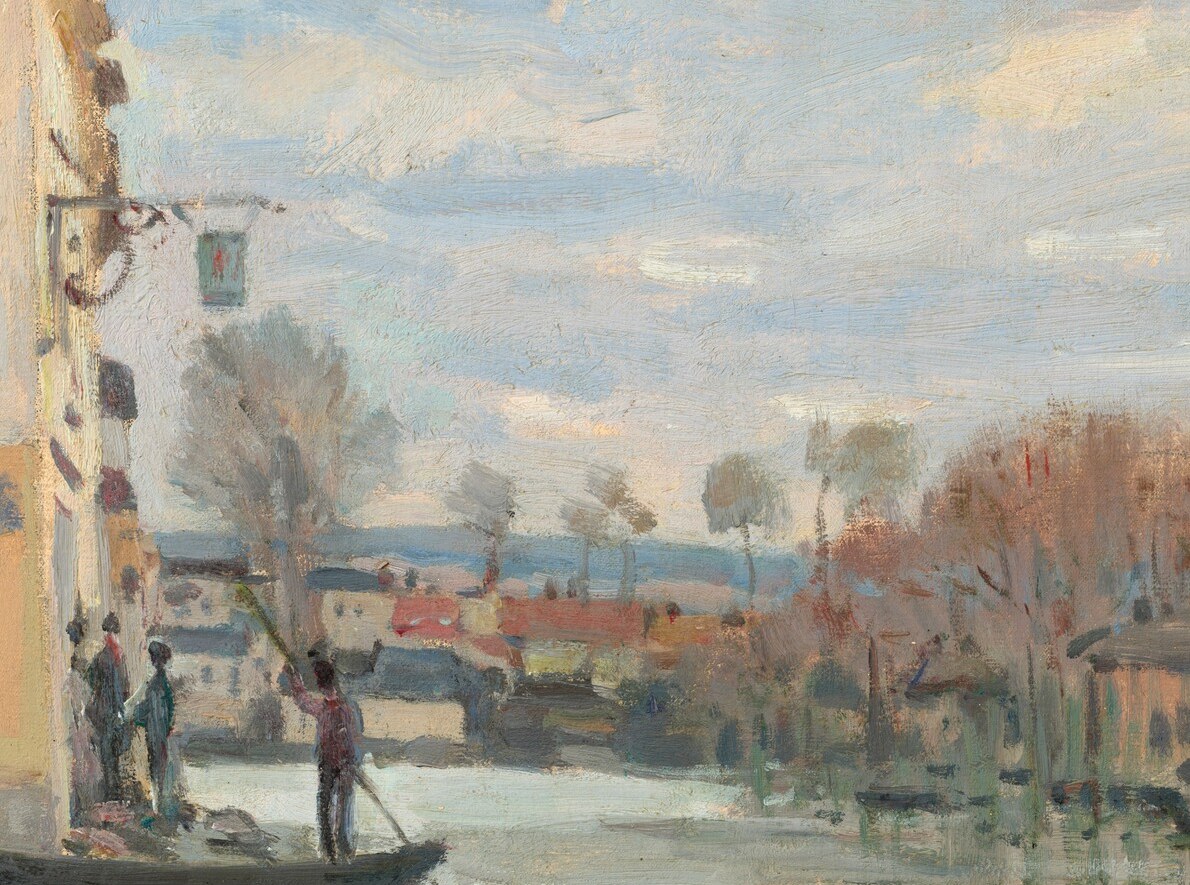
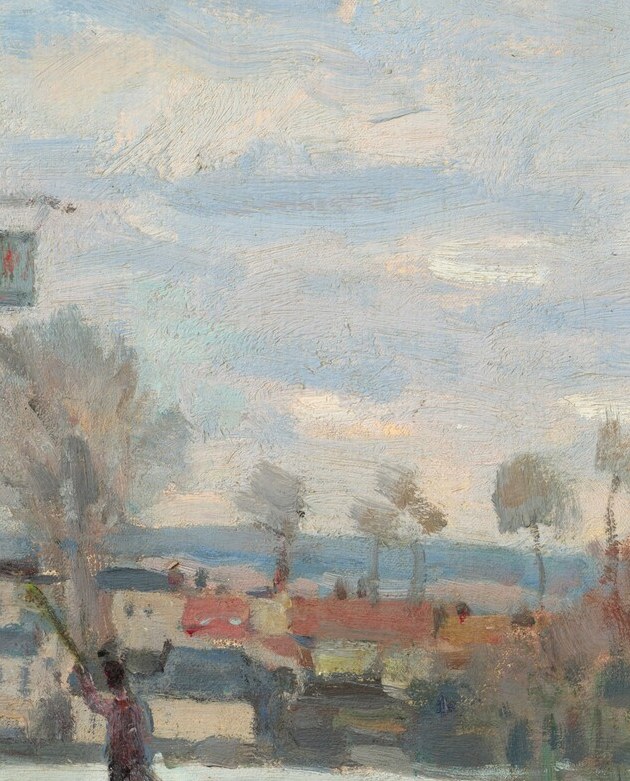
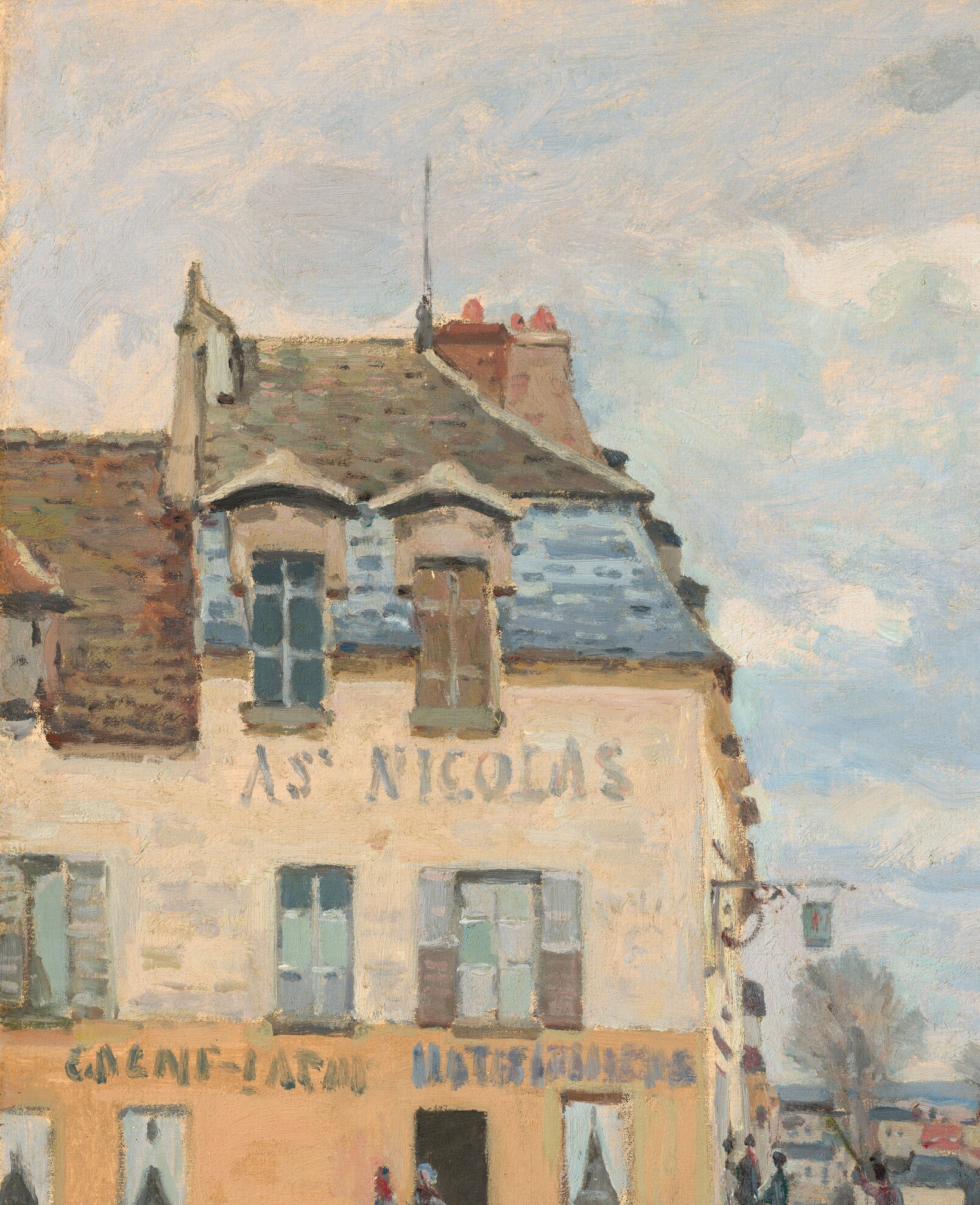
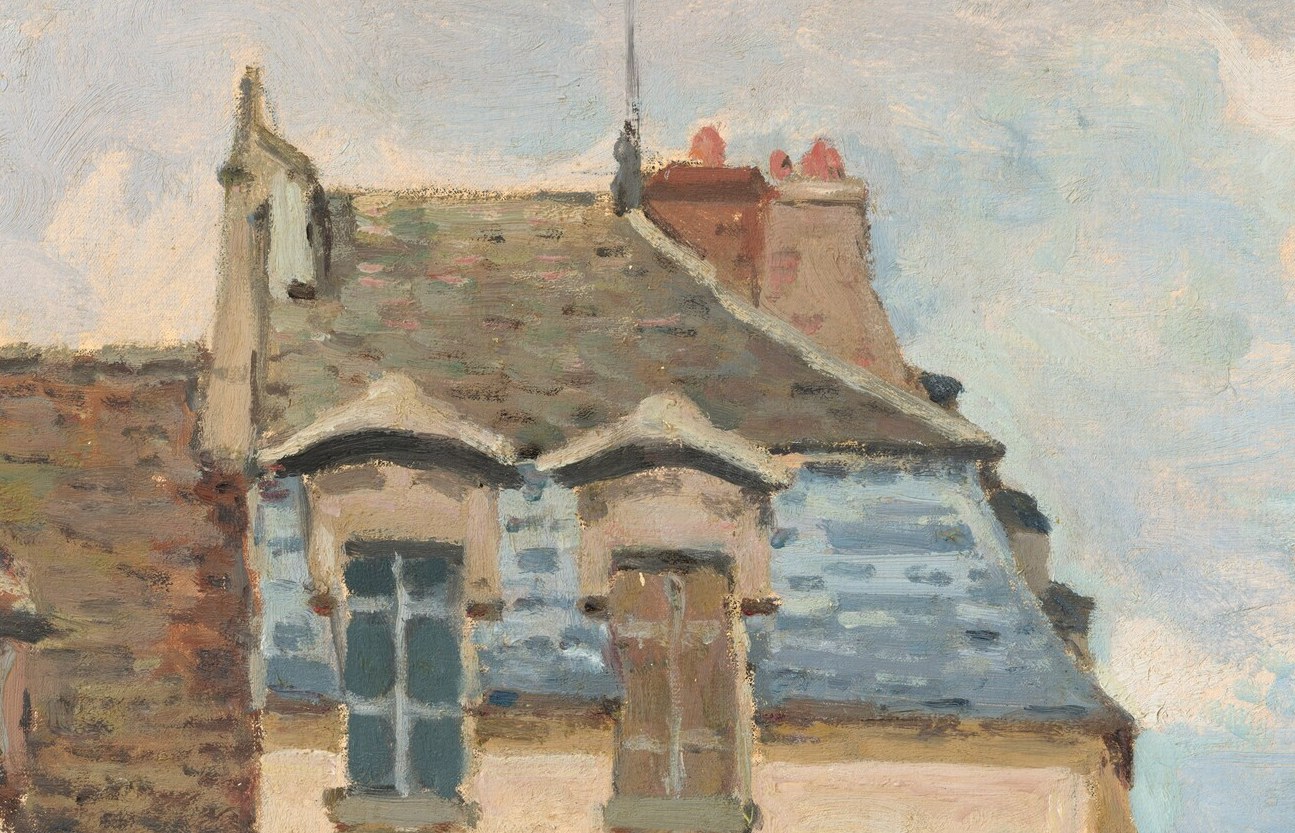
A flatboat carrying two men glides through the center of the scene, their calm rowing suggesting this was a familiar event rather than a catastrophe. Look closely at the facade of the cream-yellow building on the left: the painted sign reads "Au Nicolas," naming a real riverside merchant whose shop stood here. Behind it, a second roofline is partially visible, a detail easily missed that doubles the implied reach of the water.
Sisley was the most consistent of the Impressionists, dedicated almost entirely to landscape painting outdoors. He returned to this same vantage point day after day, waiting for the floodwater to settle into a glassy stillness. His goal was not drama but atmosphere, the way a flooded street becomes a second sky. The warm umber of the water bleeding into the cool silver of the overcast horizon is the painting's quiet triumph.
The shutters on the building are closed. Someone chose to stay. It is easy to scroll past a painting that refuses to shout, but once you notice the sign and the second roofline, the scene expands, a whole drowned neighborhood reflected in a single patch of still water.
Details

Transcript
It looks like a quiet winter day on the water. But this is not a river. It is a street. The two men row where carriages once passed. Look up, to the left. The sign reads "Au Nicolas", a real shop. Now a second roofline emerges behind it, deeper still. Sisley painted this from the same spot over several days. He waited for the water to become a perfect mirror.