The Layette by Robinson, Theodore
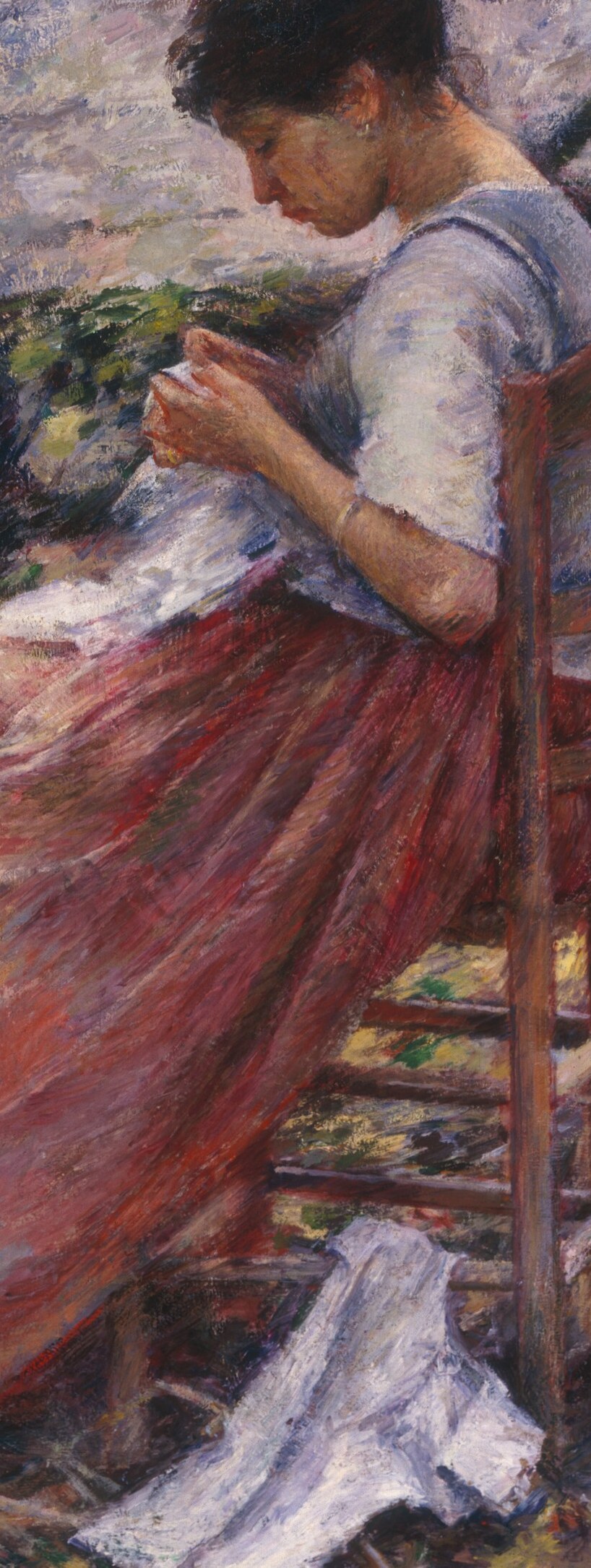
The Layette, painted by Theodore Robinson in 1892, is a beautiful example of American Impressionism, housed in an unknown museum. It captures a moment of quiet domesticity and maternal anticipation, blending an intimate scene with a vibrant natural setting.
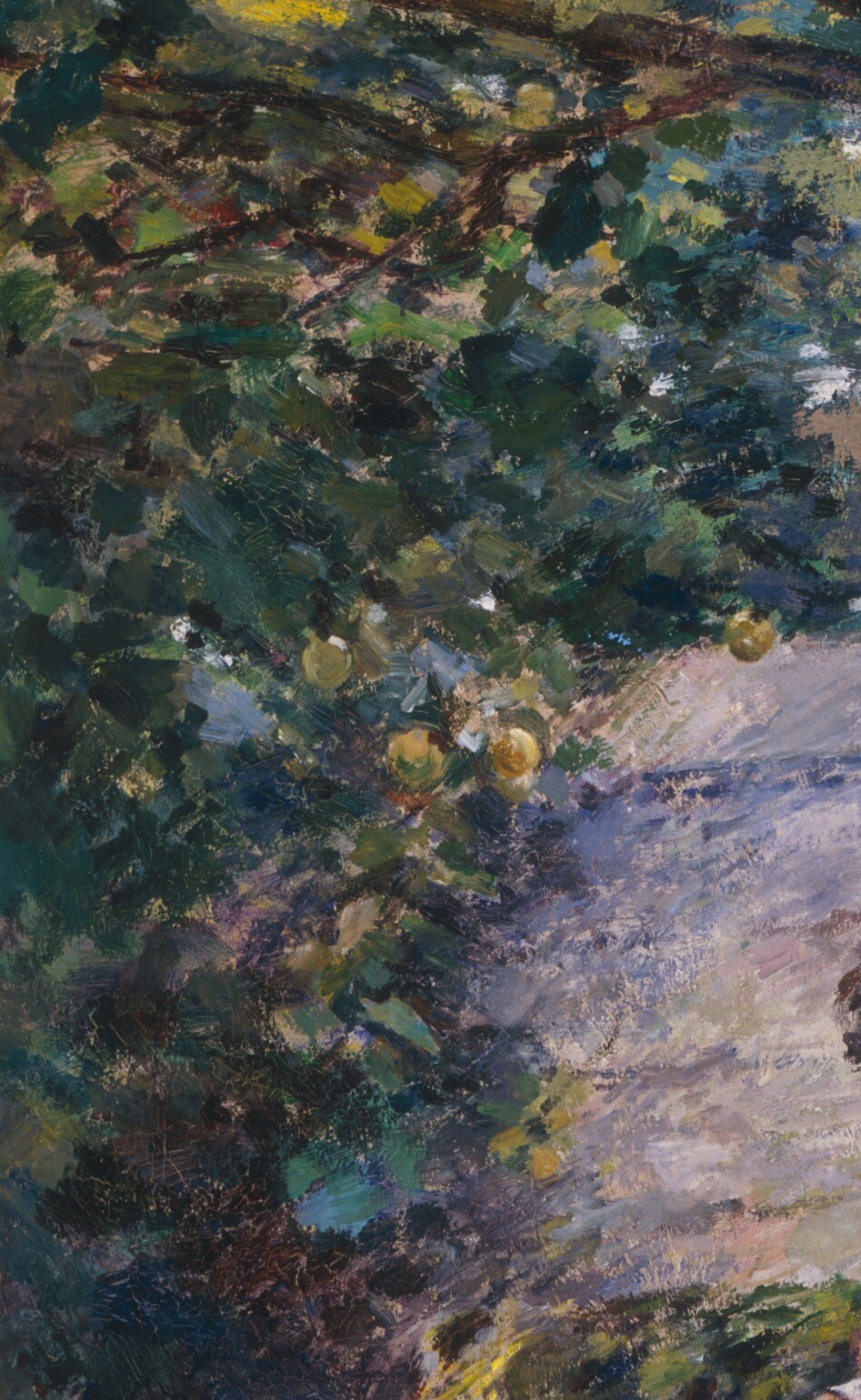
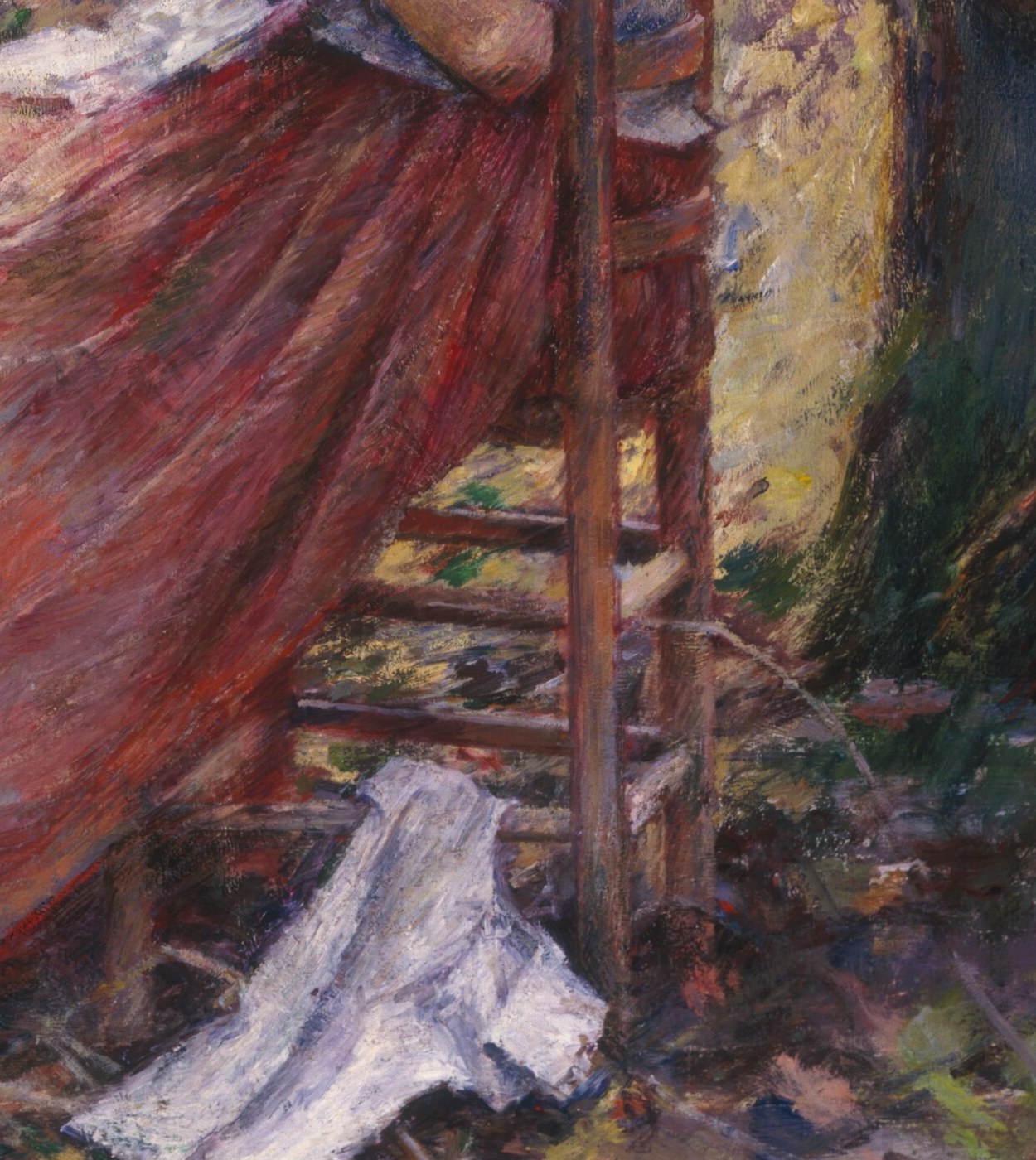
Look closely at the woman's hands, diligently sewing a layette for an infant. The delicate white garment on the ground further emphasizes the preparations for a new arrival, while dappled sunlight filters through lush foliage, creating a serene atmosphere.
Robinson, an American painter, was a key figure in introducing Impressionist techniques to the United States after studying under Claude Monet in France. This work reflects his ability to combine the loose brushwork and attention to light of French Impressionism with American genre scenes.
It’s a peaceful portrayal of everyday life, imbued with a sense of hopeful expectation. What details do you notice first?
Details
Transcript
This painter was an American Impressionist, working in 1892. The woman is sewing a layette, clothes for a newborn. Her hands show the careful preparation for a new life. The white garment on the ground also awaits the baby. Robinson, the painter, studied under Monet in France. This painting captures a quiet moment of maternal anticipation.