Young Woman with a Turban by Jacques Louis David
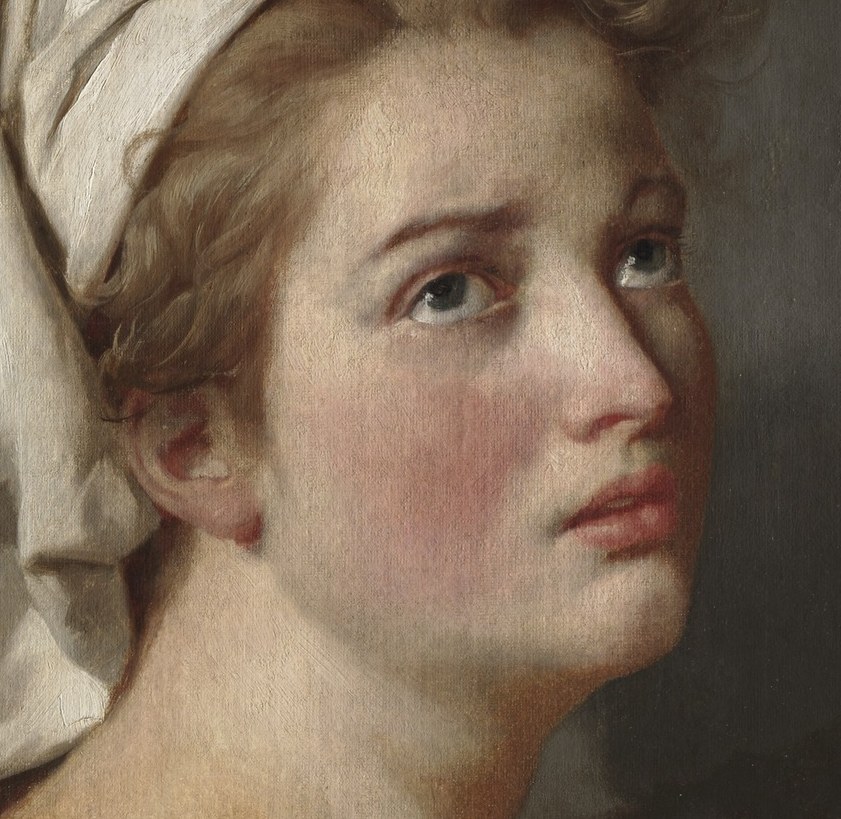
Jacques-Louis David’s 'Young Woman with a Turban', painted around 1780, captures a moment of deep, internal reflection. This small oil painting is a striking example of a 'tête d'expression', where the artist focused on conveying emotion and an inner state rather than elaborate narrative.
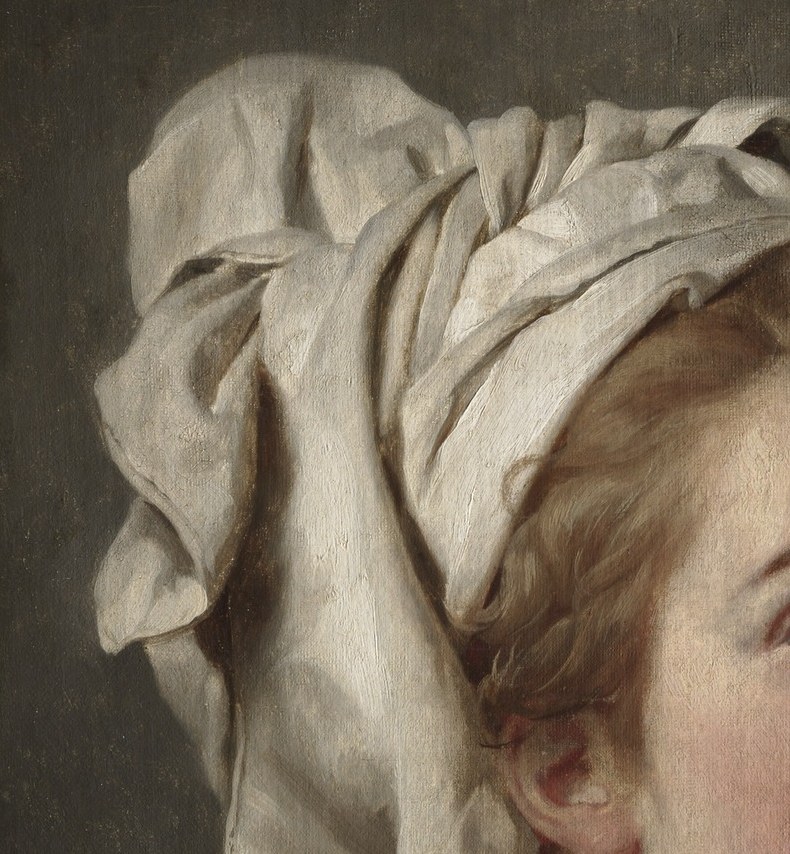
Look closely at her face: the subtle highlights in her eyes, the gentle parting of her lips, and the soft blush on her cheek all contribute to a sense of profound contemplation. The simple turban and muted garment draw all attention to her expression, inviting viewers to share in her quiet world.
David, a prominent Neoclassical painter, created this work early in his career, before his more famous political paintings. It demonstrates his early mastery of psychological presence and emotional nuance, a departure from the more frivolous Rococo style that preceded him.
The painting asks us to pause and consider the unspoken feelings held within a single, expressive face. What do you imagine she is thinking?
Details
Transcript
This young woman painted in 1780 carries a quiet intensity. Her gaze is directed upward, as if lost in thought. The subtle blush on her cheek adds warmth, a touch of life. This is a 'tête d'expression', a study of feeling and mood. Her eyes are rendered with great depth, conveying vulnerability. The painter was Jacques-Louis David, just beginning his career.