Funeral of Black Hawk - Saukie by Catlin, George
George Catlin's *Funeral of Black Hawk - Saukie*, painted around 1865, offers a rare glimpse into a specific cultural event of the Sauk people. This oil on card, mounted on paperboard, is part of the extensive collection at the Smithsonian American Art Museum, where Catlin's work is celebrated for its ethnographic detail.
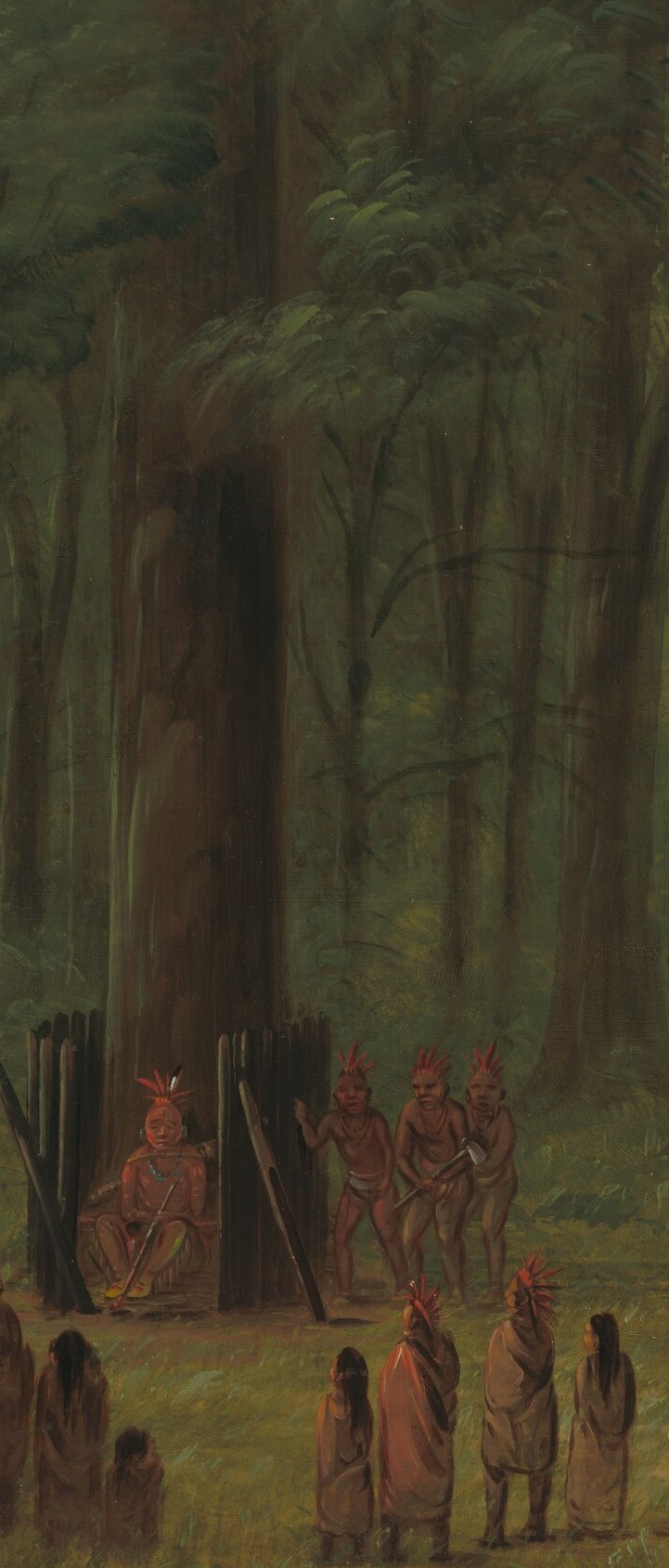
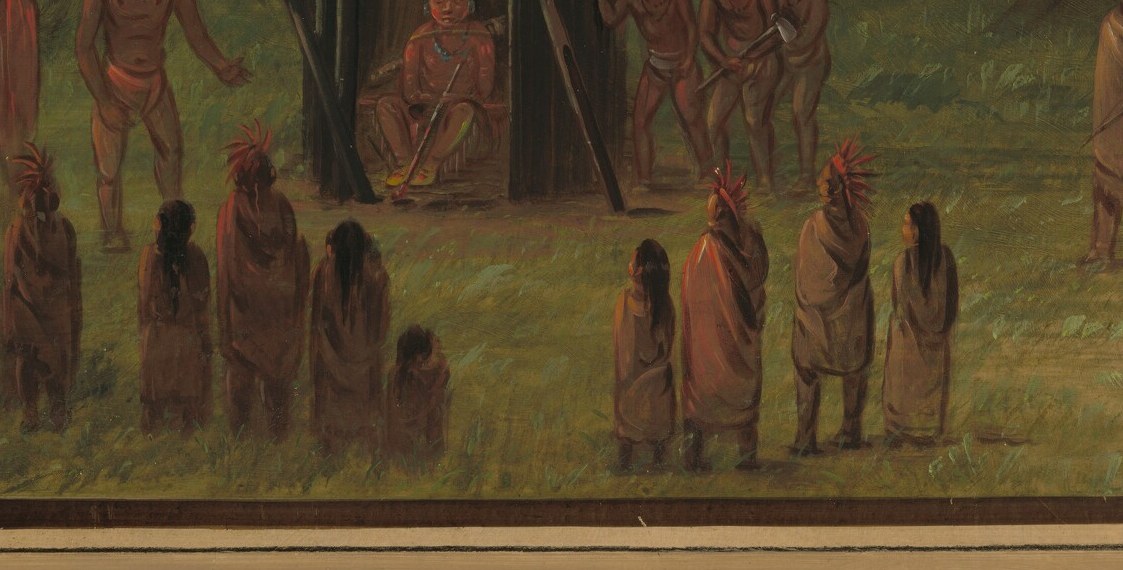
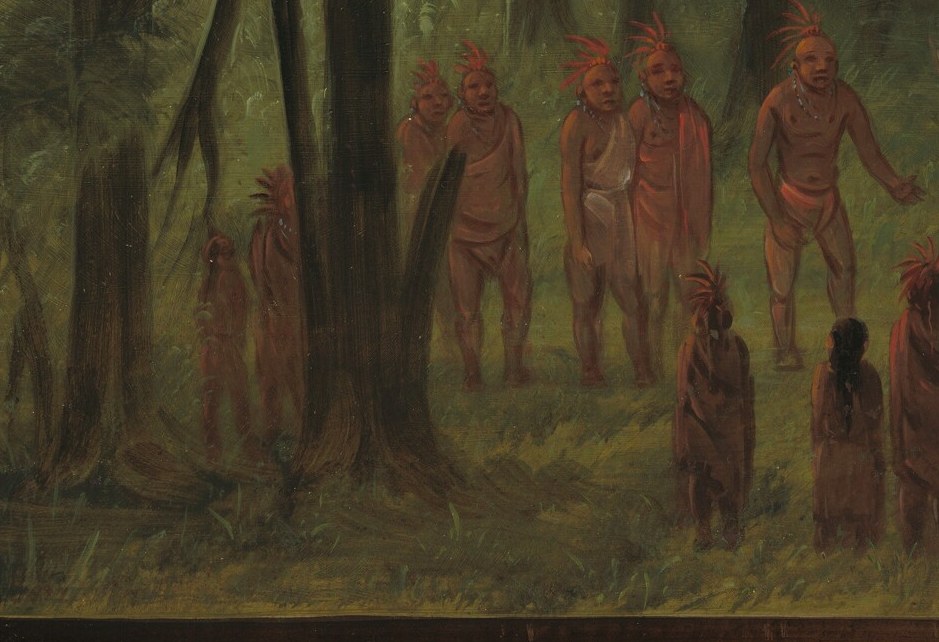
The painting centers on a shrouded body, surrounded by a community gathered around a significant tree. Notice the solemn expressions and varied postures of the figures, reflecting the gravity of the occasion. Catlin's brushstrokes, though brisk, capture the human element and communal aspect of the funeral.
Catlin, an American lawyer and painter, dedicated decades to documenting Native American life on the American frontier. He traveled extensively during the 1830s, creating portraits and scenes that depict the customs and traditions of various Indigenous groups. This work exemplifies his commitment to chronicling a vanishing way of life.
His paintings provide invaluable historical records, preserving moments that might otherwise be lost. What details in the scene particularly resonate with you?
Details
Transcript
This painting records a funeral for a Sauk leader. The artist, George Catlin, documented Native American life. A shrouded body lies at the center of the gathering. Villagers surround a prominent tree, a sacred place. Their varied stances show respect for the deceased chief. This work was created late in Catlin's career, around 1865. He chronicled Indigenous customs for decades.