Game piece with poultry by Clara Peeters
One of the most remarkable things about "Game piece with poultry" by Clara Peeters, painted around 1611 and now housed at the Museo del Prado, is the artist herself. Peeters was a Flemish still-life painter and one of very few women artists working professionally in the 17th century.
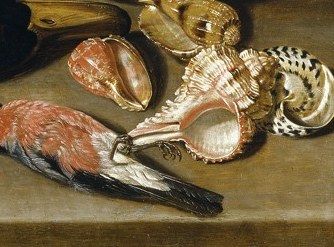
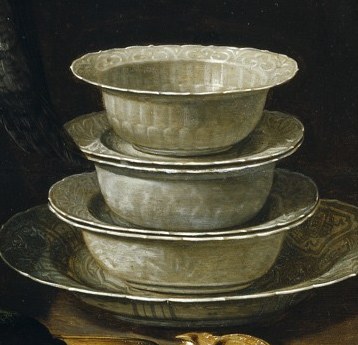
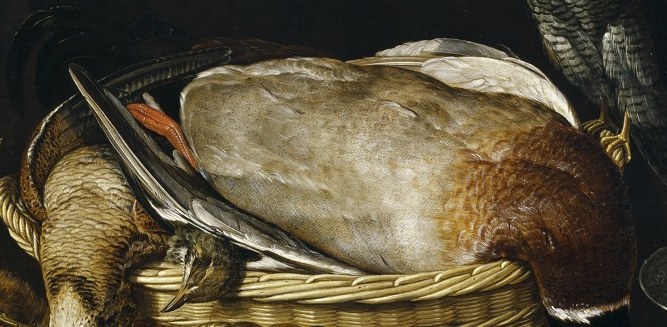
Her works are celebrated for their meticulous detail. Notice the intricate textures of the dead game birds, the delicate stack of Kraak porcelain bowls, and the exotic collection of seashells. Each element is rendered with a precision that was typical of the Dutch Golden Age.
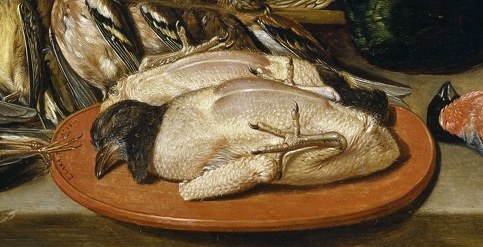
Yet, what truly makes this painting special is a hidden detail: a faint inscription, '11.B.', subtly placed on the cooked bird on the plate. This mark is believed to be Peeters' signature, a quiet but powerful assertion of her authorship in an era when opportunities for women artists were severely limited.
Peeters' ability to achieve such detail and recognition, despite the societal constraints, makes her a pivotal figure in art history. What other hidden signatures might be waiting to be discovered in her works?
Details
Transcript
This painting is over 400 years old, by Clara Peeters. She was one of the few women artists of her time. Her still lifes are full of rich details, like these shells. Or this stack of expensive Chinese porcelain bowls. But look closely at the cooked bird on the plate. She hid her own faint signature: '11.B.' A subtle mark, claiming her work in a world that restricted women.