Endymion Porter (1587–1649) by John Hoskins
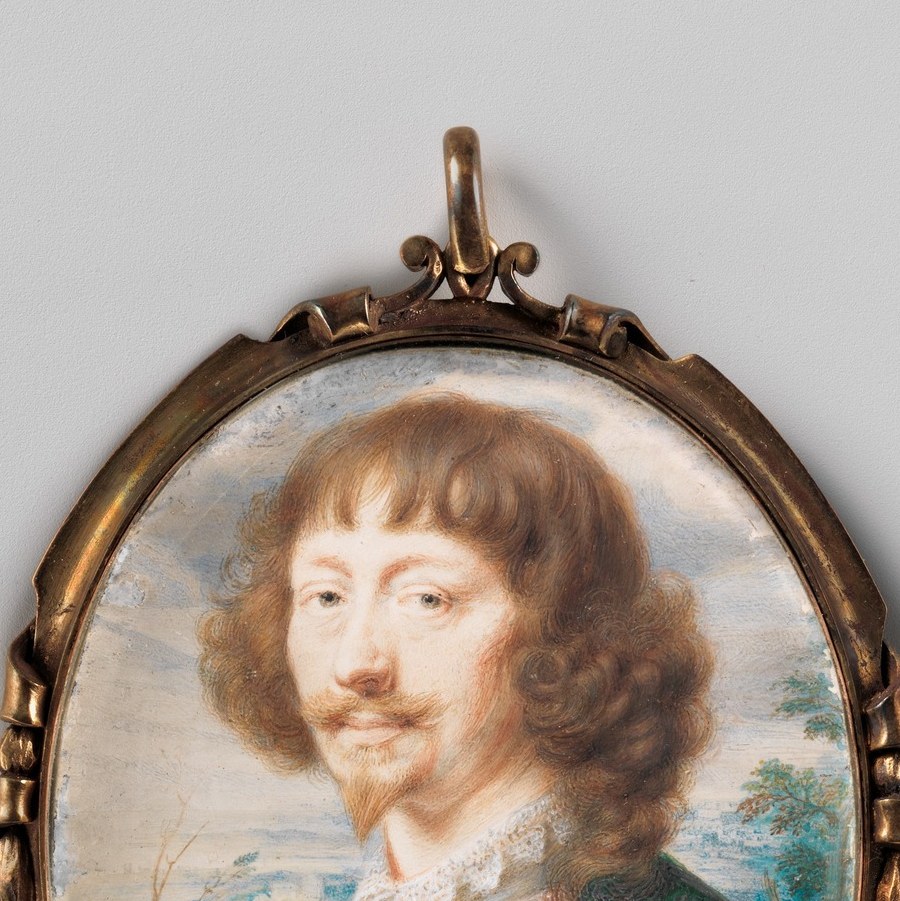
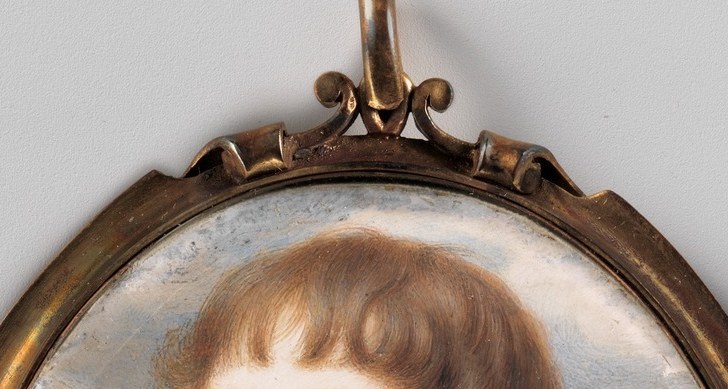
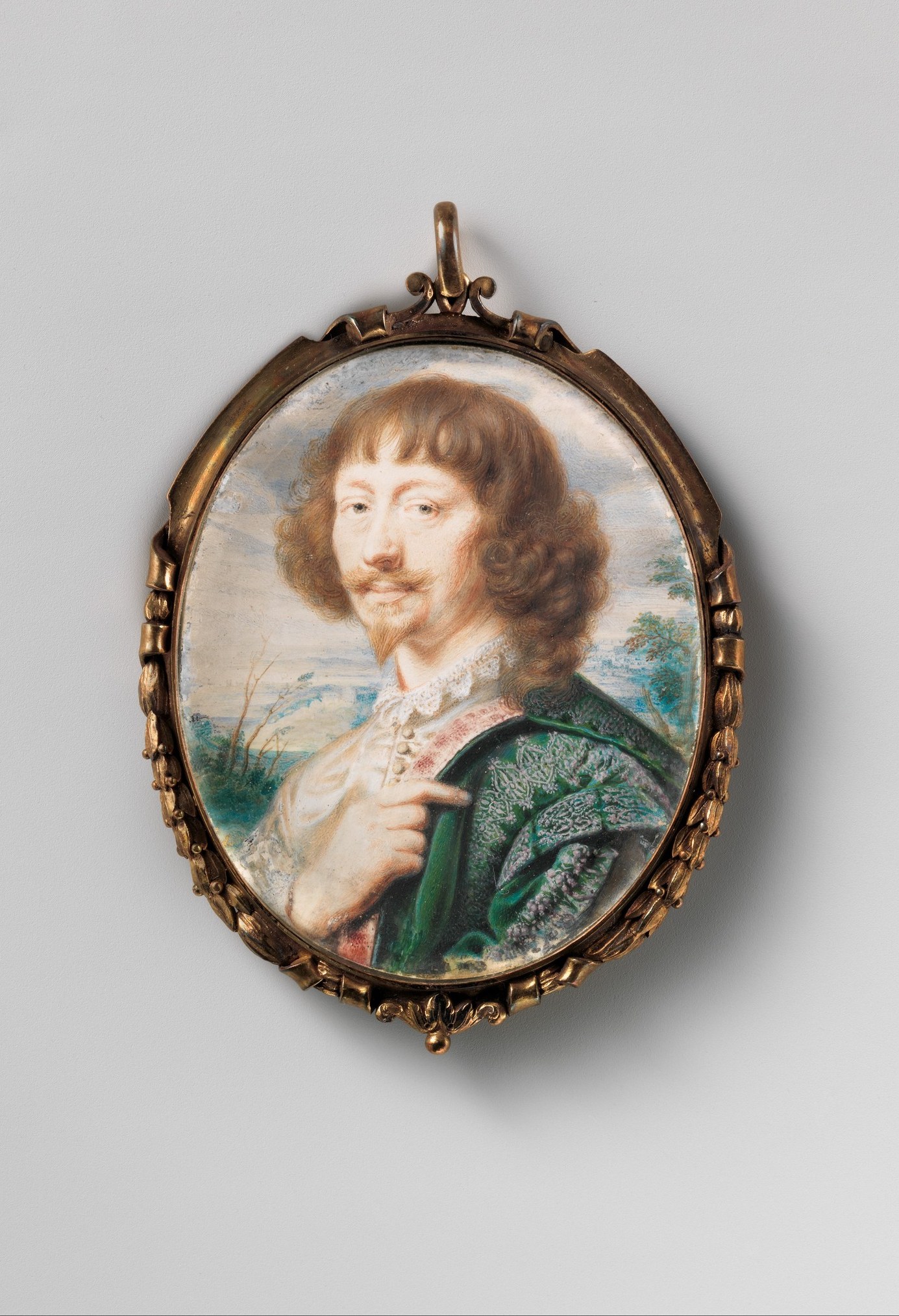
This is 'Endymion Porter' by John Hoskins, painted around 1630 and held at The Metropolitan Museum of Art. The first thing to understand is that this is not merely a small painting, it is a wearable locket miniature, complete with a suspension loop for a ribbon or chain. Porter was Charles I's trusted art agent, the man who traveled Europe buying Titians, Rubenses, and Van Dycks for the Royal Collection. This portrait may well have traveled as a diplomatic favour, gifted to an ambassador or worn as a mark of royal access.
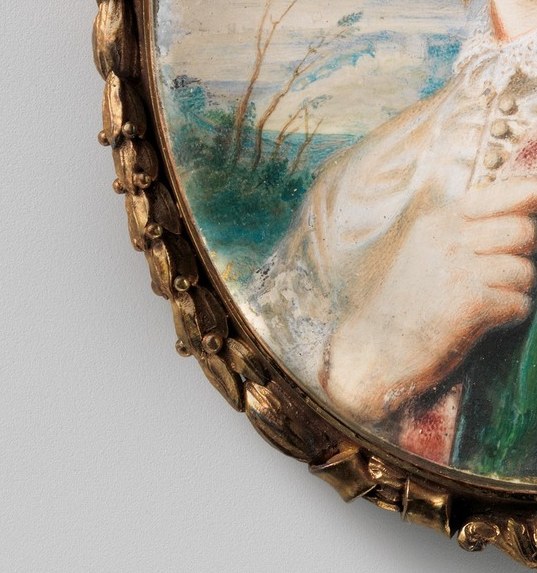
Look at the paper folded in his right hand, a standard prop for a man of affairs, and the gesturing left hand that animates the portrait beyond a static bust. Hoskins rendered the lace collar and green slashed doublet with extraordinary precision on vellum, a surface that rewards magnification. The faint blue-green landscape in the background, with hints of trees or architectural forms, is a Flemish-influenced touch that elevates this miniature above a plain dark ground common in earlier English miniatures.
Hoskins was the preeminent miniaturist of the Caroline court, working in watercolour on vellum at an intimate scale. Porter would later be ruined by the Civil War, he followed the king into exile and died in poverty. The gilded frame with its foliate cartouche at the base is original and of high quality; the loop and the goldsmith work together tell us this was an object meant to be seen and handled up close, a token of political intimacy rather than a picture hung on a wall.
A portrait small enough to close in your hand, and weighty enough to seal an alliance. Next time you see a locket, look for the loop.
Details
Transcript
He looks like any confident courtier of the 1630s. Endymion Porter was Charles I's art agent, he bought the king's Titians and Van Dycks. His hand gestures as if mid-conversation, a man used to persuasion. But the real story is the gold ring at the top. This portrait was made to be worn, a locket, a favour, an intimate diplomatic token. Now look closely at the paper he's holding.