Farmhouse by Vincent van Gogh
Vincent van Gogh’s "Farmhouse" (1896), held at the Rijksmuseum, showcases his deep interest in humble, working-class settings and the dignity of rural life.
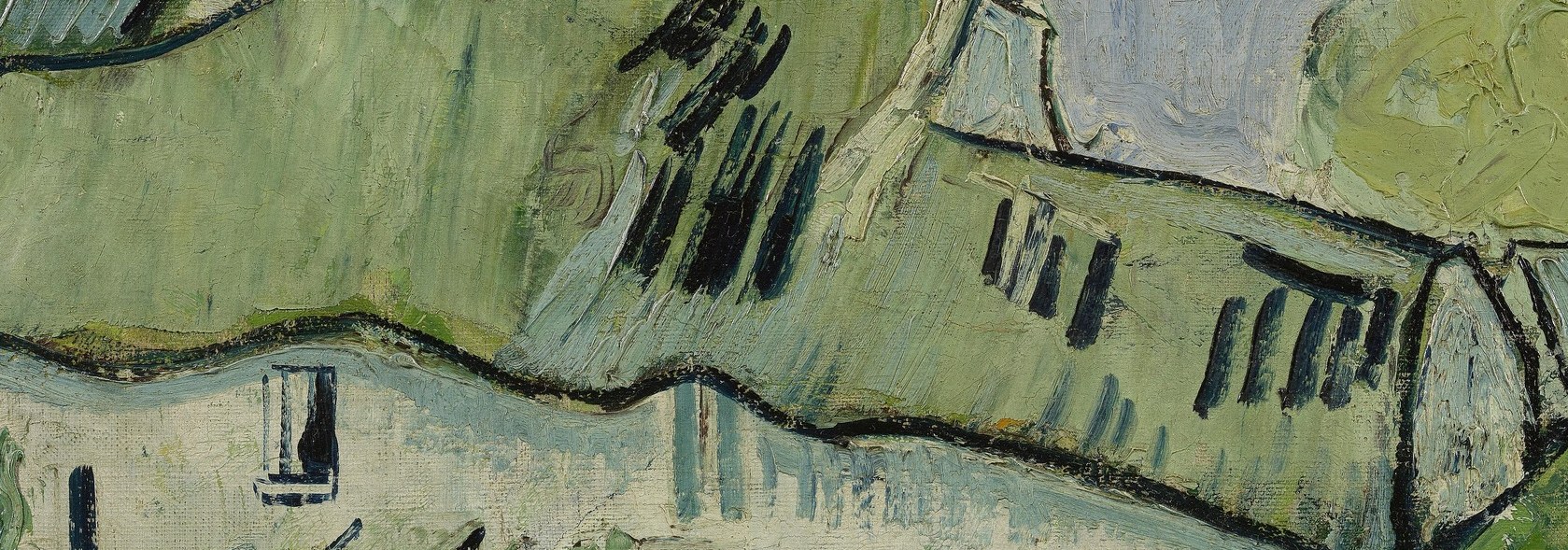
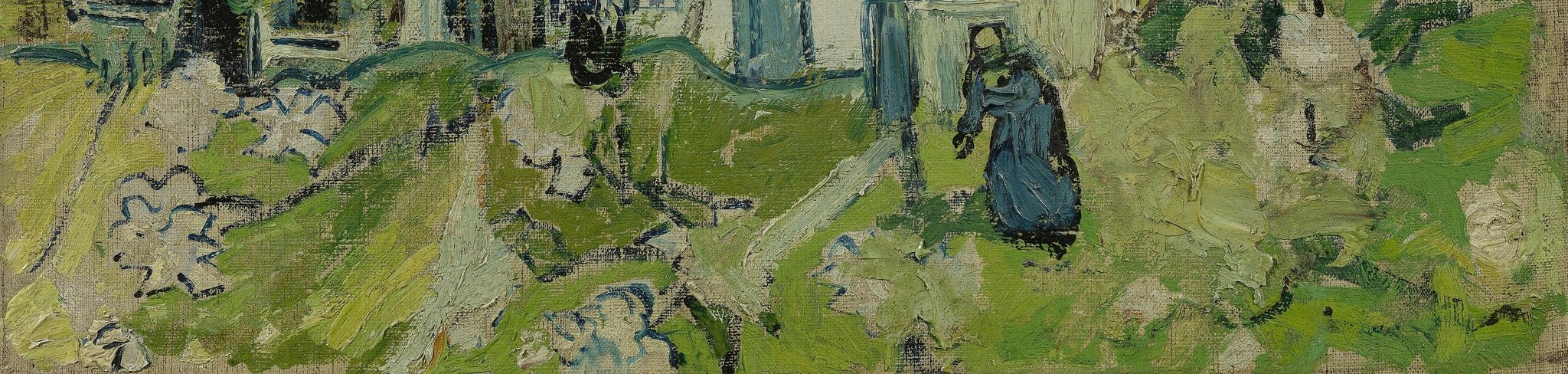
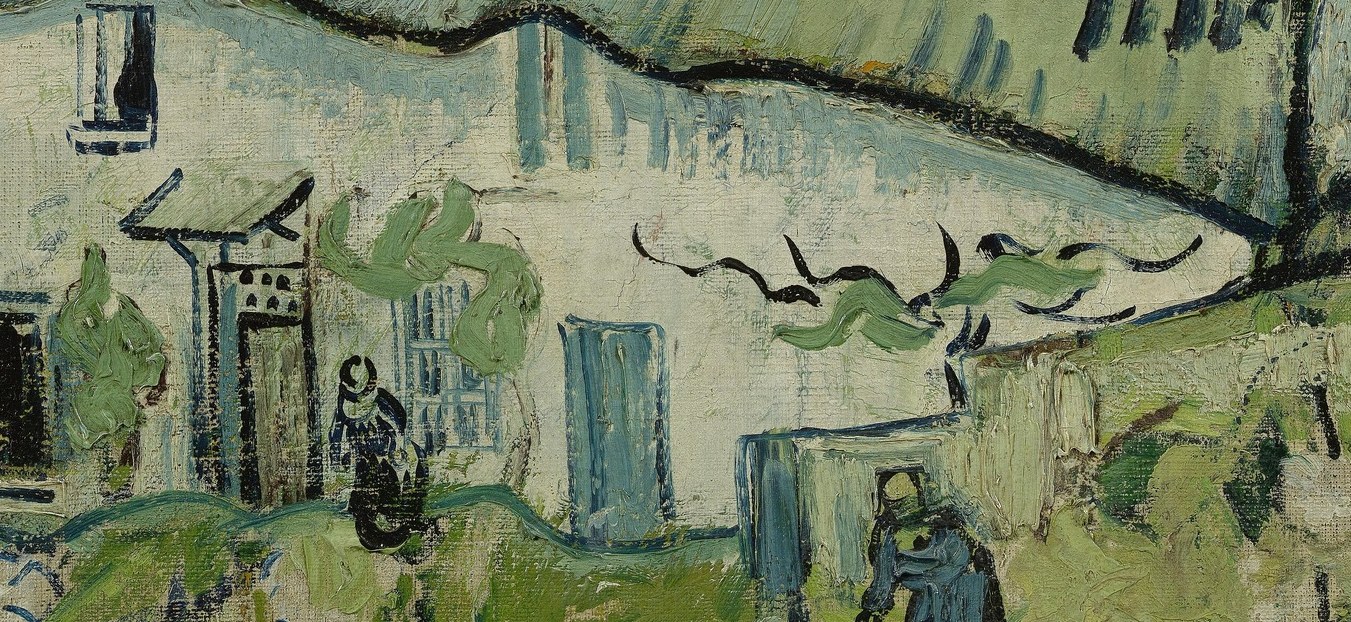
Observe how Van Gogh used a pronounced impasto technique, applying thick layers of oil paint to create a tactile surface. The roof, walls, and foliage are built up with visible, energetic brushstrokes, giving a sense of movement to this otherwise still scene.
Created during his time in the Netherlands, this painting is part of a series where Van Gogh focused on agrarian scenes and peasant lives. This period predates his more vivid Parisian works, but already exhibits his developing interest in texture, color contrast, and the emotional resonance of everyday landscapes.
What details in the painting capture your attention the most?
Details
Transcript
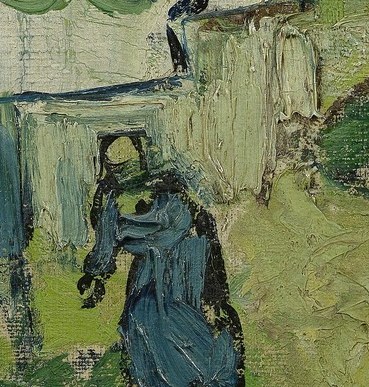
This painter turned to humble country scenes. He used thick paint to give surfaces a tactile quality. Look at the roof's heavy, organic texture. Every brushstroke creates movement in the quiet scene. The two figures suggest a pause in daily labor. This reflects the artist's interest in dignity of rural life.