Dramatic Scene with Monks in a Crypt by Alexandre-Évariste Fragonard
Dramatic Scene with Monks in a Crypt by Alexandre-Évariste Fragonard (1825) is a powerful example of the troubadour style. This oil painting draws viewers into a solemn monastic funeral, offering a glimpse into historical religious practices. The composition uses dramatic lighting and architectural elements to create a profound atmosphere.
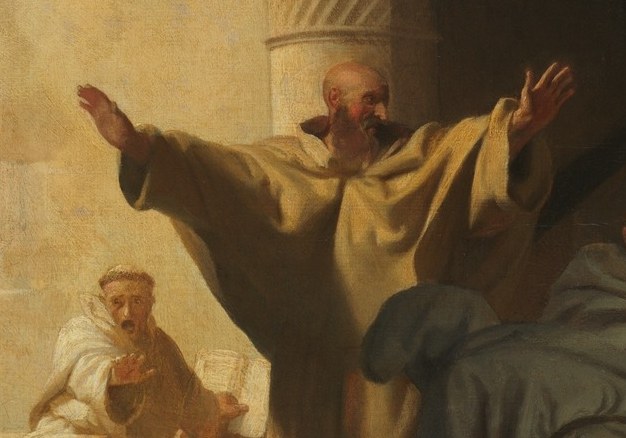
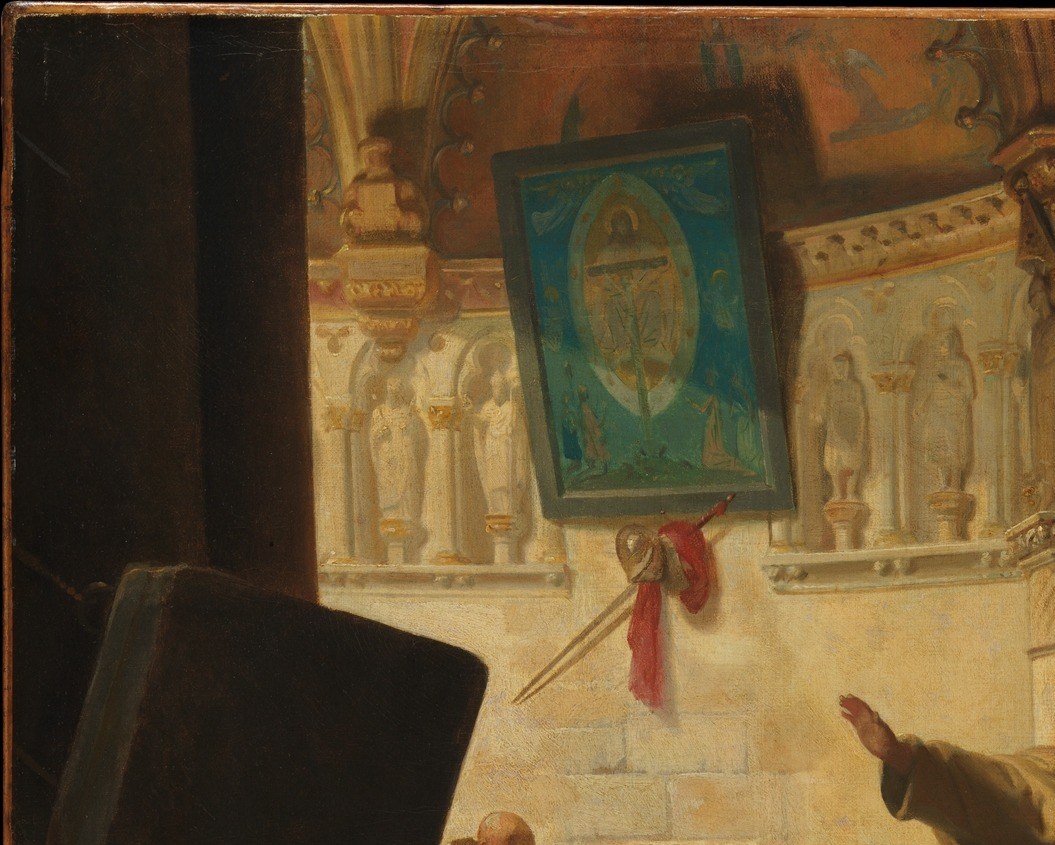
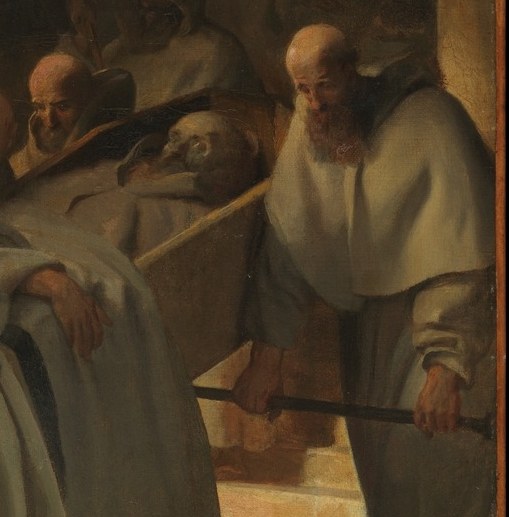
Look at the central figure in the open coffin, whose pallor contrasts with the surrounding monks. Notice the monk holding the processional cross and the dramatic gesture of the monk with raised arms. The ornate banner adds a symbolic layer to the scene.
Alexandre-Évariste Fragonard was trained by his father, Jean-Honoré Fragonard, and later by Jacques-Louis David. He created this work in 1825, capturing a moment of intense devotion and solemnity within a crypt setting.
What does the presence of the rooster signify in this scene of death and ritual?
Details
Transcript
A solemn funeral rite unfolds within this crypt. Monks gather for a sacred, final rite. The ritual scene is lit by a single shaft. He holds a processional cross for the deceased. His father taught him piquant subjects. Fragonard painted this in 1825. A rooster crows near the front. The pale corpse is the scene's focus.