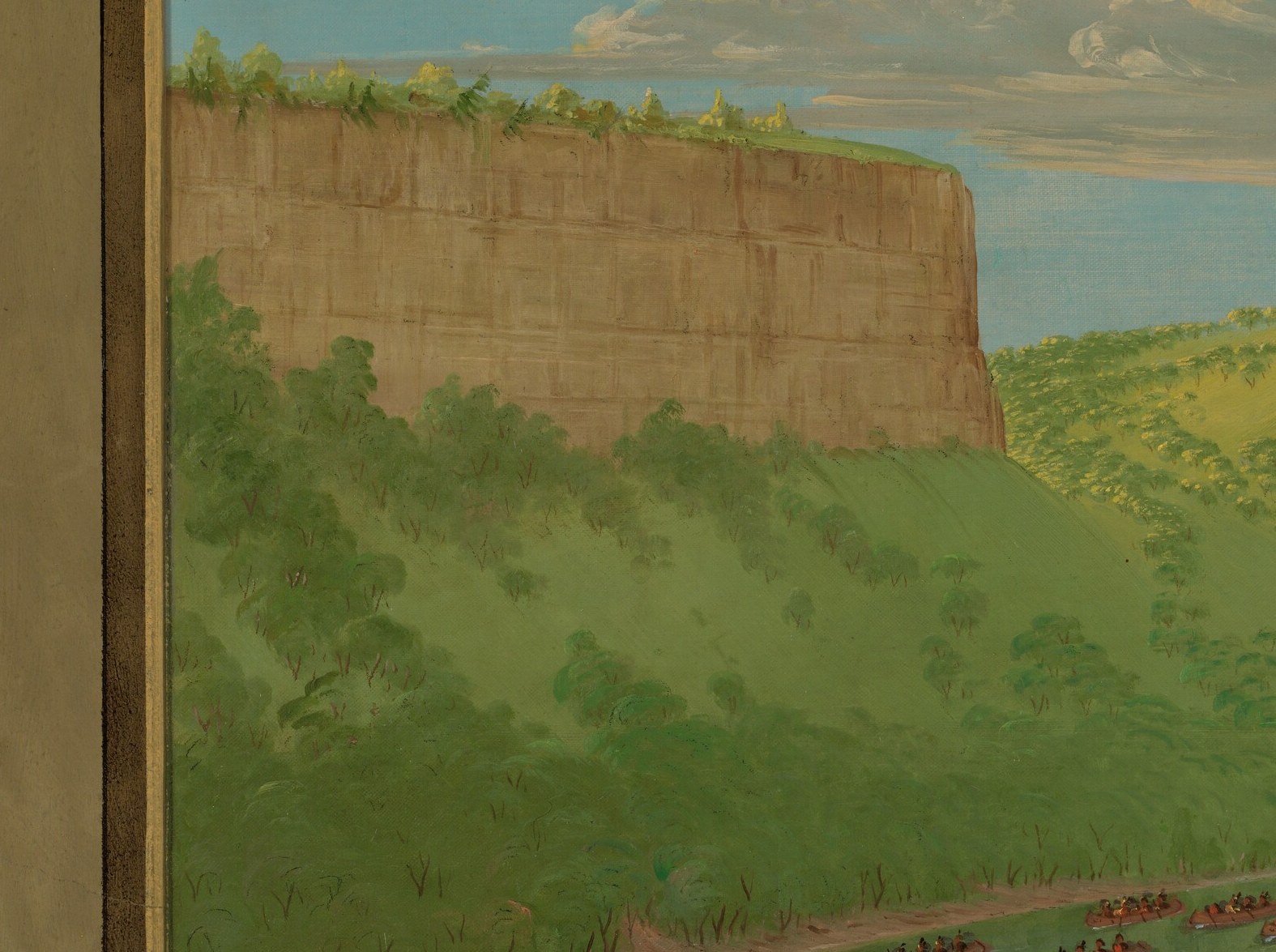
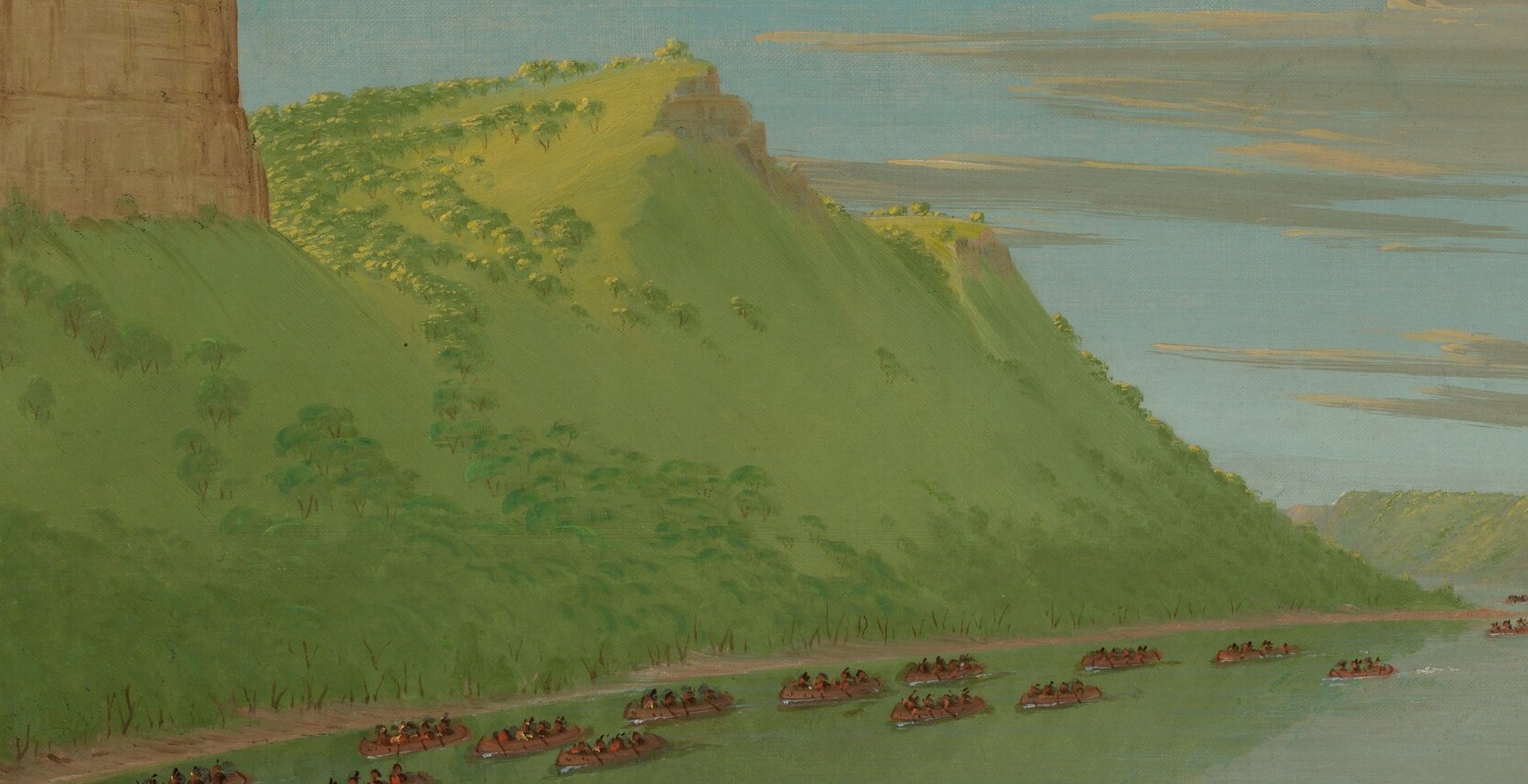
Father Hennepin and Companions Passing Lover's Leap. April 1680 by Catlin, George
George Catlin, an American painter known for his depictions of Native American life, also captured scenes of early European exploration, as seen in *Father Hennepin and Companions Passing Lover's Leap* (1847/1848) at an undisclosed museum.
This painting shows Father Hennepin and his companions navigating their canoes past the dramatic Lover's Leap rock formation, reflecting Catlin's enduring interest in the American frontier. Observe the figures in the lead canoe and the vast, untamed wilderness.
Originally trained in law, Catlin embarked on extensive travels throughout the American West in the 1830s, documenting Plains Indian communities through portraits and writings. This particular work offers a different facet of his artistic output, illustrating historical narratives of exploration.
Catlin's work provides a unique window into 19th-century America, capturing both the Indigenous cultures and the expanding frontier. What do you find most striking about this view of the wilderness?
Details
Transcript
This painter was famous for documenting Native American life. But here, he shows a European explorer, Father Hennepin. Hennepin journeyed the American frontier in April 1680. His canoes pass a dramatic landmark, Lover's Leap rock. The artist, George Catlin, trained as a lawyer. But he spent his life painting the American West.