Hunting Party by Carel van Falens
Carel van Falens’ *Hunting Party*, painted in 1716, isn't just a depiction of a chase; it's a window into the social world of the French court. This oil-on-canvas work, now in the Rijksmuseum, was created by a painter who served as a court artist and member of the Académie royale.
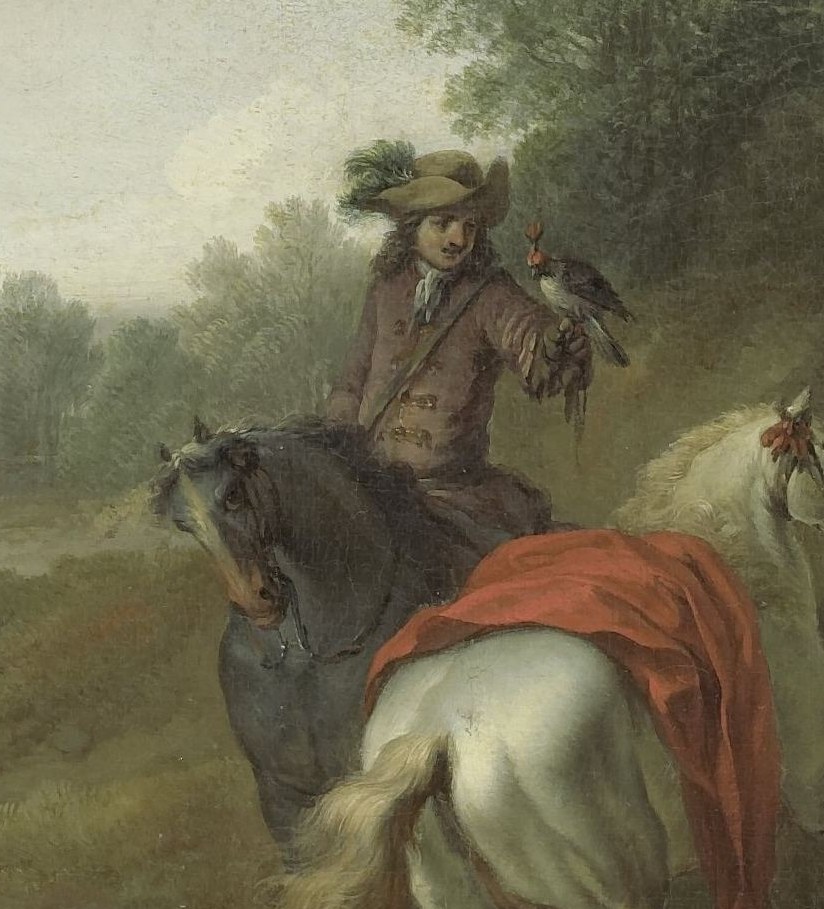
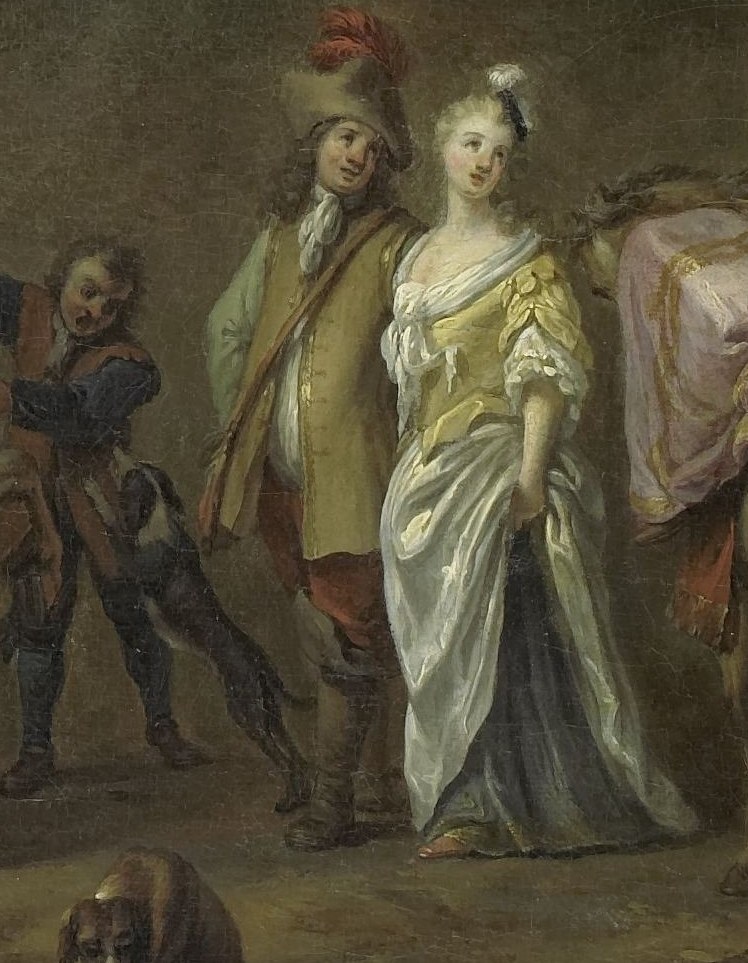
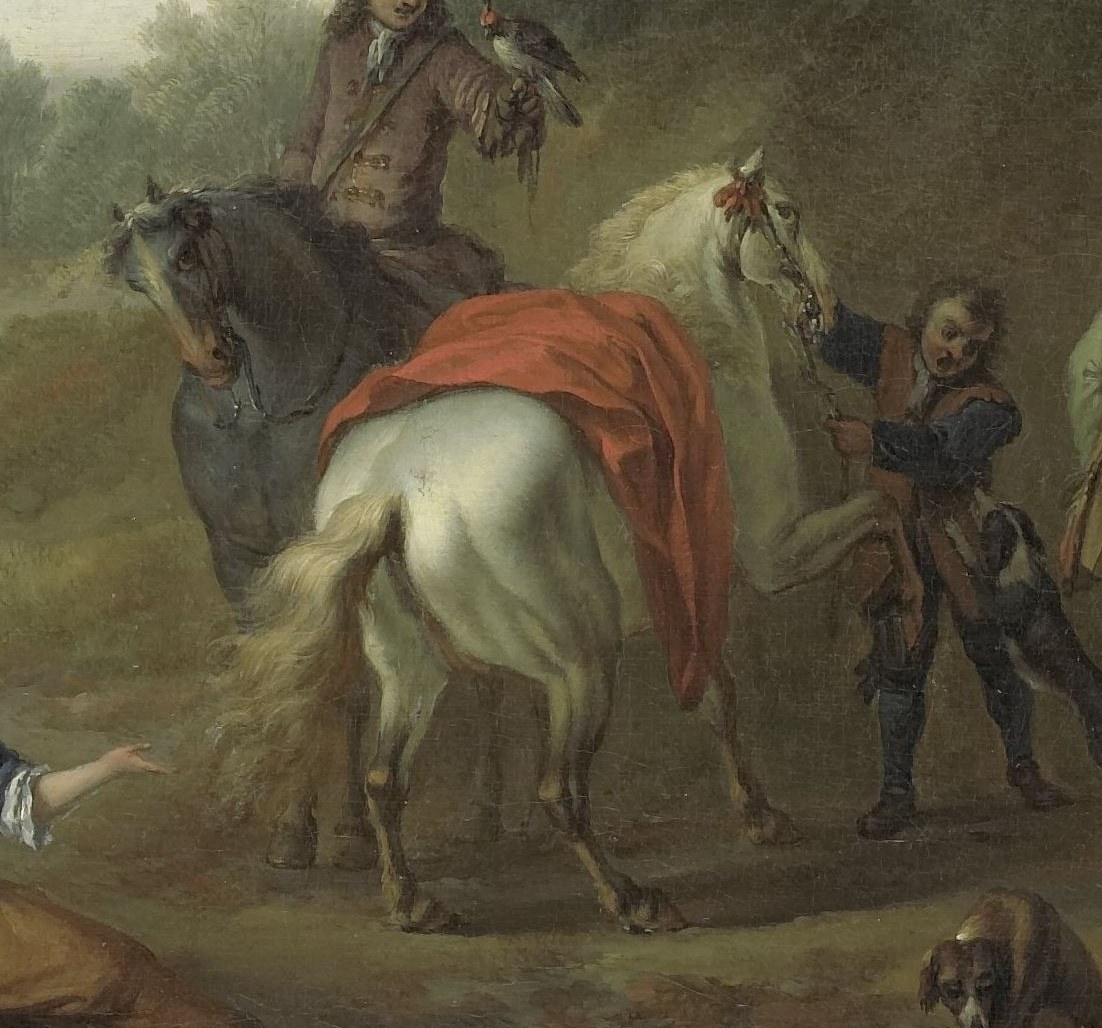
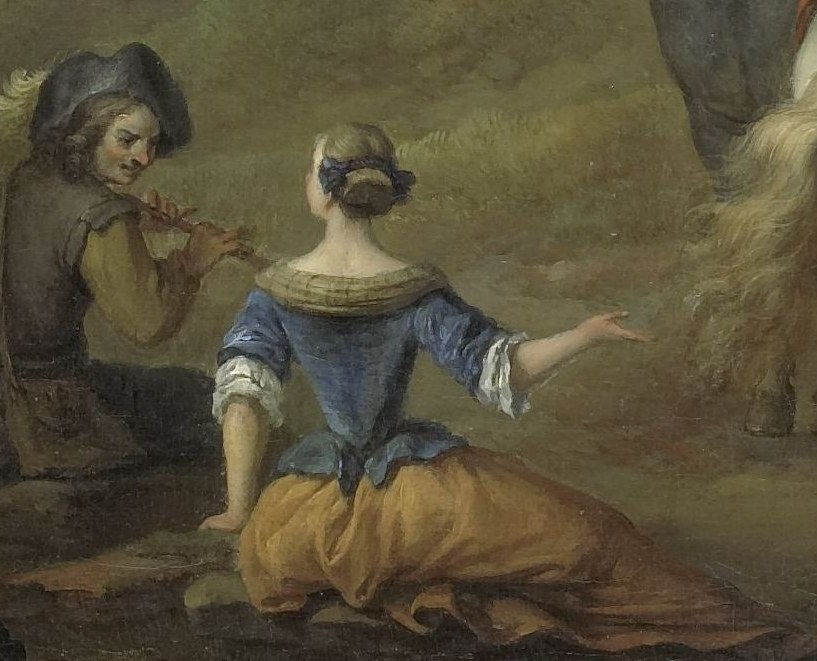
Look closely at the figures: their elegant, often impractical, attire and accessories like the small domestic dog in the foreground suggest that these gatherings were as much about displaying status and fashion as they were about the hunt itself. The pristine white horse with its decorative red blanket also speaks to this aristocratic display, rather than rugged outdoor pursuit.
Van Falens, a Flemish painter influenced by Philips Wouwerman, specialized in these scenes of hunters and cavalry. His work catered to the tastes of the French nobility, offering a glimpse into their leisure activities and social rituals. The painting reflects a niche in 18th-century Flemish art, capturing the refined atmosphere of courtly life.
What other subtle clues do you notice that speak to the social aspect of this 'hunt'?
Details
Transcript
In 1716, this painter specialized in hunting scenes. He was a court painter in France, working for the Académie royale. Notice the elegant attire, not really suited for a hunt. This white horse with its red blanket is a symbol of nobility. The little dog is a popular aristocratic accessory, not a hunting dog. These scenes were more about showing off social status than the hunt itself.