Café Singer by Edgar Degas
Edgar Degas’s "Café Singer," painted around 1890, captures the intense effort behind a public performance. Housed at the Art Institute of Chicago, this oil painting offers a glimpse into the vibrant, yet often unseen, world of late 19th-century Parisian entertainment.
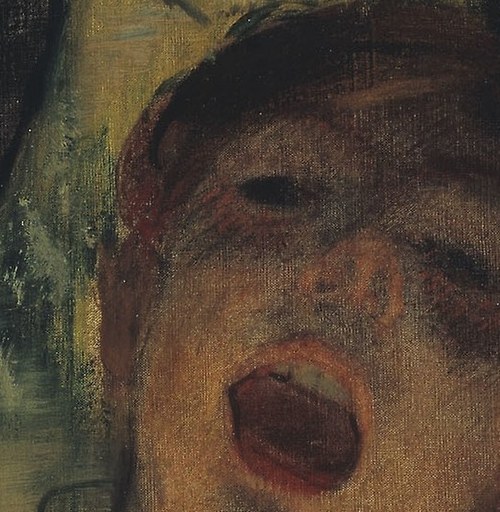
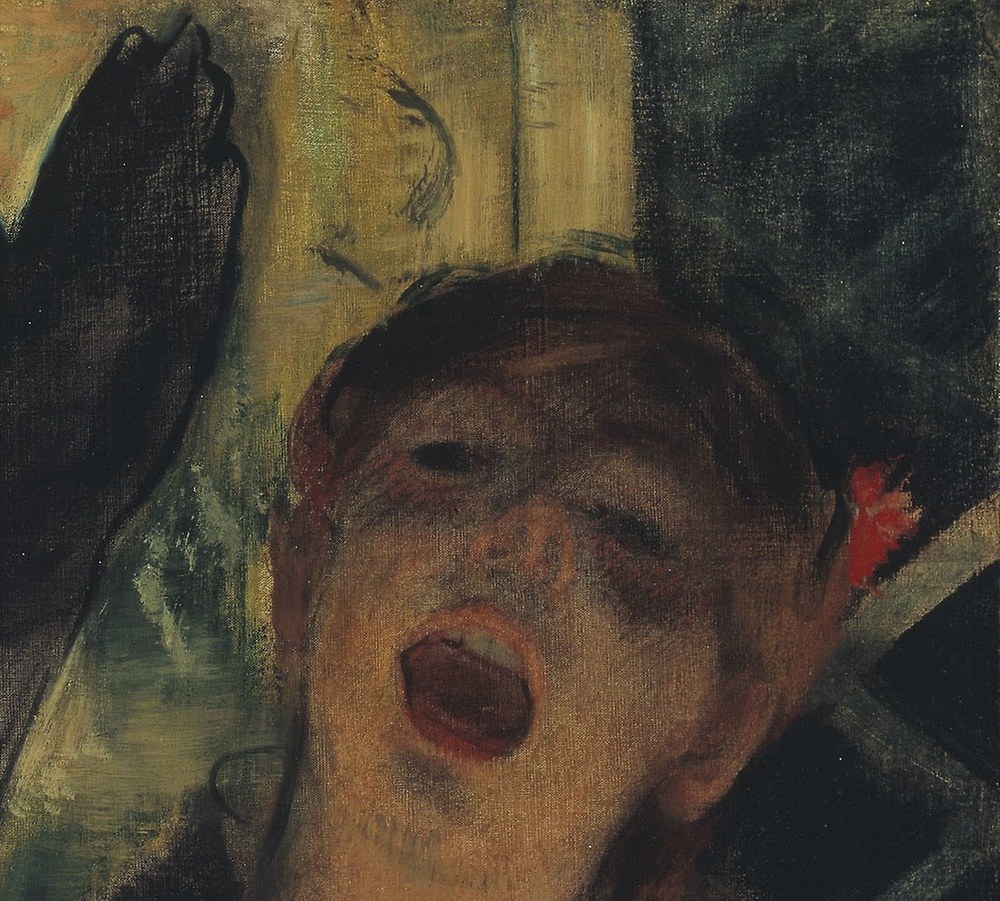
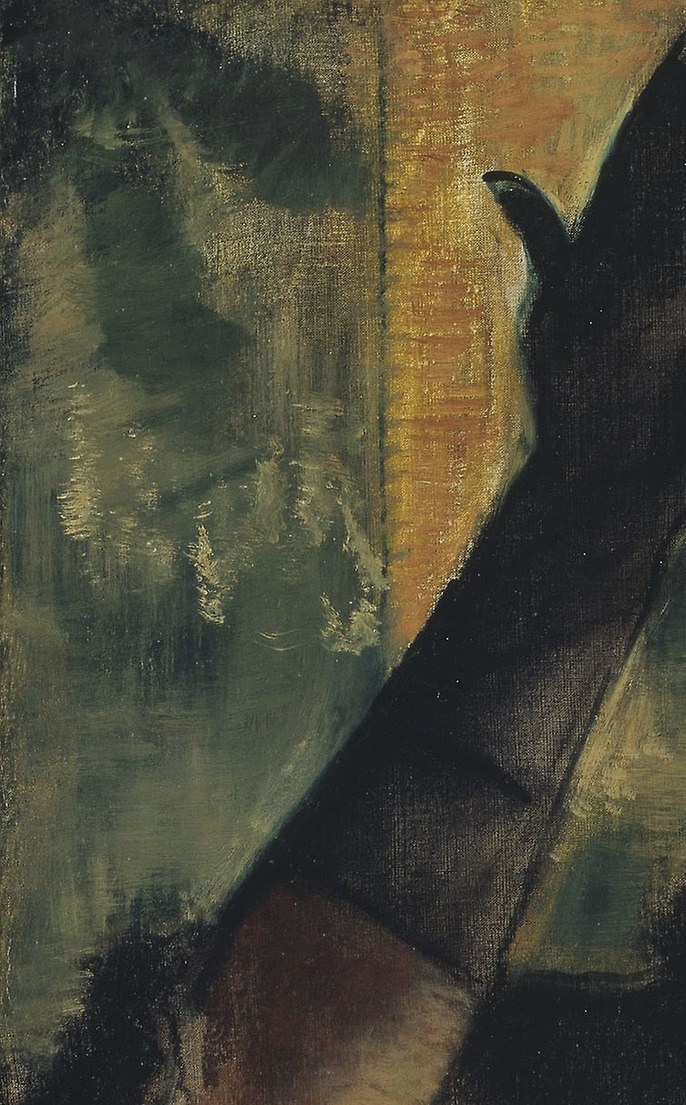
Look closely at the singer's face, her mouth open in song, and her eyes closed, suggesting deep absorption. The dramatic gesture of her raised arm and the black glove add to the theatricality, while a hint of red blossoms in her hair and on her chest provides striking accents.
Degas frequently visited café-concerts, drawn to their raw energy and the interplay of artificial light and movement. He used loose, expressive brushwork, allowing warm undertones to show through, highlighting the transient nature of such performances. Rather than romanticizing, he depicted performers as individuals working within the modern city's nocturnal economy.
This painting is a powerful study of human effort and the captivating illusion of the stage. What do you notice most about her expression?
Details
Transcript
This performer is giving everything to her song. The painter captures the raw effort in her open mouth. Her closed eyes shut out the audience and the world. Degas frequented Parisian café-concerts in the late 1800s. He was drawn to the unpolished energy of these venues. His loose brushwork suggests the fleeting artificial light. He showed performers as laboring individuals, not idealized figures.