Four Flathead Indians by Catlin, George
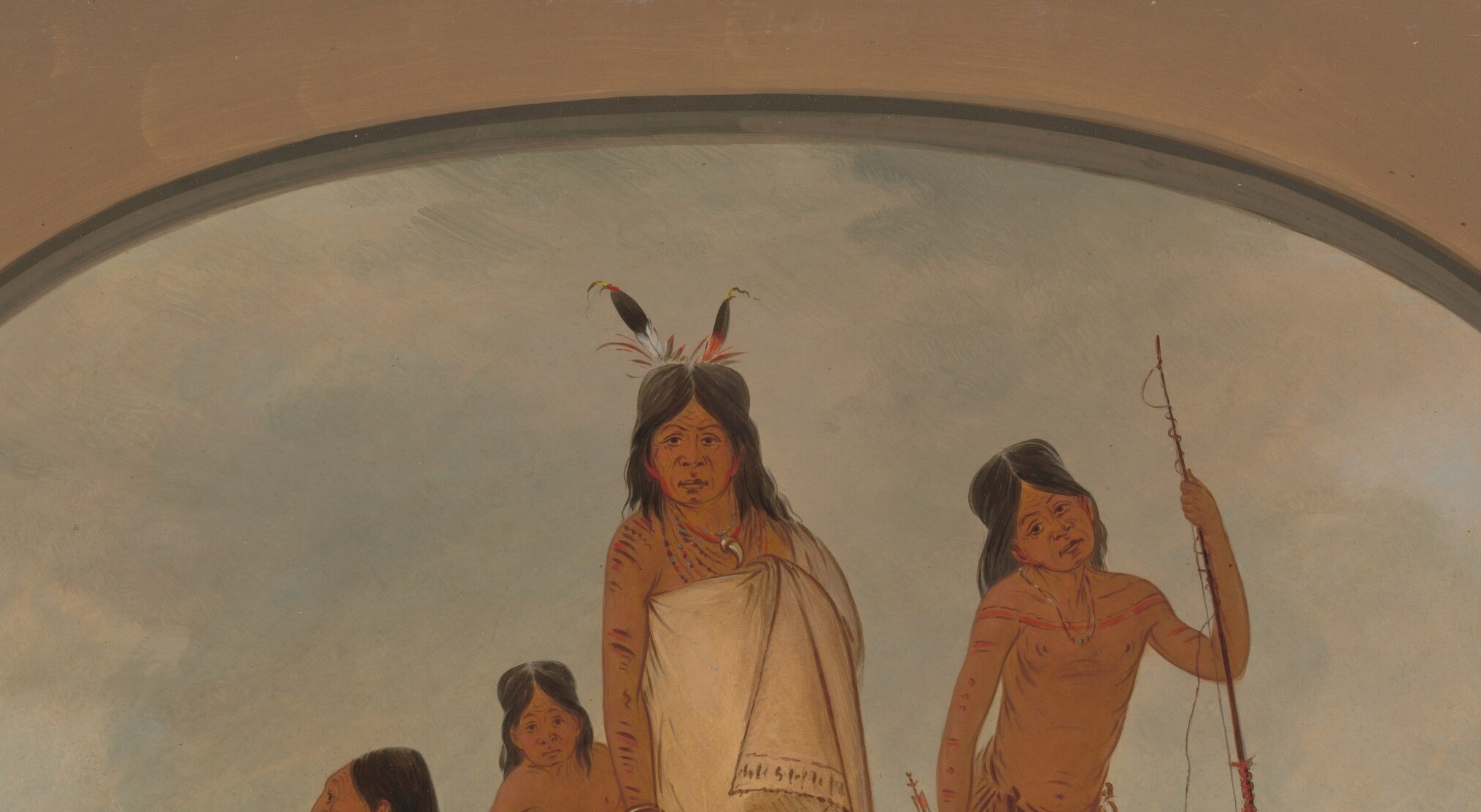
George Catlin's 'Four Flathead Indians', painted between 1855 and 1869, is an oil on card work housed at the Smithsonian American Art Museum. It's not a direct observation, but a studio creation based on earlier sketches.
Catlin, a lawyer-turned-artist, embarked on multiple journeys to the American West in the 1830s, dedicating himself to documenting Native American life. This painting features four figures, one in a feathered headdress, another holding a woven basket.
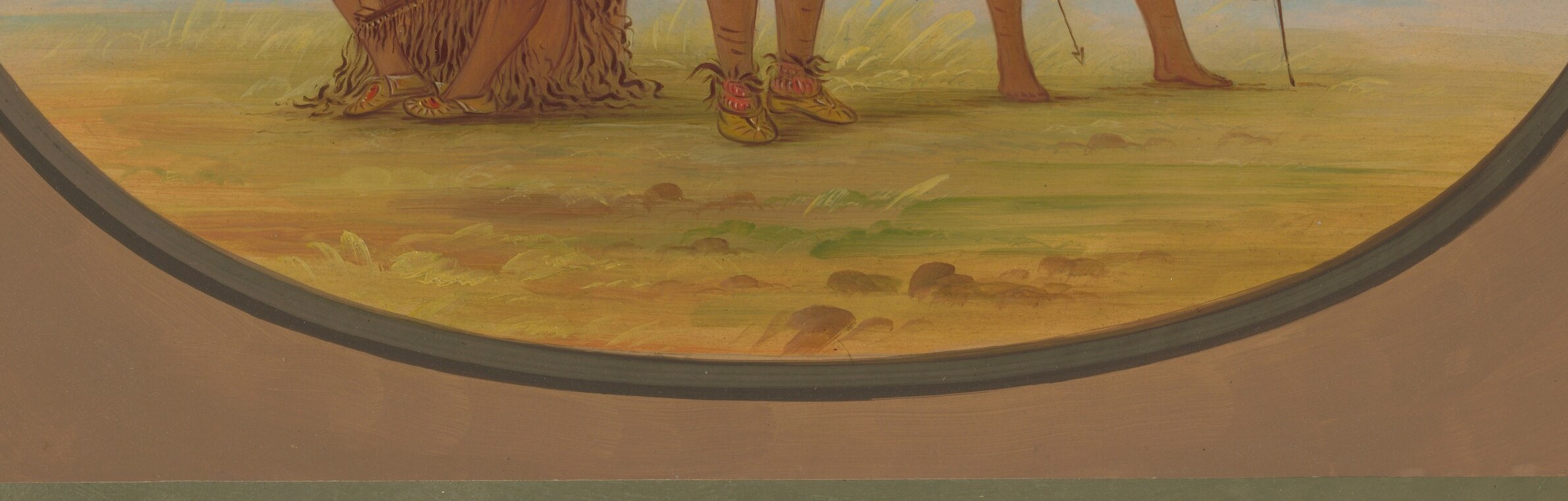
Intriguingly, Catlin included a subtle inscription on the basket: his initial 'A' and the number '26'. This suggests he was organizing his vast body of work, creating new paintings from his extensive archive of preliminary drawings. This practice highlights how Catlin sought to preserve visual records of Indigenous communities long after his initial encounters.
The piece serves as both a portrait and a historical document, revealing the artist's methods in bringing his observations to a broader audience. What details do you notice first?
Details
Transcript
This painting appears to show four figures from the Flathead tribe. The artist, George Catlin, traveled extensively to paint Native Americans. But this painting was actually made between 1855 and 1869. Catlin based it on sketches from his 1830s expeditions. Look closely for his hidden signature. In the basket, his initial 'A' and the number '26' are painted. A secret inventory number for a painting created years after the fact.