Allegory by Piero di Cosimo

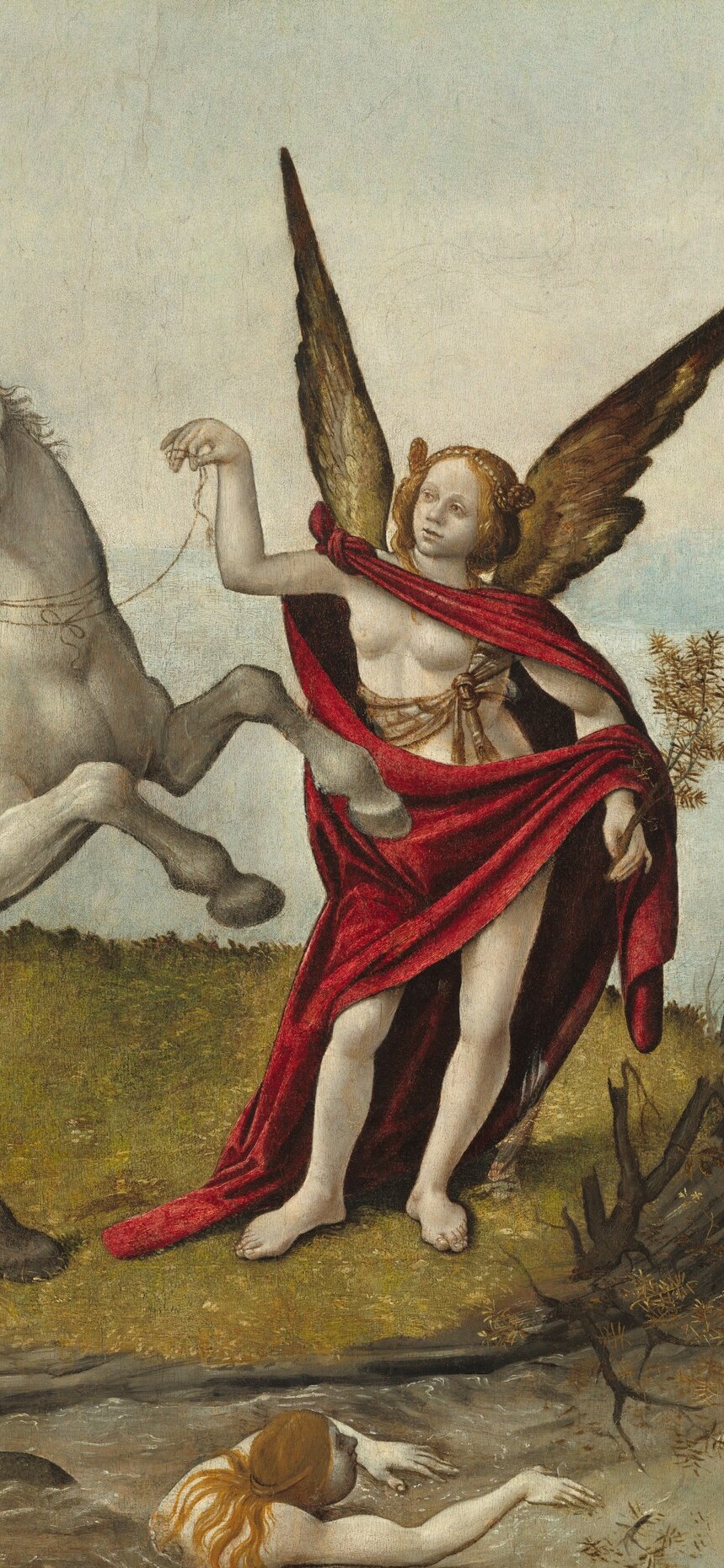
This is Piero di Cosimo's 'Allegory,' painted around 1500 in Florence and housed today in the National Gallery of Art, Washington. It depicts a scene from no known myth, because Piero likely invented it.

A rearing white horse, the Renaissance's ready symbol for unbridled passion, confronts a winged figure in crimson drapery. A prone body lies face-down in the rocky foreground. Two dark birds, ravens or crows, lurk in the left shadow. A dead tree frames the upper edge. Every object is a symbolic token, but Piero left no key.

Piero di Cosimo (1462-1522) was a Florentine contemporary of Botticelli and Leonardo, but he followed no one. He painted strange, poetic, often unsettling scenes drawn from obscure classical fragments or his own imagination. Vasari described him as eccentric and solitary, living on hard-boiled eggs and refusing to prune his garden because he believed nature should run wild.

The painting's iconography remains unresolved by scholars. The winged figure may be Virtue taming desire, or Victory, or a forgotten god. The red drapery signals urgency or sacrifice. The birds suggest death or transformation. Piero gives us a complete visual sentence in a language we can only partly read, and that may be exactly the point.

#arthistory #pierodicosimo #renaissance

Details
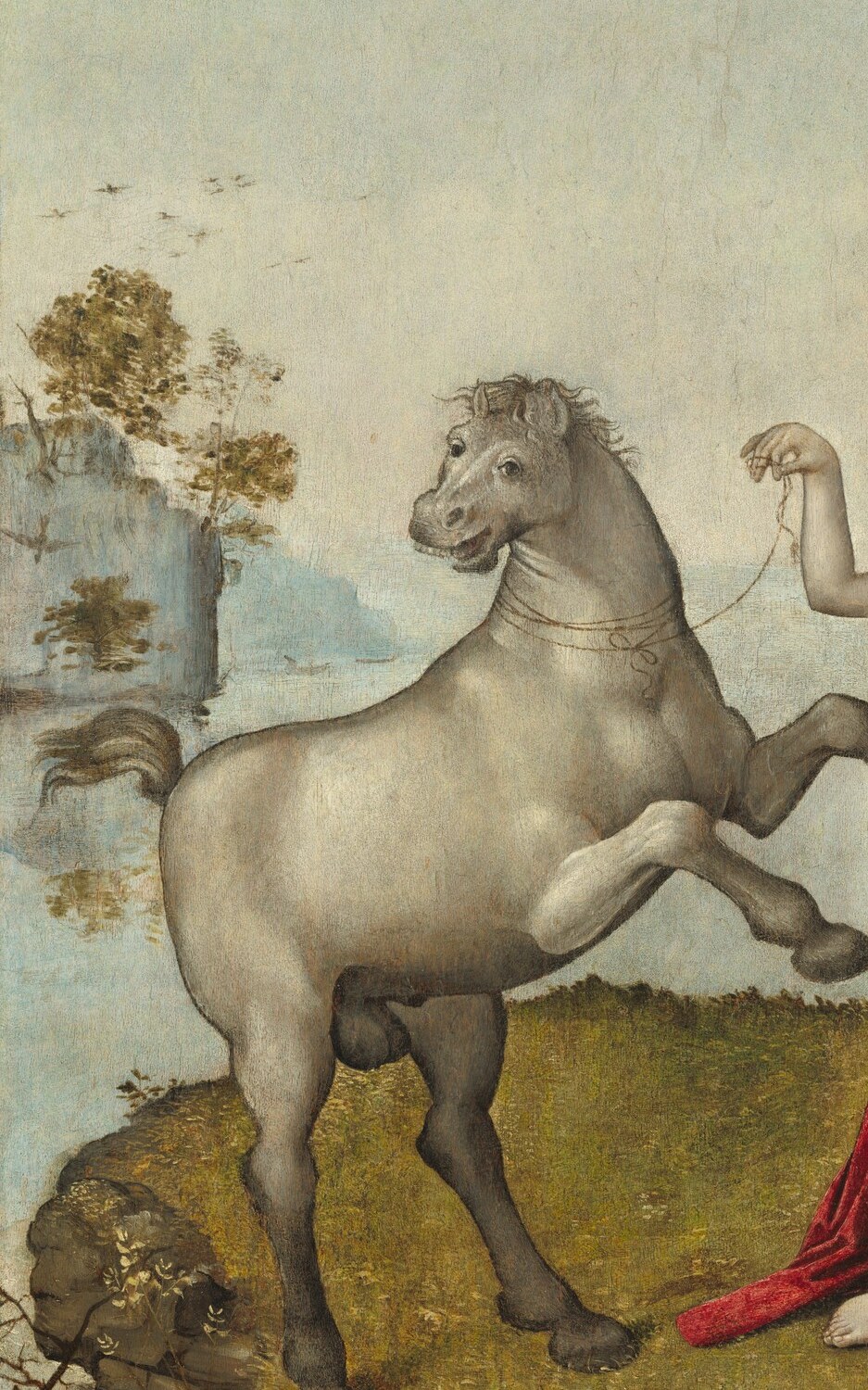
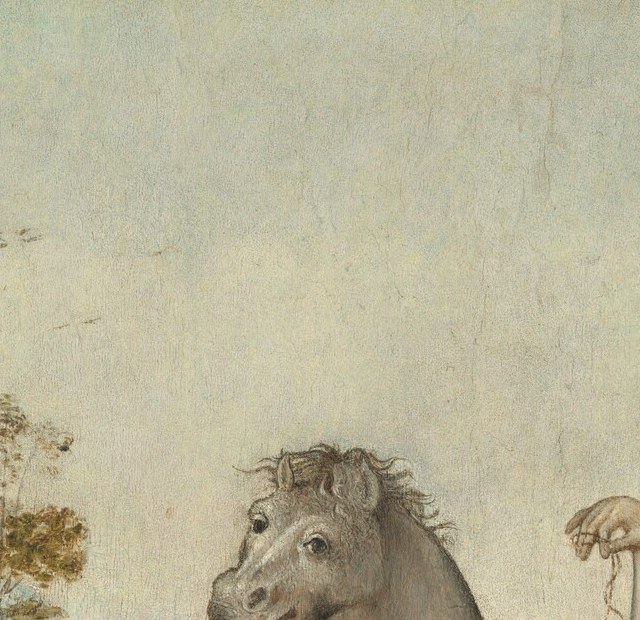
The horse's balletic pose and near-white coat dominate the composition; its body language reads as untamed force confronting the winged figure, making it the allegorical anchor of the whole scene.
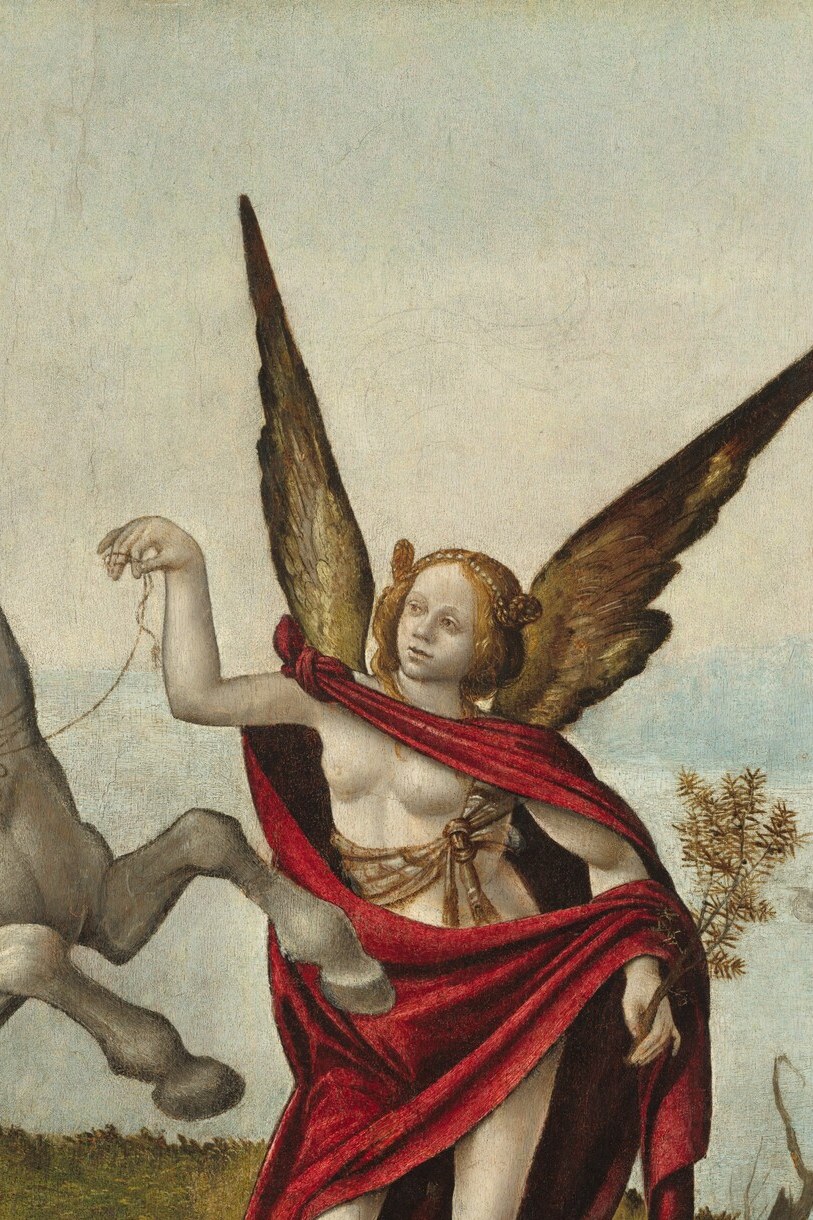
The central protagonist: a partially-clad youth with large amber-brown wings who grips the scene's tension. The identity , Victory, Virtue, a god , is deliberately unresolved, which is the painting's core riddle.
The head is turned slightly toward the viewer, mouth parted , a close-up reveals a strikingly human expressiveness rare in Renaissance animal painting.
Piero's careful feather-by-feather rendering is a clear virtuoso display; the wings frame the figure like a stained-glass window and push the figure's identity toward the divine or mythological.
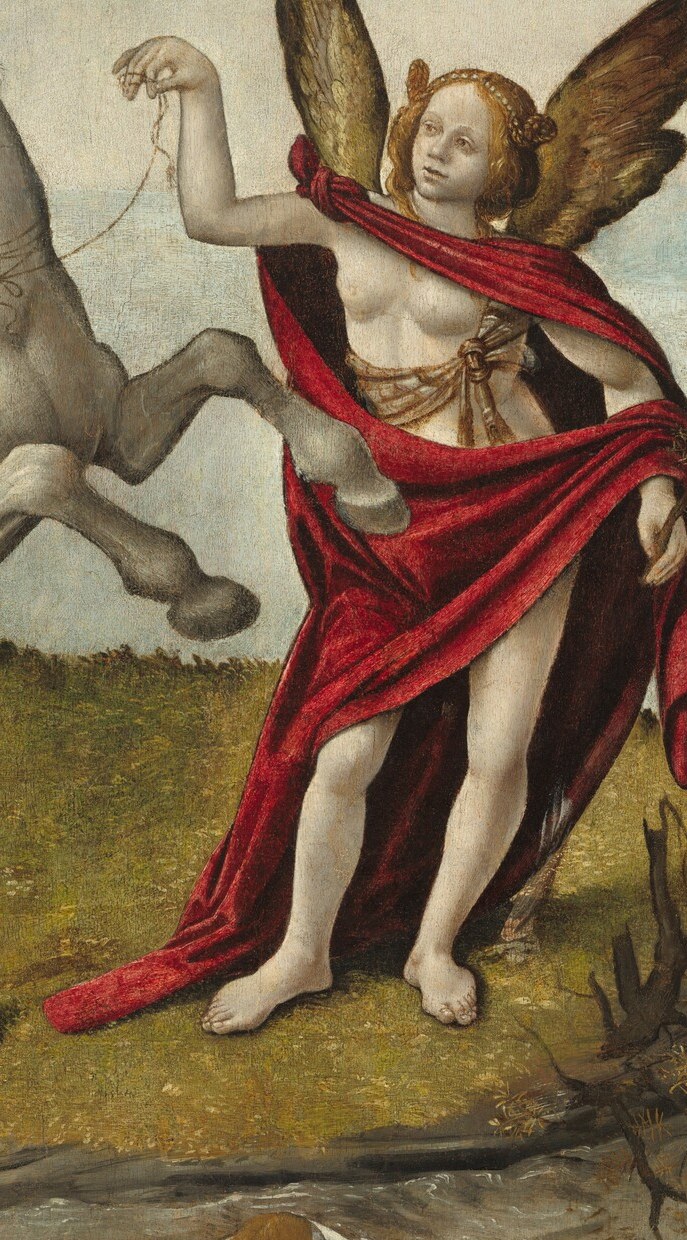
The saturated red is the painting's dominant warm accent; it implies urgency, passion, or sacrifice, and the way it is slung rather than worn hints at a figure caught mid-action.
Transcript

A rearing horse. A winged figure. A body face-down in the dirt. This is not a story from any known book. Piero di Cosimo invented myths when the real ones weren't strange enough. The horse: unbridled passion. A Renaissance symbol everyone knew. And here, what bridles it, Virtue, or Victory, or something older. That red drapery reads as sacrifice. It's slung, not worn. Two dark birds in the shadow. Death, or omen, or transformation. And the bare tree frames it all, a primal, lawless space where myth lives.