Artwork
Allegory
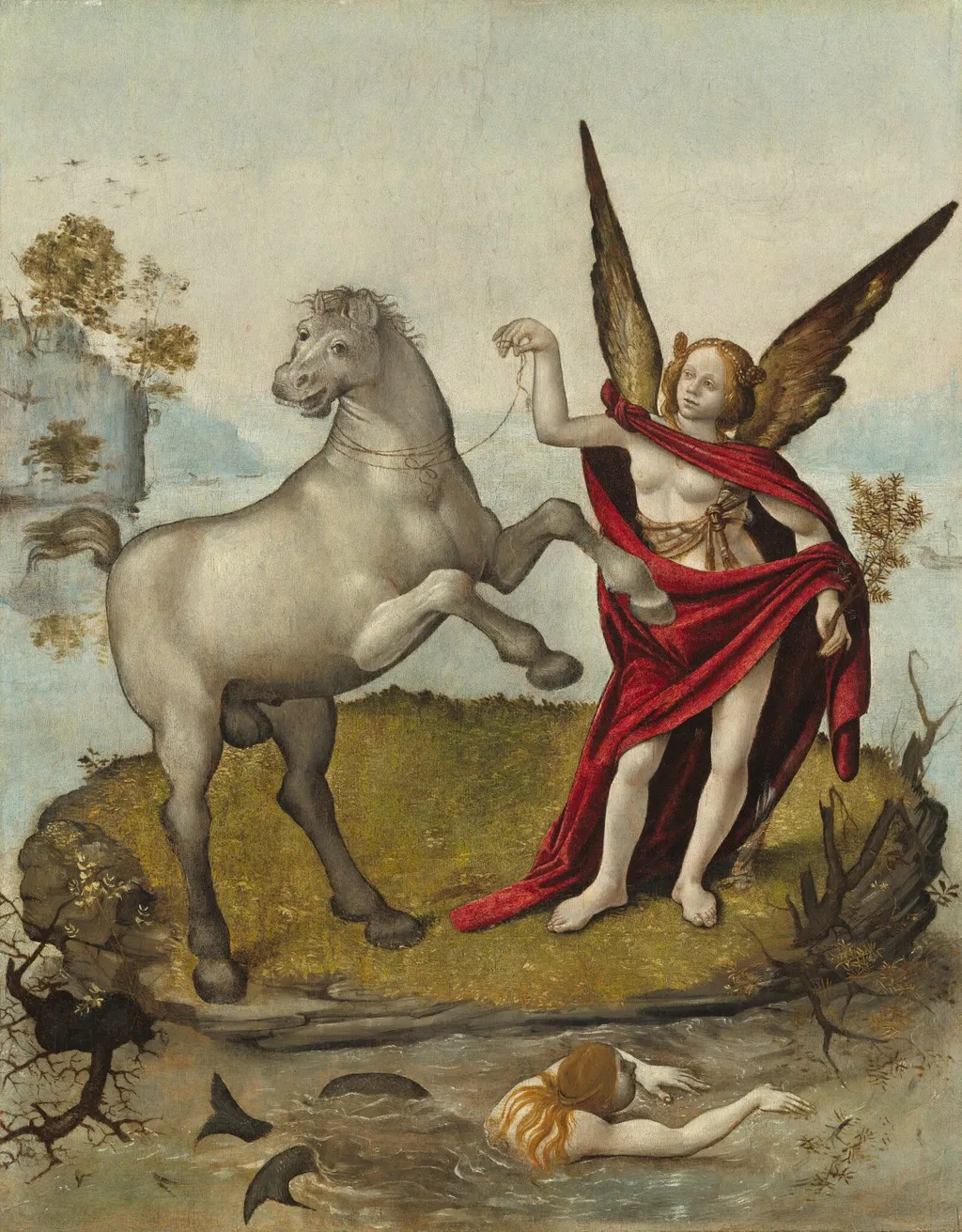
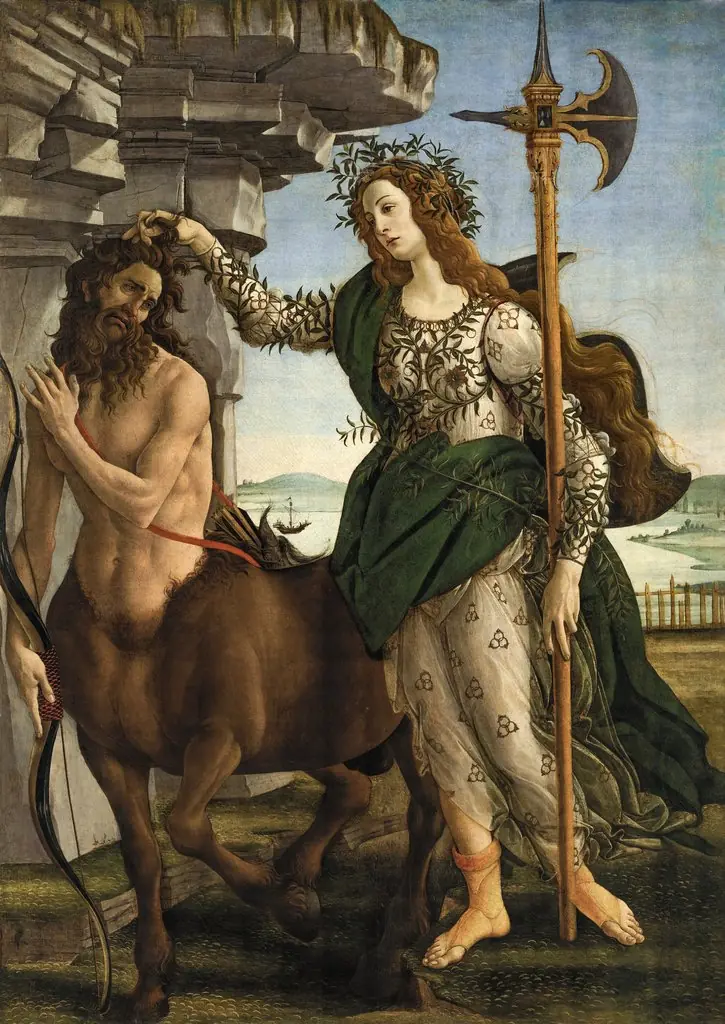
Allegory is an oil painting by the Early Renaissance artist Piero di Cosimo. It dates from 1500 and is held in the collection of the National Gallery of Art.
About this work
Subject & Meaning
The composition is interpreted as an allegory of chastity, the woman symbolising virtue that tames untamed desire represented by the horse.
The painting, titled Allegory (c. 1500), shows a winged female figure gently restraining a rearing stallion on a small island, while a mermaid swims nearby. The composition is interpreted as an allegory of chastity, the woman symbolising virtue that tames untamed desire represented by the horse. The island setting and the sea‑borne mermaid reinforce the theme of controlled desire within a bounded realm.
Piero di Cosimo’s use of mythological elements functions as visual emblems of moral restraint, a common Renaissance approach to convey abstract virtues through narrative scenes. The work entered the National Gallery of Art in 1939 after being sold to the Samuel H. Kress Foundation.
Technique & Style
The painting is executed in oil on panel, a medium that allowed Piero di Cosimo to achieve subtle modeling and luminous color effects. The support is a flat wooden board, prepared with a ground layer to receive the paint. The handling is characterized by delicate, precise brushwork that delineates figures and natural elements with clarity, while atmospheric effects are rendered through glazing.
Compositionally, the work juxtaposes the allegorical figure of Chastity, a winged woman restraining a rearing stallion, with a mermaid in the sea, creating a contrast between restraint and temptation. Stylistically, the painting reflects early 16th-century Florentine tendencies toward idealized form and narrative clarity, though Piero’s idiosyncratic approach is evident in the fantastical elements and the integration of mythological motifs into a moral allegory.
History & Provenance
Executed circa 1500, this oil-on-panel allegory by Piero di Cosimo was documented in the Casa Gravaghi collection in Parma by 1870. The work subsequently entered the holdings of Count Alessandro Contini Bonacossi, who maintained residences in Florence and Rome. In 1935, the Count sold the painting to the Samuel H. Kress Foundation based in New York.
Four years later, in 1939, the foundation donated the piece to the National Gallery of Art in Washington, D.C., where it remains part of the Samuel H. Kress Collection. While specific commission records are not detailed in available accounts, the painting's trajectory from a private Parmesan collection to a major American institution is well-documented through these transfers.
The work is held by the National Gallery of Art in Washington, D.C., where it has been part of the Samuel H. Kress Collection since a 1939 gift from the foundation. Its accession is recorded as a donation from the Kress foundation, placing it within the museum’s permanent holdings. The painting has been displayed in several institutional presentations, notably in the 2005 Florentine study day "Invisibile agli occhi" that examined the Tacoli Canacci collection, and it continues to appear in the NGA’s European paintings galleries.
Context
Piero di Cosimo’s Allegory (c. 1500) has been interpreted primarily as a symbolic representation of chastity, a reading reinforced by its depiction of a winged woman taming a rearing stallion while a mermaid swims nearby. Scholarship situates the work within the artist’s broader fascination with mythological and allegorical themes, characteristic of his idiosyncratic synthesis of Renaissance humanism and fantastical invention. The painting’s enigmatic iconography has invited varied interpretations, reflecting Piero’s place in late 15th-century Florentine art as a bridge between classical revival and the burgeoning Mannerist tendency toward ambiguity.
Its inclusion in the Samuel H. Kress Collection and subsequent donation to the National Gallery of Art underscores its significance within the canon of Italian Renaissance allegories, though its precise meaning remains a subject of debate.
Overview
Piero di Cosimo's Allegory, painted circa 1500 in oil on panel, depicts a surreal coastal scene populated by mythological and hybrid figures. The composition centers on a rearing wild horse positioned on a rocky outcrop, observed by a mermaid rising from the turbulent waters below. To the left, a woman in a red garment stands holding a spear, her gaze directed toward the central action.
The background features a stormy, atmospheric sky that enhances the dreamlike quality of the narrative. This work exemplifies the artist's distinctive fascination with the grotesque, the primitive, and the fantastical, often drawing from obscure classical sources or inventing entirely new myths. Created during the height of Piero's career in Florence, the painting reflects his departure from the strict rationality of High Renaissance ideals in favor of a more imaginative, idiosyncratic vision.
The specific iconography remains a subject of scholarly debate, with no definitive literary source identified, suggesting the artist may have been illustrating a lost fable or creating an original allegory. The work stands as a testament to Piero di Cosimo's unique position in Italian art history as a painter of eccentric, poetic, and often unsettling imagery.
Own this work as a print
Artist & collection

Artist
Piero di Cosimo, also known as Piero di Lorenzo, was an Italian Renaissance painter, who continued to use an essentially Early Renaissance style into the 16th century.

 The Visitation with Saint Nicholas and Saint Anthony Abbot
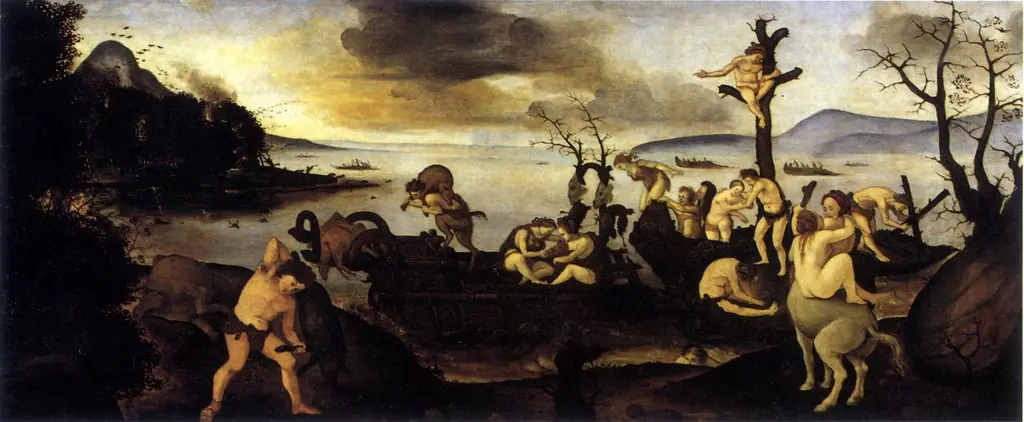 Return from the Hunt by Piero di Cosimo
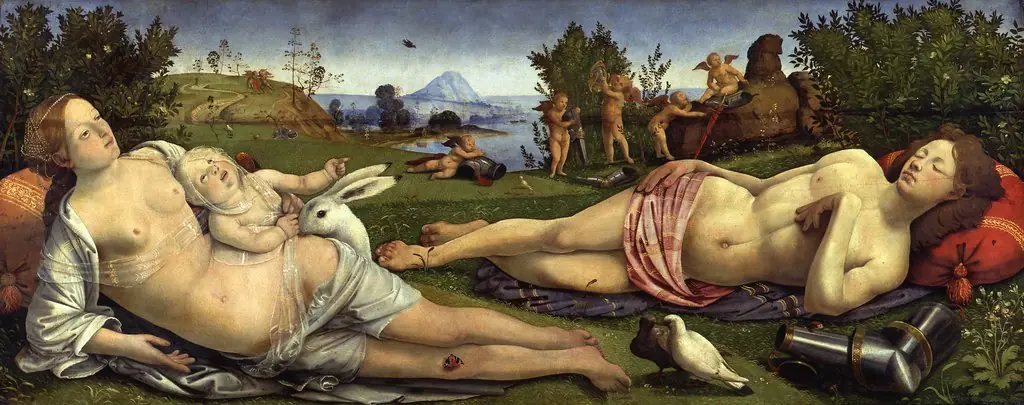 Venus, Mars and Cupid
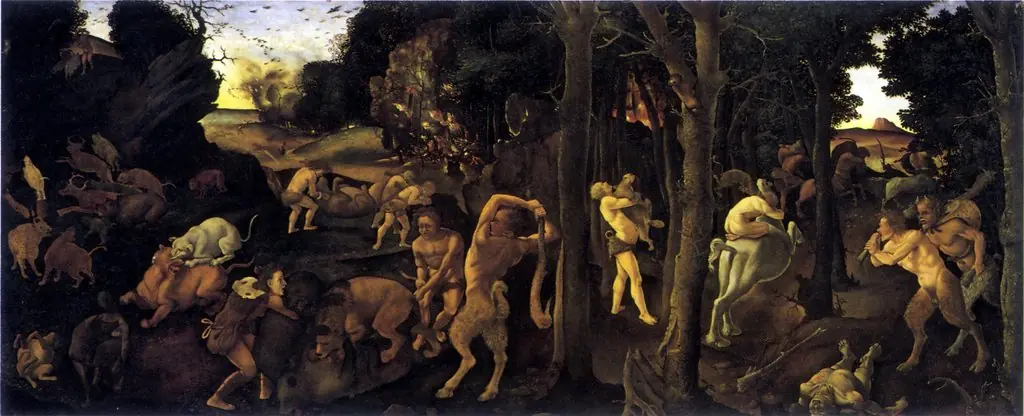 A Hunting Scene
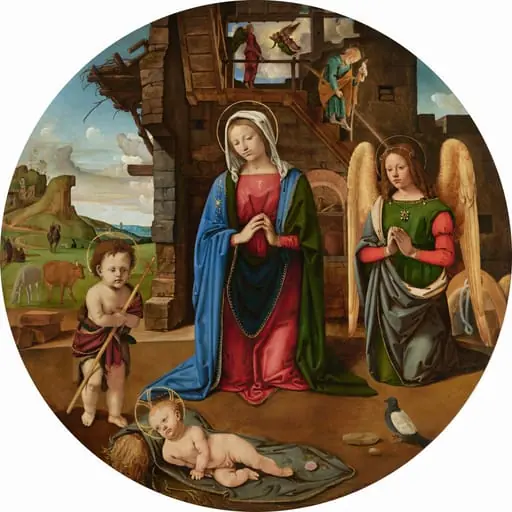 The Nativity with the Infant Saint John
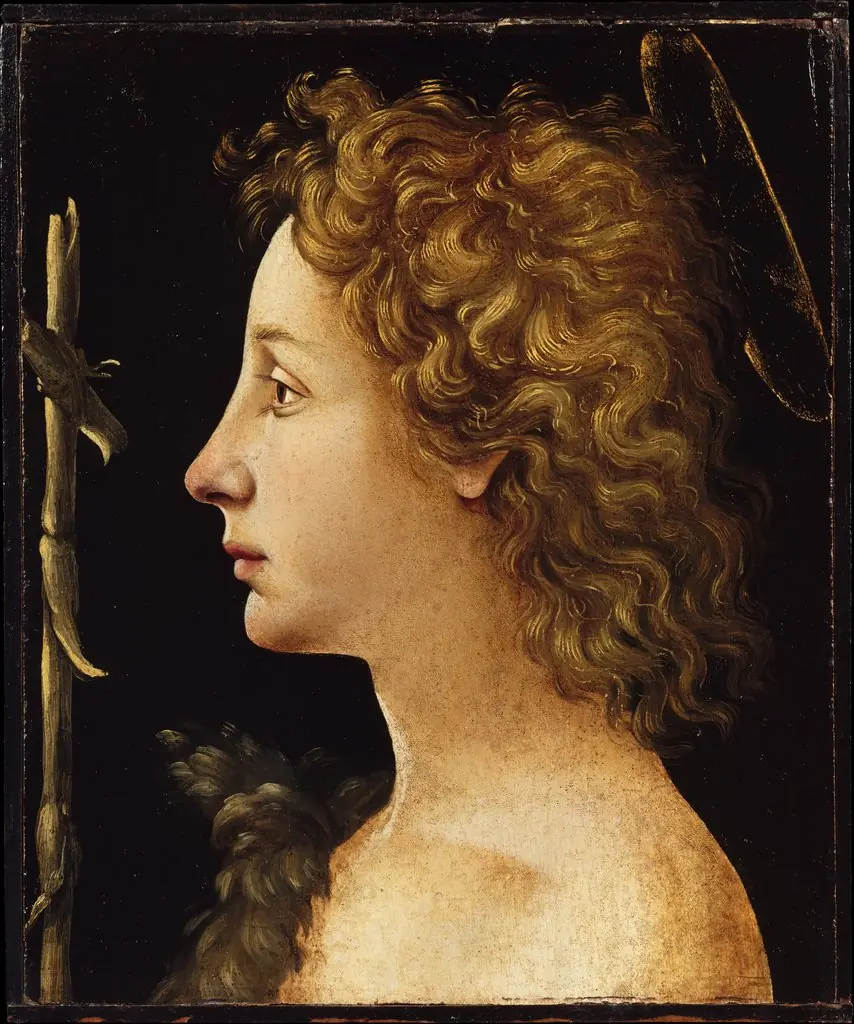 The Young Saint John the Baptist
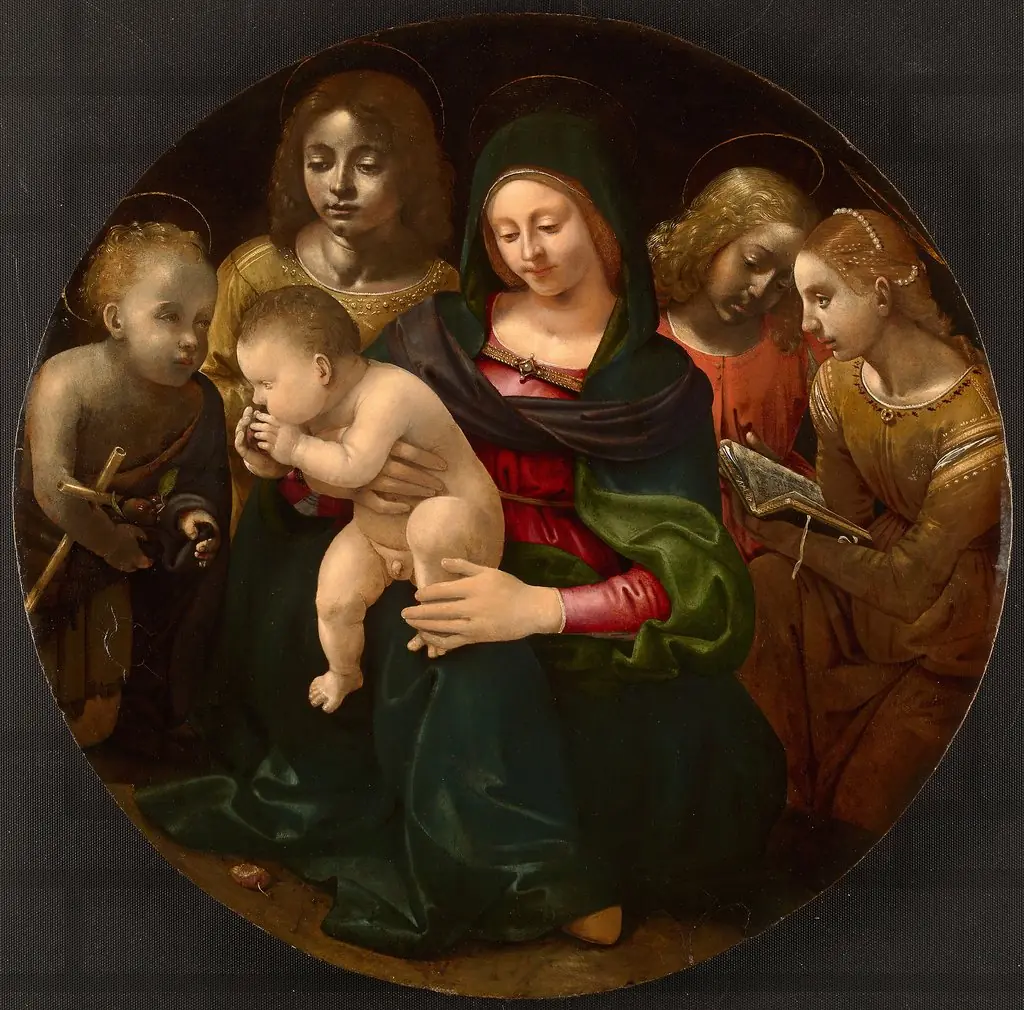 Virgin and Child with the Young Saint John the Baptist, Saint Cecilia, and Angels
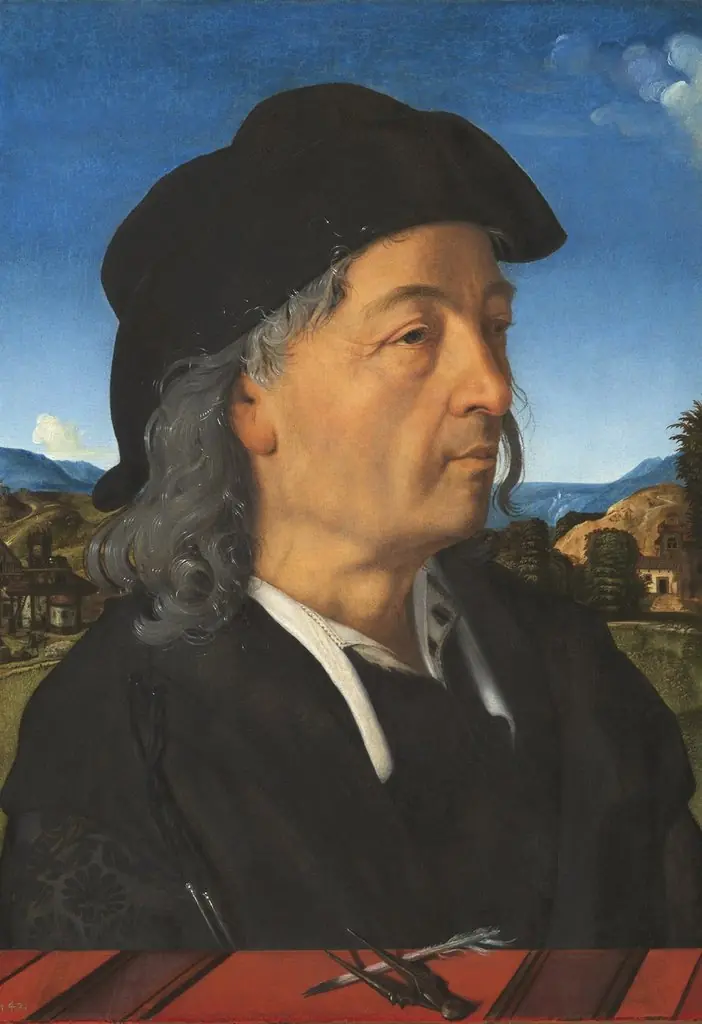 Portrait of Giuliano Giamberti da Sangallo