Mercury and Battus by Francisque Millet
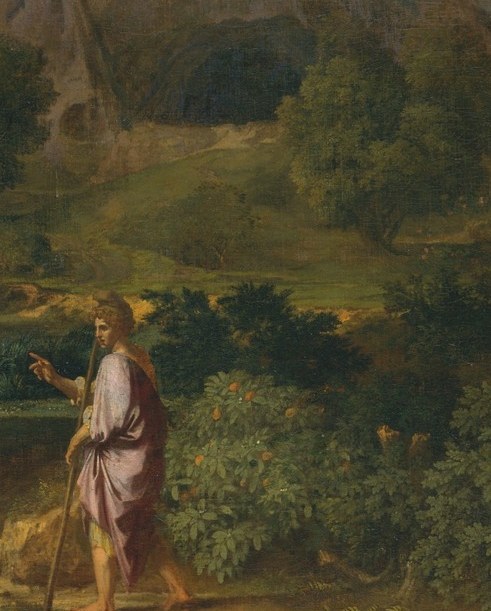
This is "Mercury and Battus," painted around 1670 by the Flemish-French landscape painter Francisque Millet. It lives in the collection of the Louvre. From a distance it reads as a handsome classical landscape with two figures by a stream. Up close it is a scene of divine treachery about to turn a man into stone.
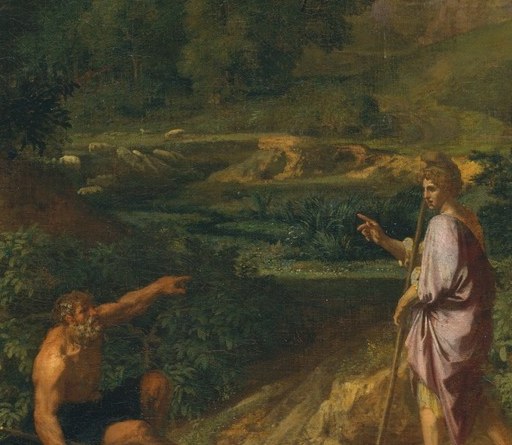
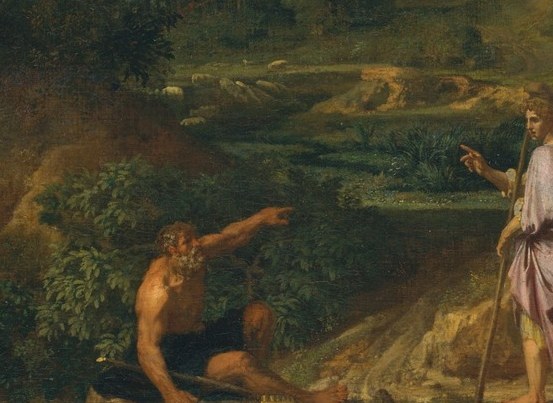
The story comes from Ovid's Metamorphoses. Mercury stole Apollo's cattle and hid them in the woods. Only one man witnessed it: an old herdsman named Battus. Mercury bribed him with a cow and swore him to secrecy. Disguising himself, the god returned to test Battus and asked if he had seen the herd. Battus betrayed him instantly. For that betrayal, Mercury turned him into a flint stone on the very spot.
Millet buries the clues in plain sight. The rock Battus rests against is no ordinary seat. It is his future. Follow the gesture of Mercury's raised arm and see where that command is aimed. Then look for the warm orange shape near the stream bank. In the myth the stolen cattle are the catalyst for everything, and that detail is the one most people scroll straight past.
Next time you see a landscape with a couple of figures, remember Battus. It might not be a quiet afternoon. It might be the moment before the judgment.
Details
Transcript
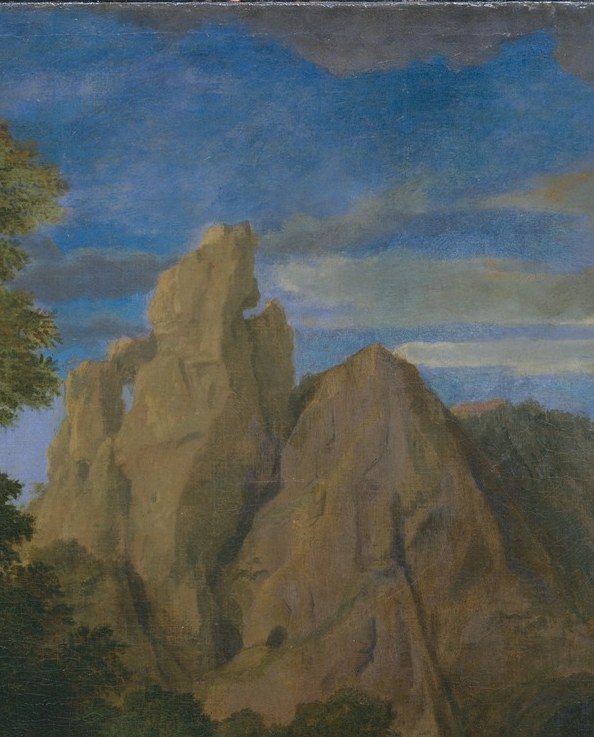
A dark forest. A jagged peak. A skyscape on the verge of breaking. Two figures by a stream. One commands, the other cowers. The man in the robe is Mercury, god of thieves and boundaries. The frightened man is Battus. He broke a promise to the god. His punishment is hidden in plain sight. Battus leans against it now. The rock he will soon become. And look beside him: the orange-red shape at the water's edge. Likely a hide from Mercury's stolen herd. The crime that started it all.