Saint Catherine by Guido Reni
Guido Reni's 'Saint Catherine,' painted in 1606, is a stunning example of his early Baroque mastery of light and texture, now housed at the Museo del Prado.
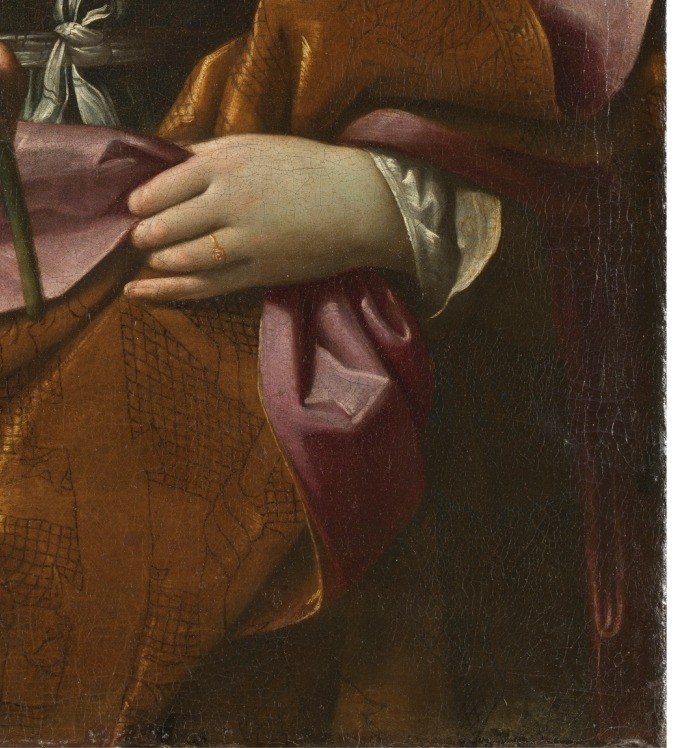
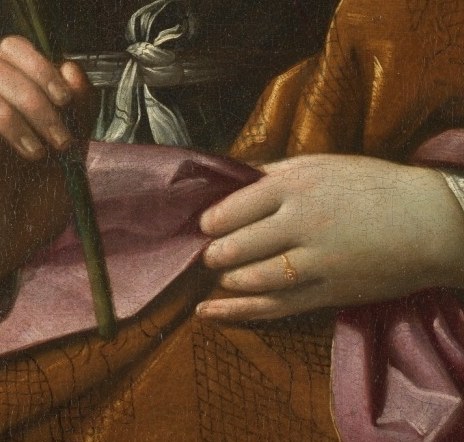
Look closely at the luminous quality of the saint's skin and the rich drapery of her garments. Reni's technique creates a captivating play of light and shadow, making fabrics appear to glow and shimmer with a lifelike quality.
Created during a period when Reni was establishing his reputation in Rome, this painting demonstrates his ability to render soft textures and subtle tonal transitions with oil paint. It balances naturalistic detail with an idealized grace, reflecting the artistic currents of the early seventeenth century and the Counter-Reformation's emphasis on saintly virtues.
The skill involved in creating such illusionistic textures with paint is truly remarkable. How do you think he achieved this effect?
Details



Transcript
This painter was a master of light. He made skin glow from within. The folds of her golden drape catch and reflect. Notice the rich, pink lining of her robe. See how the subtle sheen of her undergarment is painted. This is pure oil paint, made to look like silk and light.