元? 佚名 仿李公麟 人馬駱駝圖 冊頁|Mongol with Horse and Camel by Li Gonglin|Unidentified artist
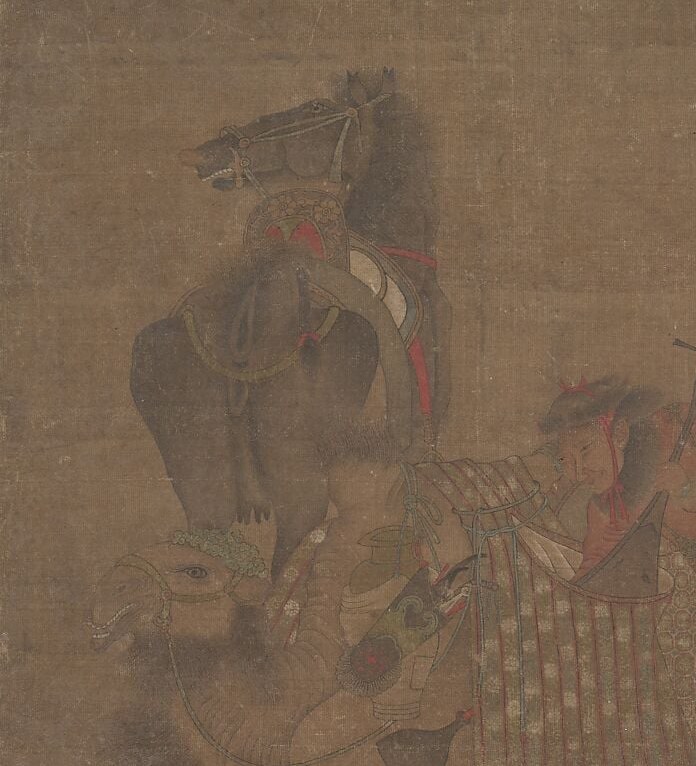
Mongol with Horse and Camel, an anonymous Yuan dynasty album leaf from around 1319, is a study in near-invisibility. The artist copied the style of Li Gonglin, the Northern Song master who perfected baimiao, or plain-line drawing, two centuries earlier.
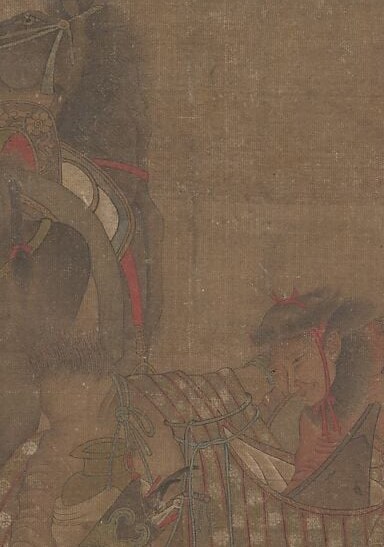
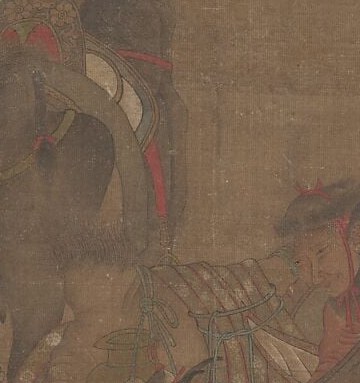
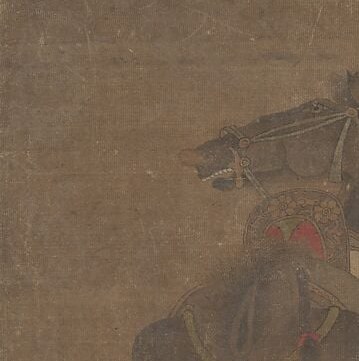
But step closer: the ink here is so faint the figures seem to float on the buff silk. The camel's neck bows under a load you can barely make out. The man's robe is cut by lines thinner than a hair. There is no background, no ground plane, only three forms suspended in empty space.
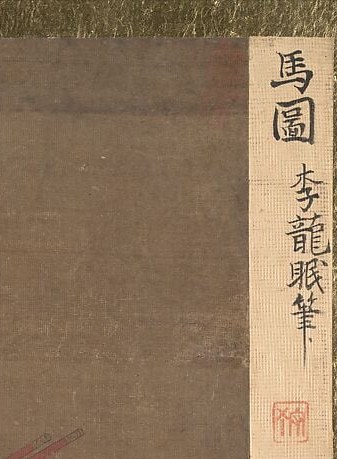
This is the extreme edge of baimiao technique. Li Gonglin painted animals with fluid, understated brushwork. His Yuan imitator pushed the restraint further still, removing all landscape elements and thinning the ink until the image nearly dematerializes. A collector's vermillion seal below the title inscription traces the leaf's journey through later hands, but the painter remains unknown.
You're looking at a copy of a copy, made with such control that the paint seems to vanish as you watch. What does it ask of you to look at something this delicate?
Details
Transcript
Start with the silk. Almost empty. A man leads a horse and camel across the void. Now look closer. The ink barely touches the silk. This is baimiao. Plain-line painting. Restraint as a virtue. It copies Li Gonglin, a master who died 200 years earlier. The copyist pushes the line even further. Almost to disappearance. The paint was rationed grain by grain. A single breath could ruin it.