Young Mother Sewing by Mary Cassatt
View the artwork: Young Mother Sewing →
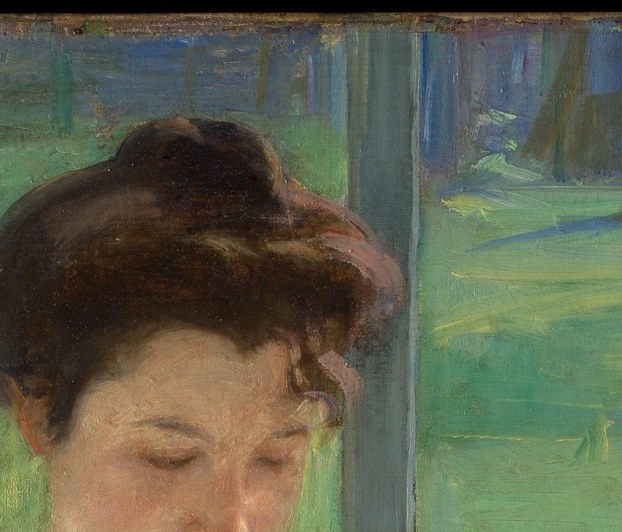
Mary Cassatt's 'Young Mother Sewing' (1900) lives at the Metropolitan Museum of Art, and it's a picture of a woman who knew her worth, even if the market took a century to catch up.
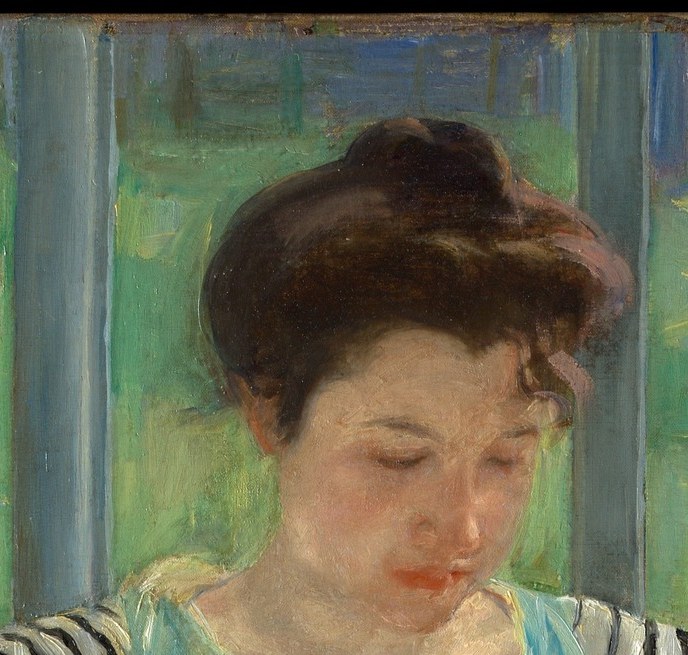
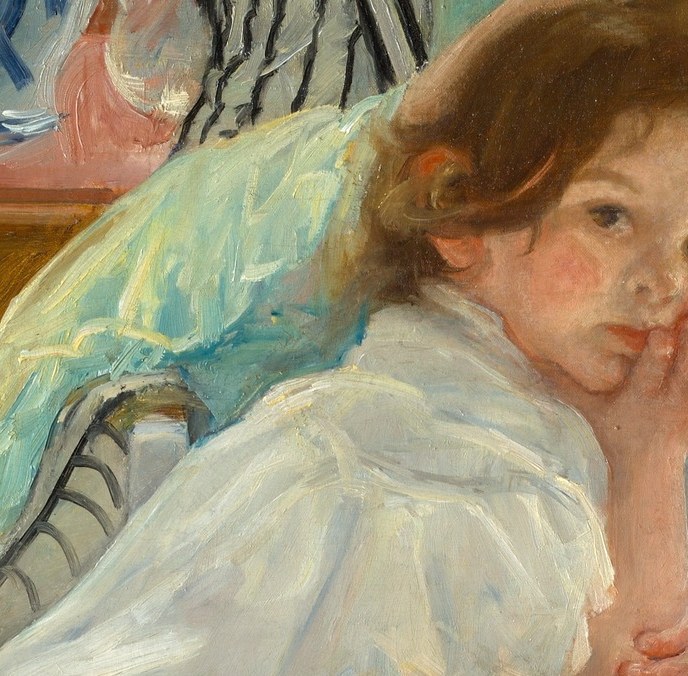
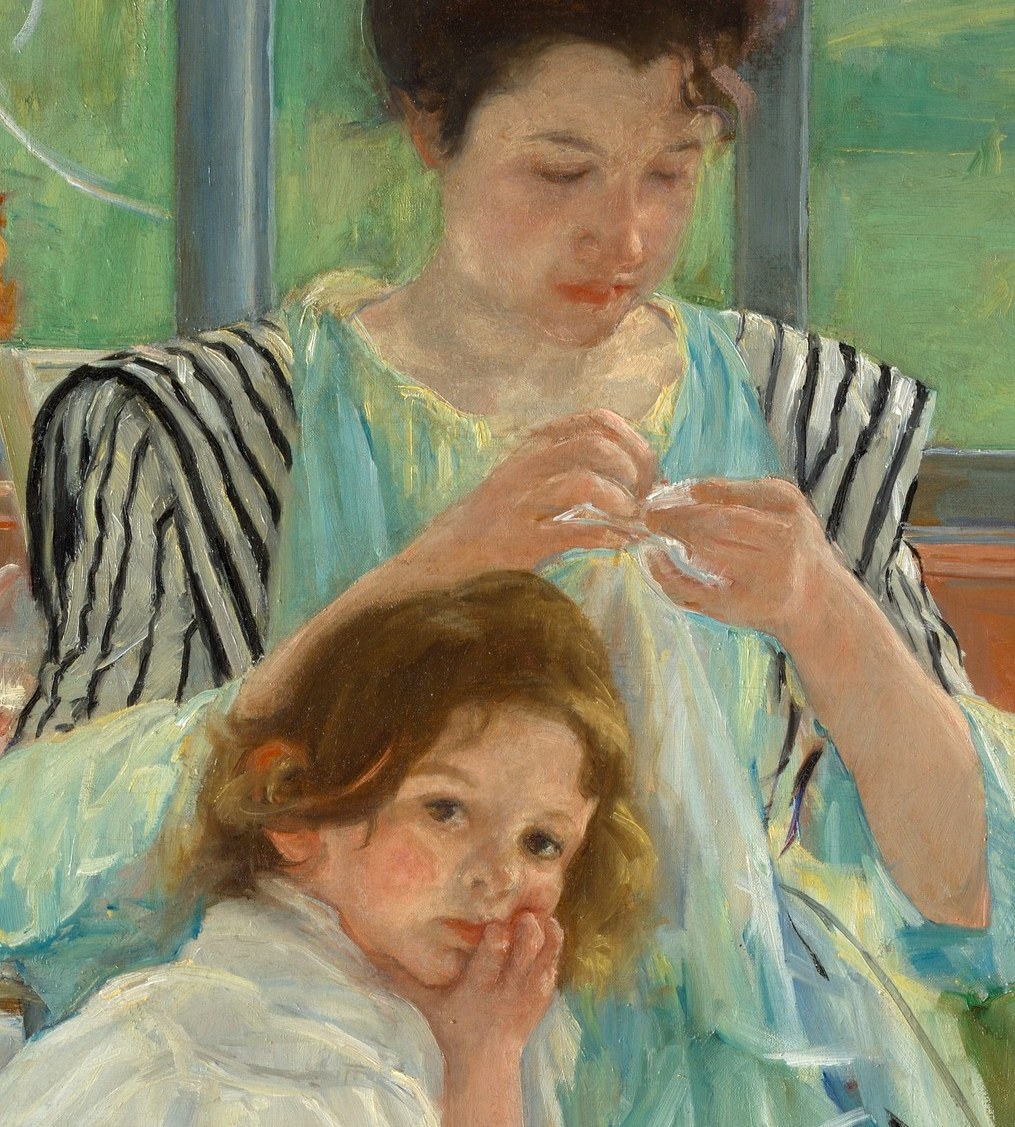
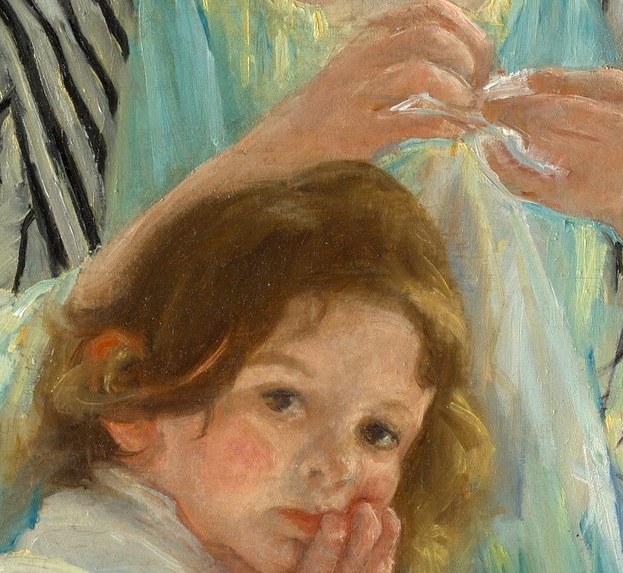
Look at the child's face. Unlike so many Cassatt children absorbed in play or sleep, this girl looks outward, meeting or nearly meeting your eye. Then let your gaze drop to the hands: the mother's busy with needle and fabric, the child's idle and folded. Cassatt makes the contrast feel like a fact of life, not a judgment.
Cassatt was born in Pennsylvania in 1844 and moved permanently to France in her twenties. She became the only American to exhibit with the Impressionists, and by 1900, when she painted this, critics grouped her with Berthe Morisot and Marie Bracquemond as the three great women of the movement. She was also the one who convinced wealthy American friends, the Havemeyers especially, to buy Monets and Manets, essentially building the Impressionist wing of the Met.
And yet for most of the 20th century, paintings like this one traded at a deep discount to male peers. 'Young Mother Sewing' went for $4 million at Sotheby's in 1997. Since then, Cassatt's best works have broken into eight-figure territory. The gap is closing.
#arthistory #marycassatt #impressionism
Details
Transcript
In 1900, Mary Cassatt was at her peak. Dealers called her one of the 'three great ladies' of Impressionism. But her market never matched the men she exhibited beside. A Cassatt oil this era could sell for $2,000. A Monet the same year: five times that. In 1997, this painting sold at Sotheby's for $4 million. Today, a major Cassatt mother-and-child can reach eight figures.