Artwork
Young Mother Sewing
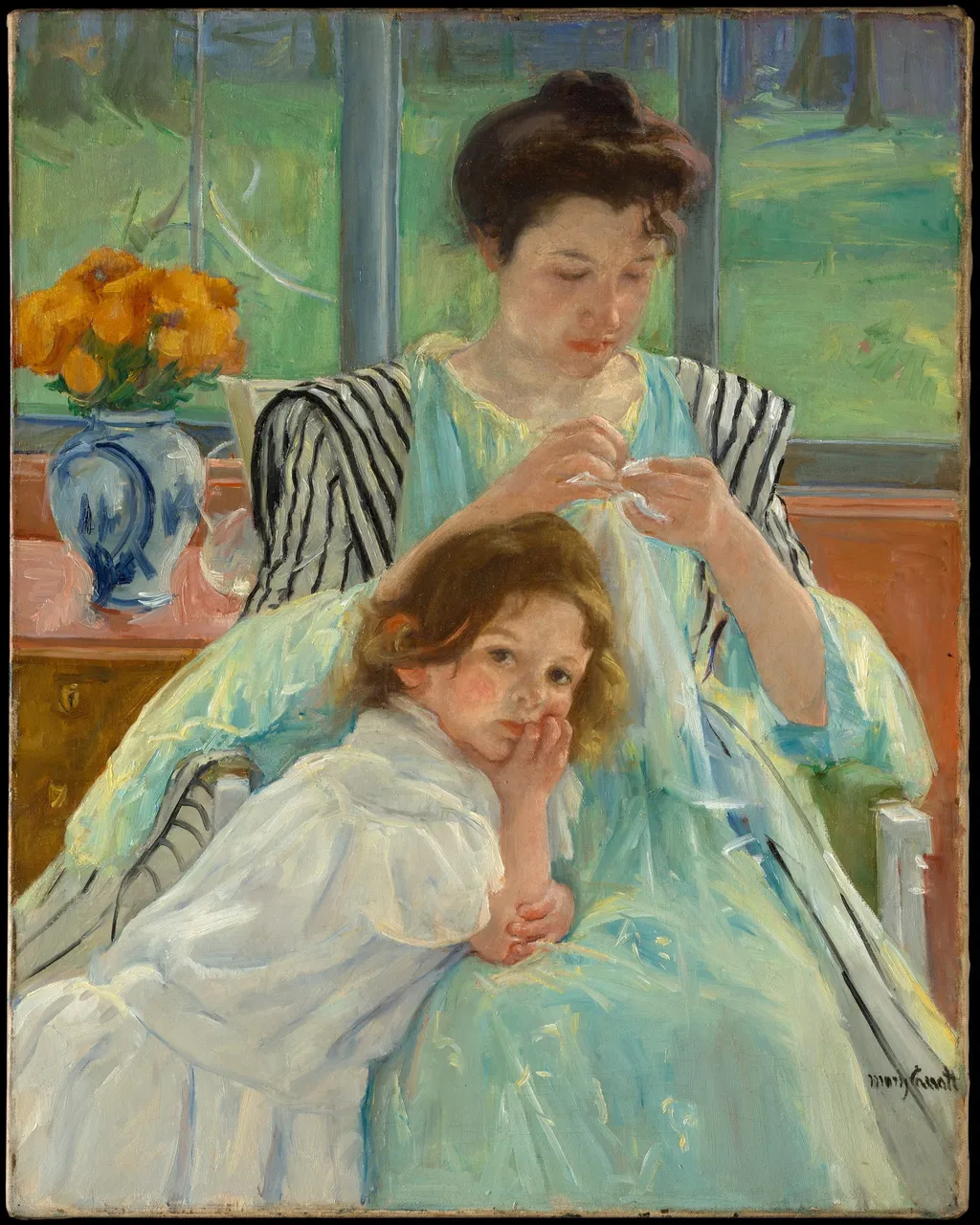
Young Mother Sewing is an oil painting by the Impressionist artist Mary Cassatt. It dates from 1900 and is held in the collection of the Metropolitan Museum of Art.
About this work
Subject & Meaning
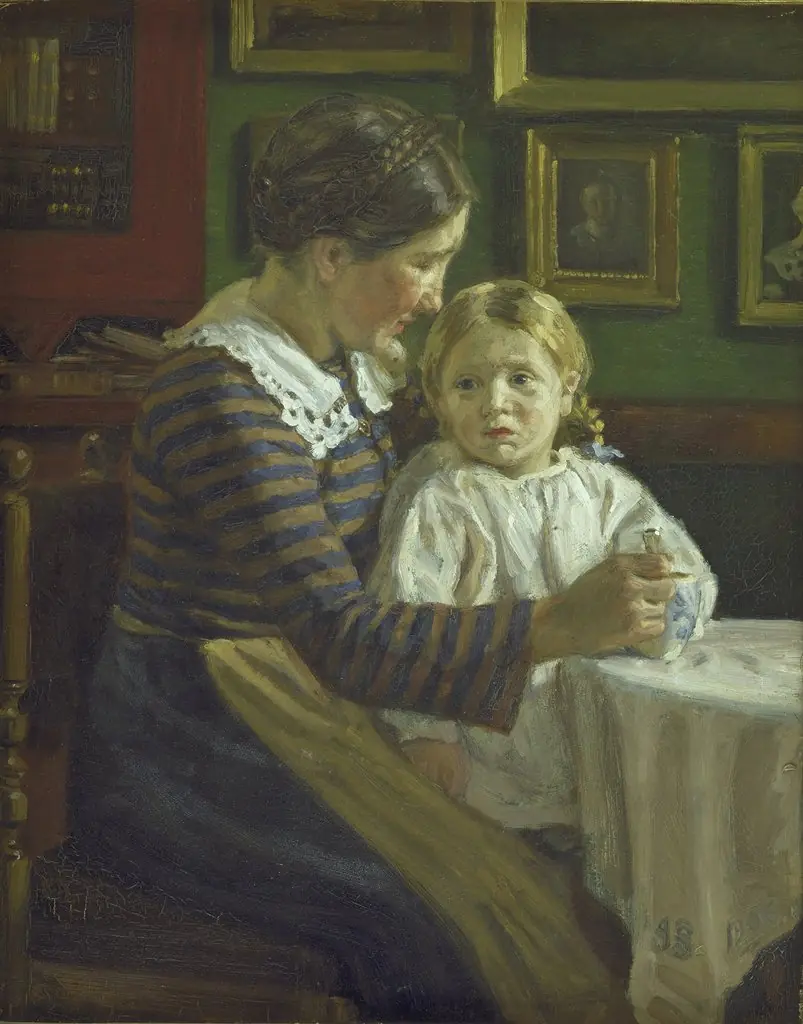
The painting shows a mother seated before a window, engaged in sewing, while a young girl in a white dress leans on her lap and looks toward the viewer (3,4,5).
The painting shows a mother seated before a window, engaged in sewing, while a young girl in a white dress leans on her lap and looks toward the viewer (3,4,5). The mother wears a striped dress covered by a green apron whose hue echoes the grass visible outside the window, linking the domestic interior to the natural setting (3,4,5). Cassatt employed two unrelated models for the figures (3,4,5).
The work belongs to the artist’s recurring mother‑child theme, conveying affection and reverence and reflecting the contemporary cultural focus on child‑rearing (5). Symbolically, the apron’s green ties the nurturing act to the outdoors, and the child’s outward gaze invites the viewer into this intimate moment, suggesting continuity and the future of the maternal bond.
Technique & Style
Executed in 1900, Young Mother Sewing is an oil painting on canvas measuring 92.4 by 73.7 centimeters. The composition features a mother seated before a window, wearing a striped dress and a green apron that visually echoes the outdoor grass, while a child in a white dress leans against her lap. Cassatt employed two unrelated models to achieve the scene's naturalism, capturing a candid moment where the mother continues her sewing despite the child's presence.
Stylistically, the work reflects Cassatt's broader shift during the 1890s toward maternal subjects, characterized by an affectionate and reverent approach to domestic life. The handling of the medium emphasizes the texture of the fabrics and the interplay of light from the window, grounding the figures in a specific, observable reality.
History & Provenance
Young Mother Sewing, an oil on canvas painting completed by Mary Cassatt in 1900, was acquired in Paris from dealer Paul Durand‑Ruel by Louisine Havemeyer in 1901. Havemeyer, a prominent American collector and suffragist, retained ownership until she bequeathed the work to the Metropolitan Museum of Art in 1929 as part of the H.O. Havemeyer Collection. The painting has subsequently been loaned to numerous institutions, including the Museum of Modern Art, the National Gallery of Art, and the Mint Museum.
Cassatt is known to have used two unrelated models for the mother and child, a fact noted by the Met.
Young Mother Sewing is held in the collection of the Metropolitan Museum of Art in New York, having been bequeathed to the institution in 1929 as part of the H.O. Havemeyer Collection. Prior to this acquisition, the work was purchased in Paris from the dealer Durand-Ruel by Louisine Havemeyer in 1901. The painting has a notable exhibition history linked to the women's suffrage movement; Havemeyer lent the piece to Knoedler's Gallery in New York for fundraising exhibitions in both 1912 and 1915.
Since entering the museum's holdings, the work has been widely exhibited on loan at various venues, including the Museum of Modern Art in New York, the National Gallery of Art in Washington, D.C., the Parish Art Museum, the Newark Museum, the Mint Museum of Art, the Santa Barbara Museum of Art, and the Newport Harbor Art Museum.
Overview
Young Mother Sewing, executed by Mary Cassatt in 1900, depicts an intimate domestic scene featuring a woman seated in a striped armchair, engaged in needlework while a young girl leans affectionately against her. The composition emphasizes the physical closeness and quiet companionship between the figures, a recurring theme in Cassatt's exploration of maternal bonds. The woman wears a soft green dress, contrasting with the child's pale, loose shirt, while a blue vase containing orange flowers rests on a table in the background.
Cassatt utilizes a palette of warm greens and yellows to capture the effect of sunlight streaming through a window, which bathes the interior in a luminous glow. This work exemplifies the artist's mature style, characterized by flattened perspectives and a focus on the psychological depth of everyday interactions. Created during a period when Cassatt was deeply invested in portraying the private lives of women, the painting reflects her departure from traditional academic constraints toward a more modern, impressionistic approach to light and form.
The piece stands as a significant example of her contribution to the depiction of the female experience in late 19th and early 20th-century art.
Own this work as a print
Artist & collection
Artist
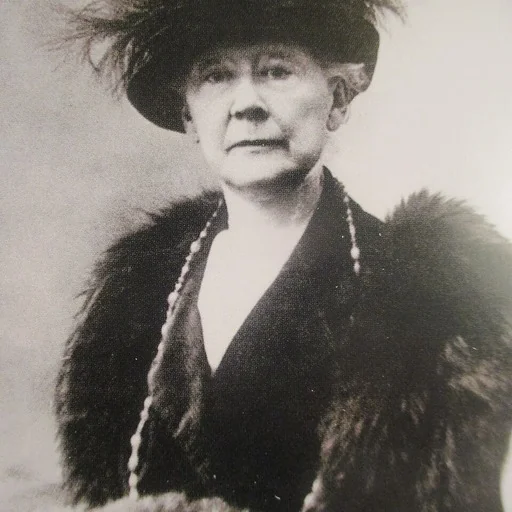
Mary Stevenson Cassatt (; May 22, 1844 – June 14, 1926) was an American painter and printmaker.