Roses by Vincent van Gogh
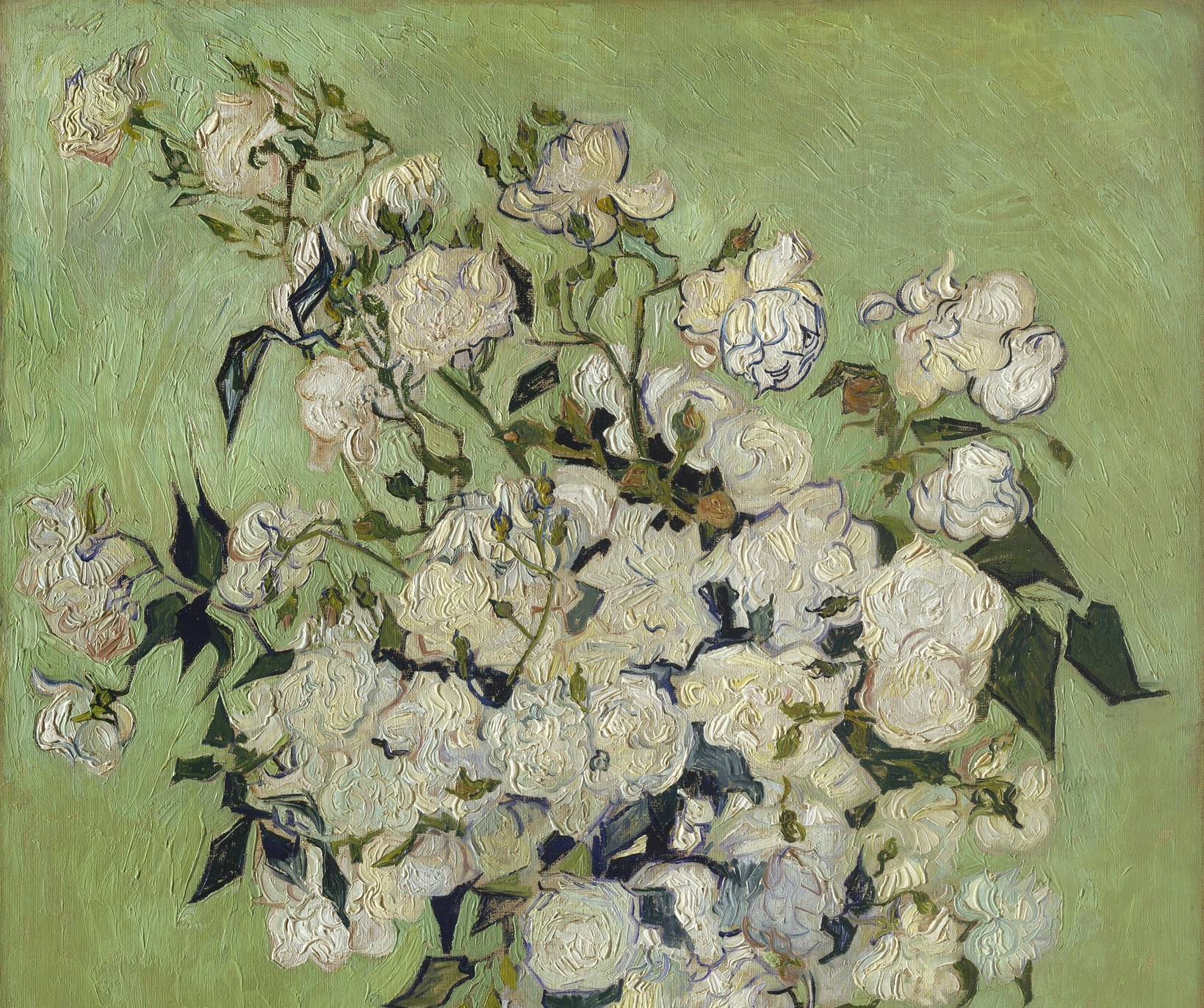
Vincent van Gogh painted 'Roses' in 1890, in the final months of his life, and it hangs today at The Metropolitan Museum of Art.
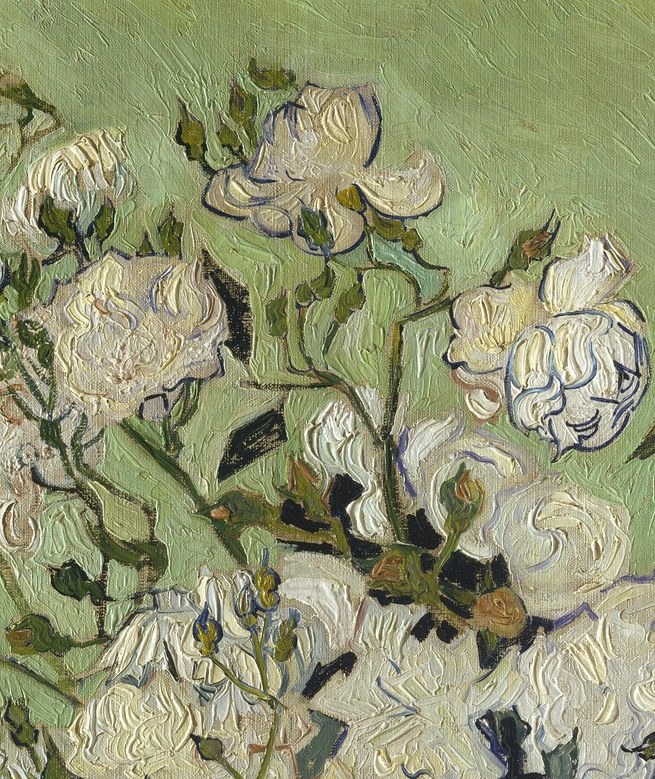
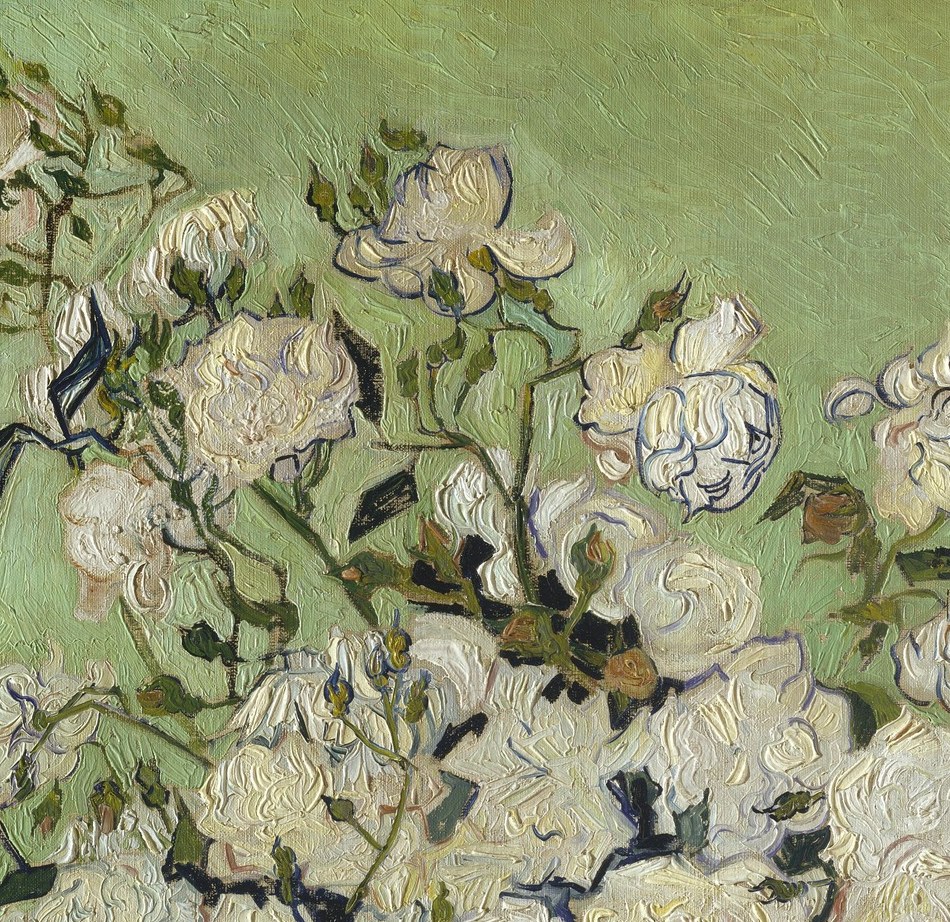
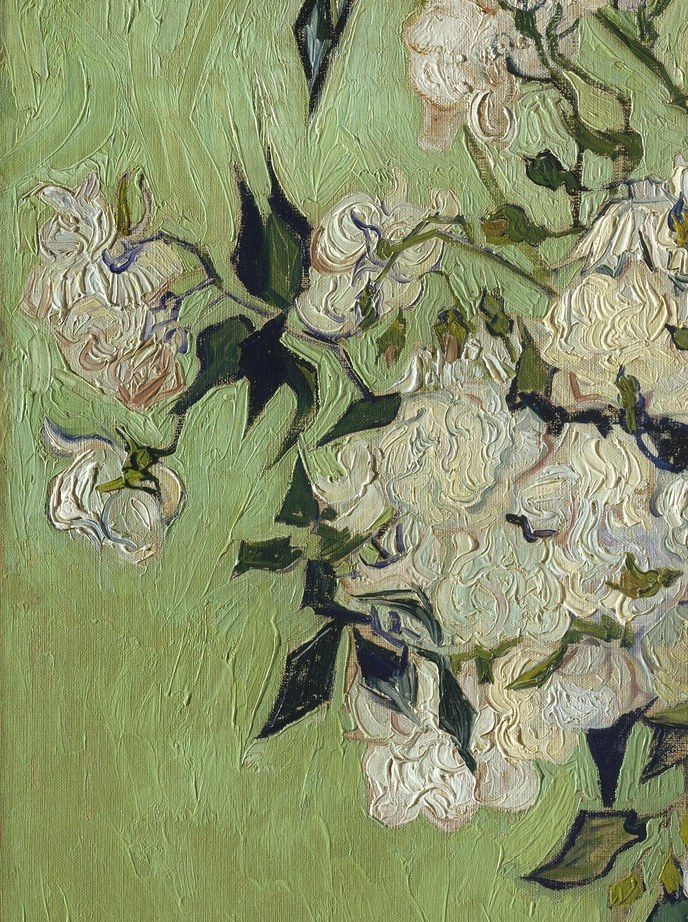
This is a painting you need to see in person, or at least in a detail shot that shows the surface. The white petals are not just described by his brush; they are physically built from it. Van Gogh applied the oil paint so thickly that each stroke stands up from the canvas, a technique called impasto. Those ridges are tall enough to catch real light and cast real micro-shadows, turning the paint into low-relief sculpture.
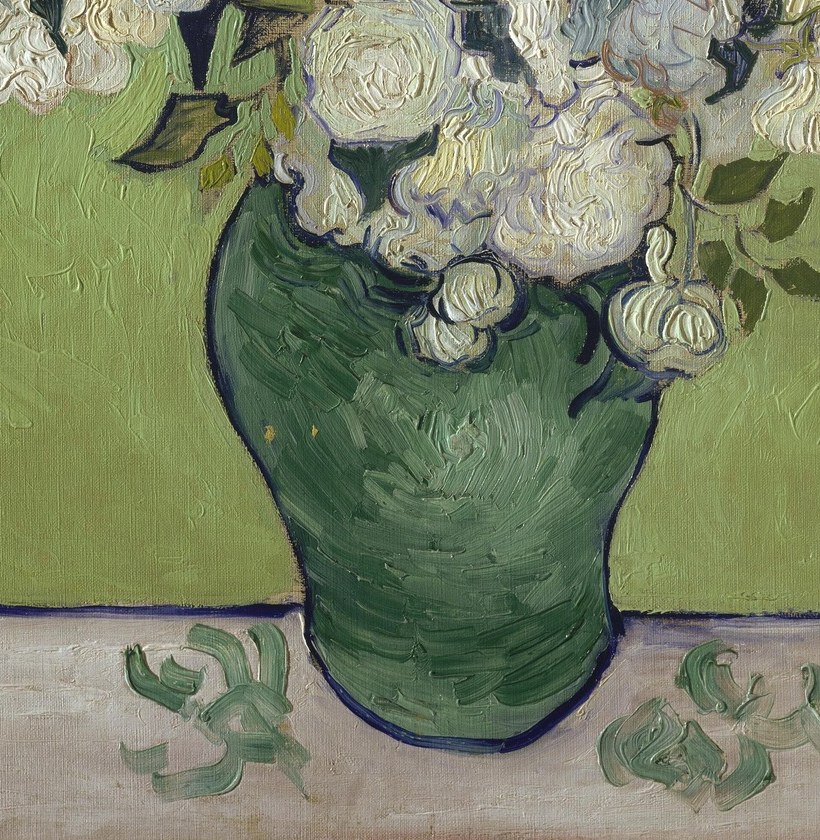
The choice of a pale green background for a green vase holding white roses was an audacious color gambit. It pushes nearly the entire canvas into a single, luminous key, so the white petals blaze purely by contrast. A thin blue horizontal line near the base is almost hidden, but it functions as a complementary anchor, quietly holding the composition together.
Van Gogh made this while a patient at the asylum in Saint-Rémy. Dying flowers cascade down the left side alongside fresh blooms, a quiet acknowledgment of the full cycle of life embedded in a painting most people read as simply beautiful. What do you notice first: the sculpted petals, or the single stem breaking hard to the right?
Details
Transcript
It looks like a vase of white roses. But this is not a flat picture. Look closer at the paint itself. Each petal is a ridge of pure oil paint. Thick enough to cast its own shadow. The brush didn't blend. It sculpted.