The Marble Steps Leading to the Church of Santa Maria in Aracoeli in Rome by Christoffer Wilhelm Eckersberg
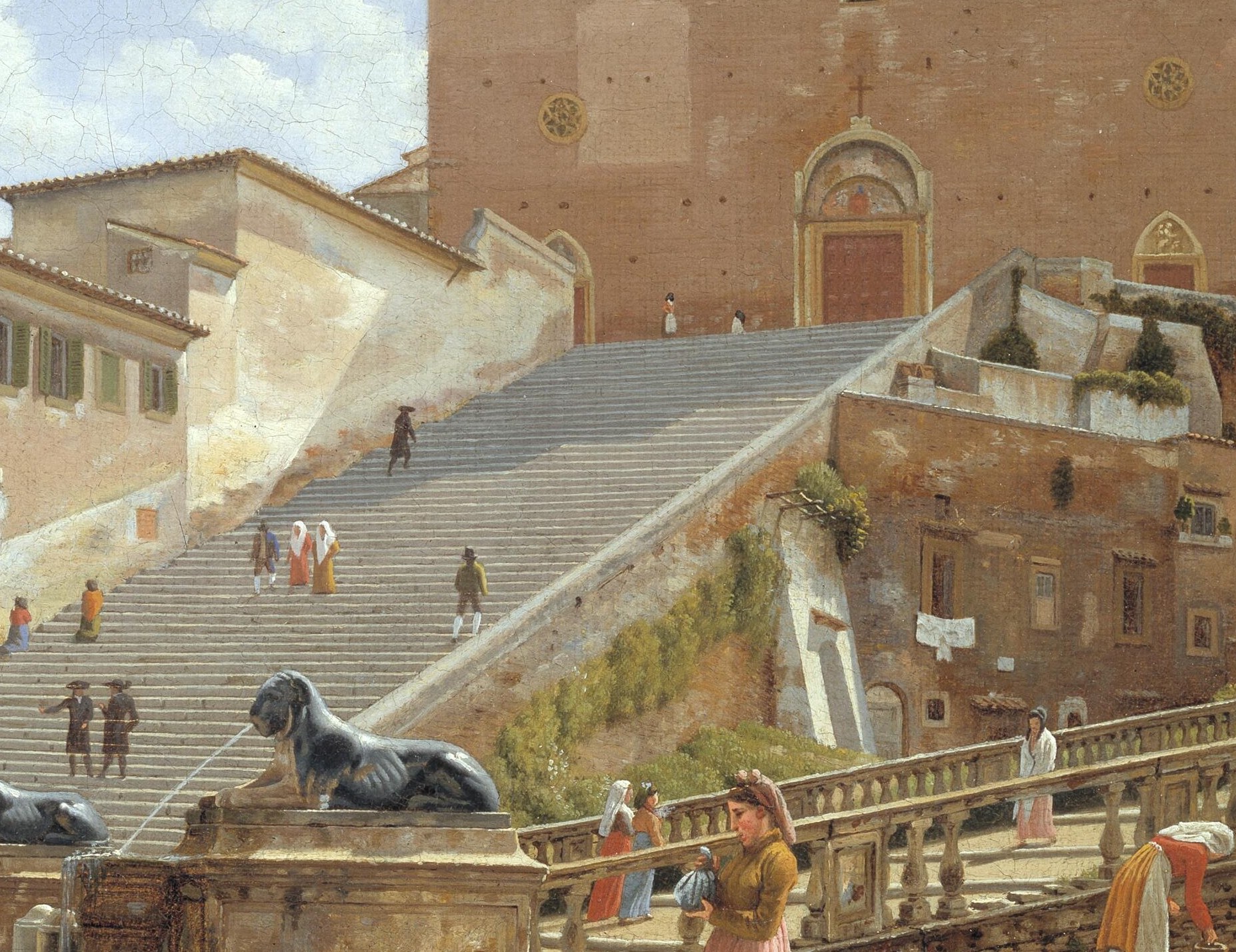
C. W. Eckersberg's "The Marble Steps Leading to the Church of Santa Maria in Aracoeli in Rome," painted between 1814 and 1816, is a cornerstone of the Danish Golden Age. This oil on canvas, now in a museum collection, captures a precise moment of Roman life.
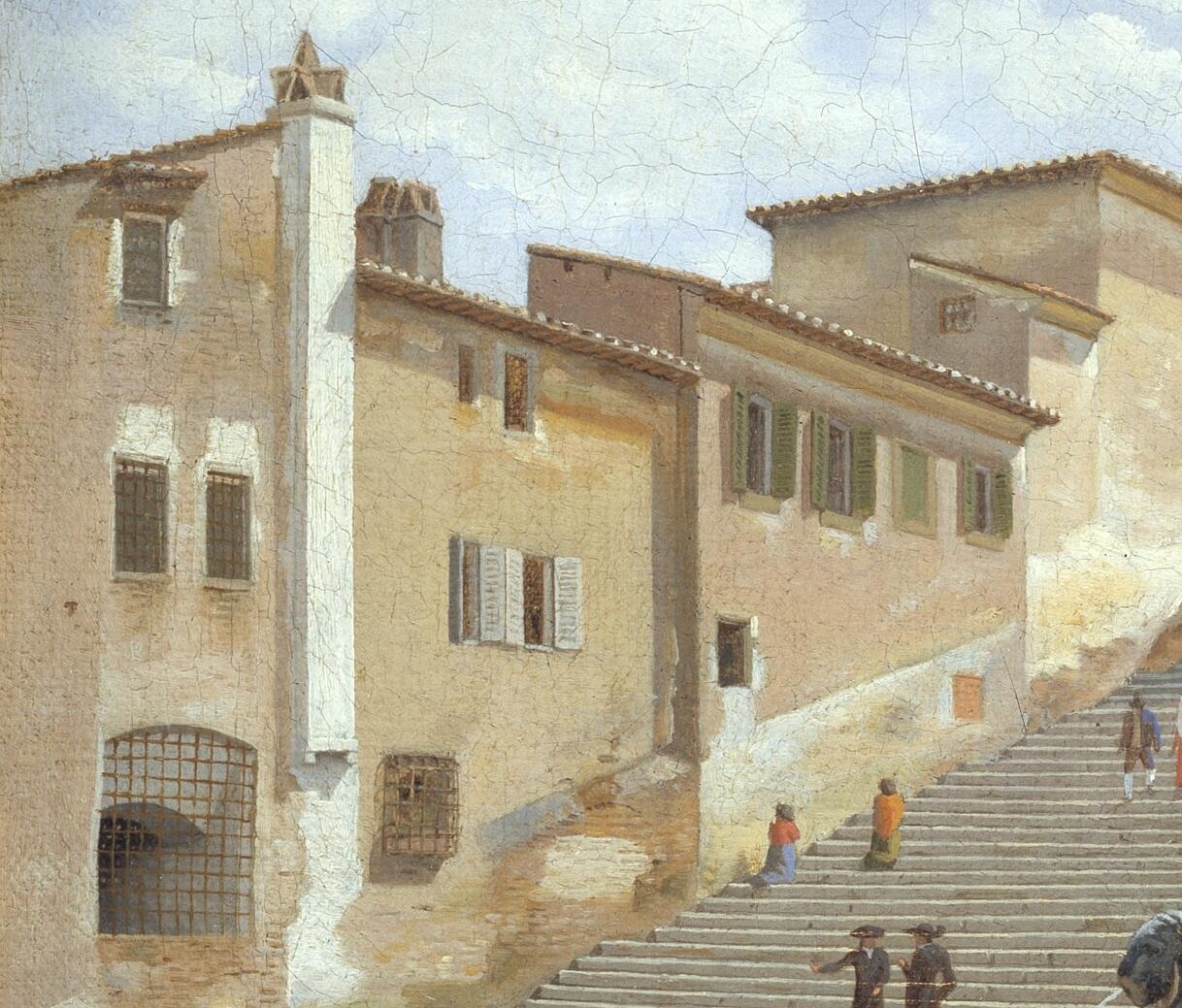
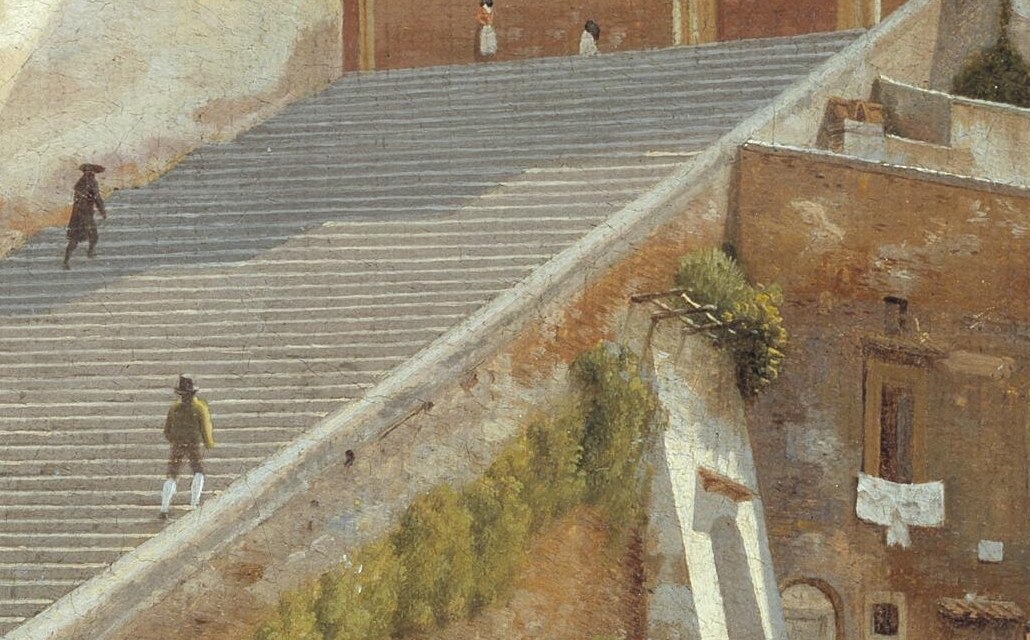
Look closely at how Eckersberg renders the play of light and shadow on the vast marble steps, and the small figures animating the scene. His choice of a low viewpoint emphasizes the monumental scale of the architecture.
During his time in Rome, Eckersberg meticulously observed and painted the city's ancient and contemporary life. This dedication to realism and his structural compositions laid the foundation for an entire movement in Danish art.
He is widely regarded as the "Father of Danish painting" for his profound influence. What details draw your eye most in this Roman scene?
Details
Transcript
This painter lived in Rome from 1813 to 1816. He became known for his detailed urban scenes. He chose a low viewpoint to emphasize the grand scale. He painted outdoors to capture the mid-morning light. His meticulous eye captured every small human detail. He is called the Father of Danish painting.