Niagara Falls by Philip Leslie Hale
Philip Leslie Hale’s Niagara Falls, painted in 1902, is an American Impressionist view of the iconic cataract now held at The Metropolitan Museum of Art. The painting is less a postcard of plunging water than a document of a place already thoroughly shaped by tourism and industry at the turn of the century.
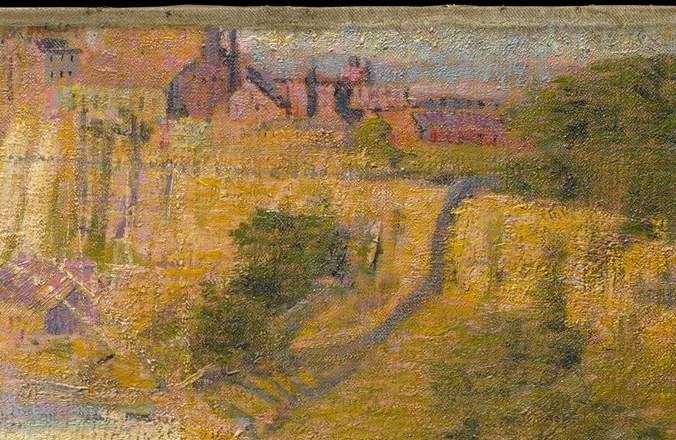
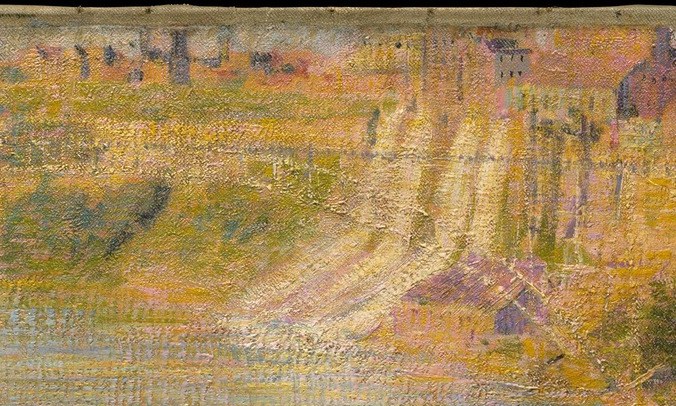
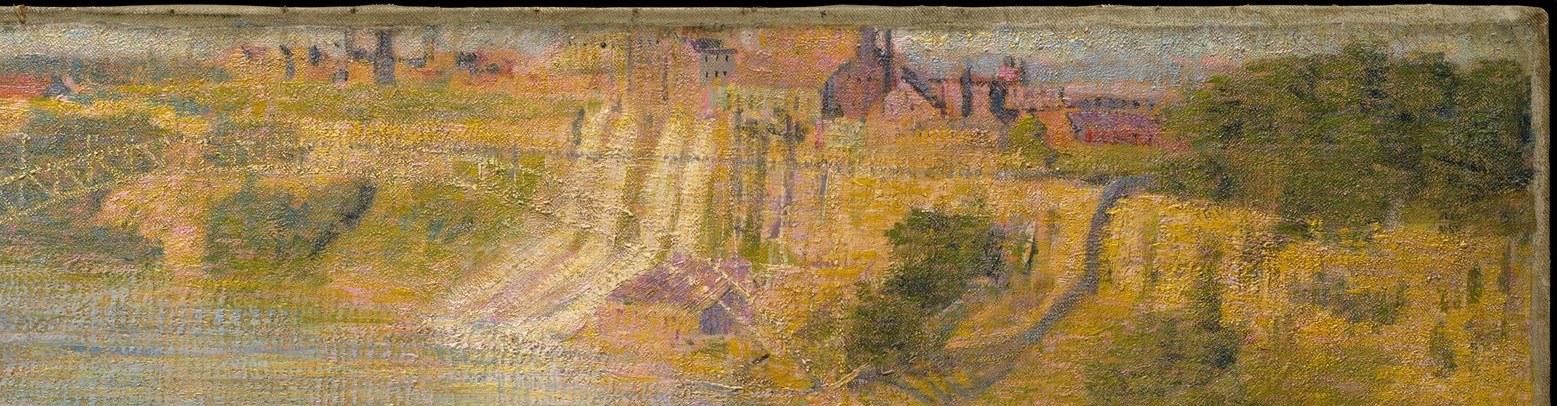
Look past the mist and the dark framing trees on the left. On the far bank, tiny reddish buildings are visible, hotels and structures that had crowded the Niagara rim by 1902. A faint horizontal bridge spans the upper middle distance, one of the railway or pedestrian crossings that made the falls accessible to mass sightseeing. Hale did not crop these out; he let them sit quietly in the haze.
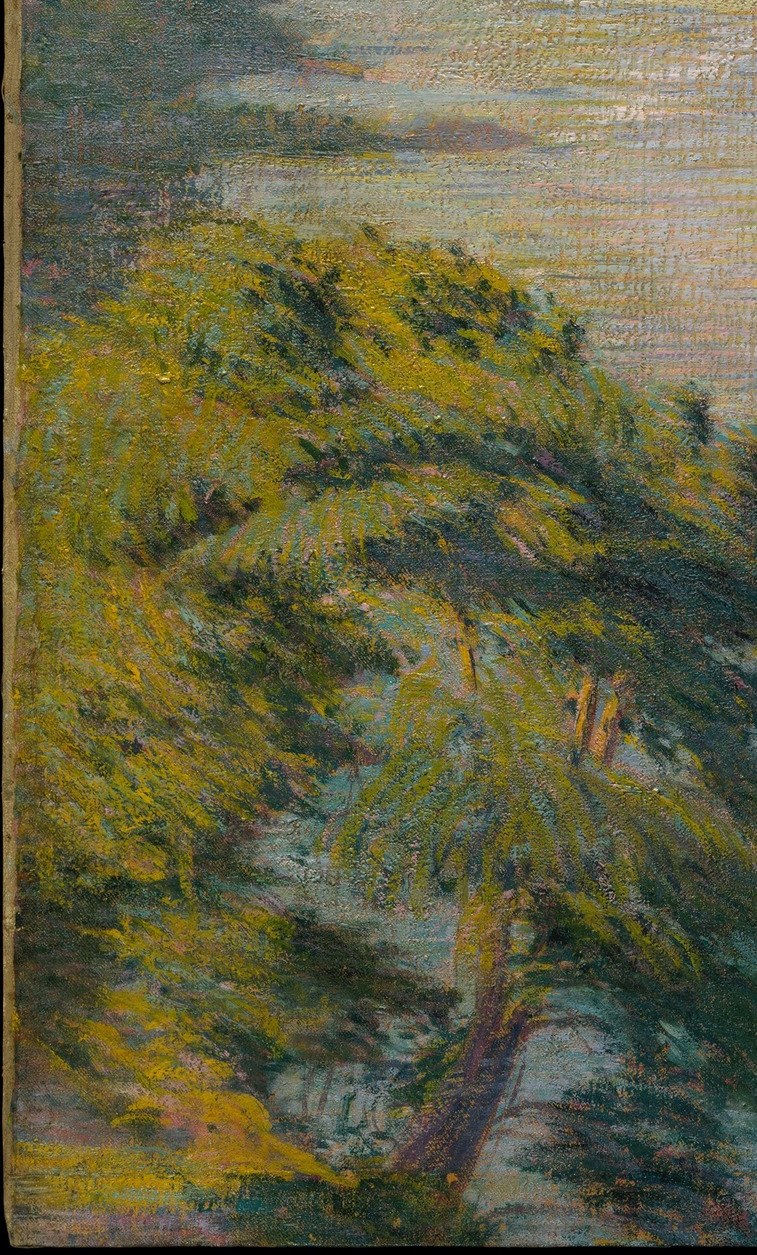
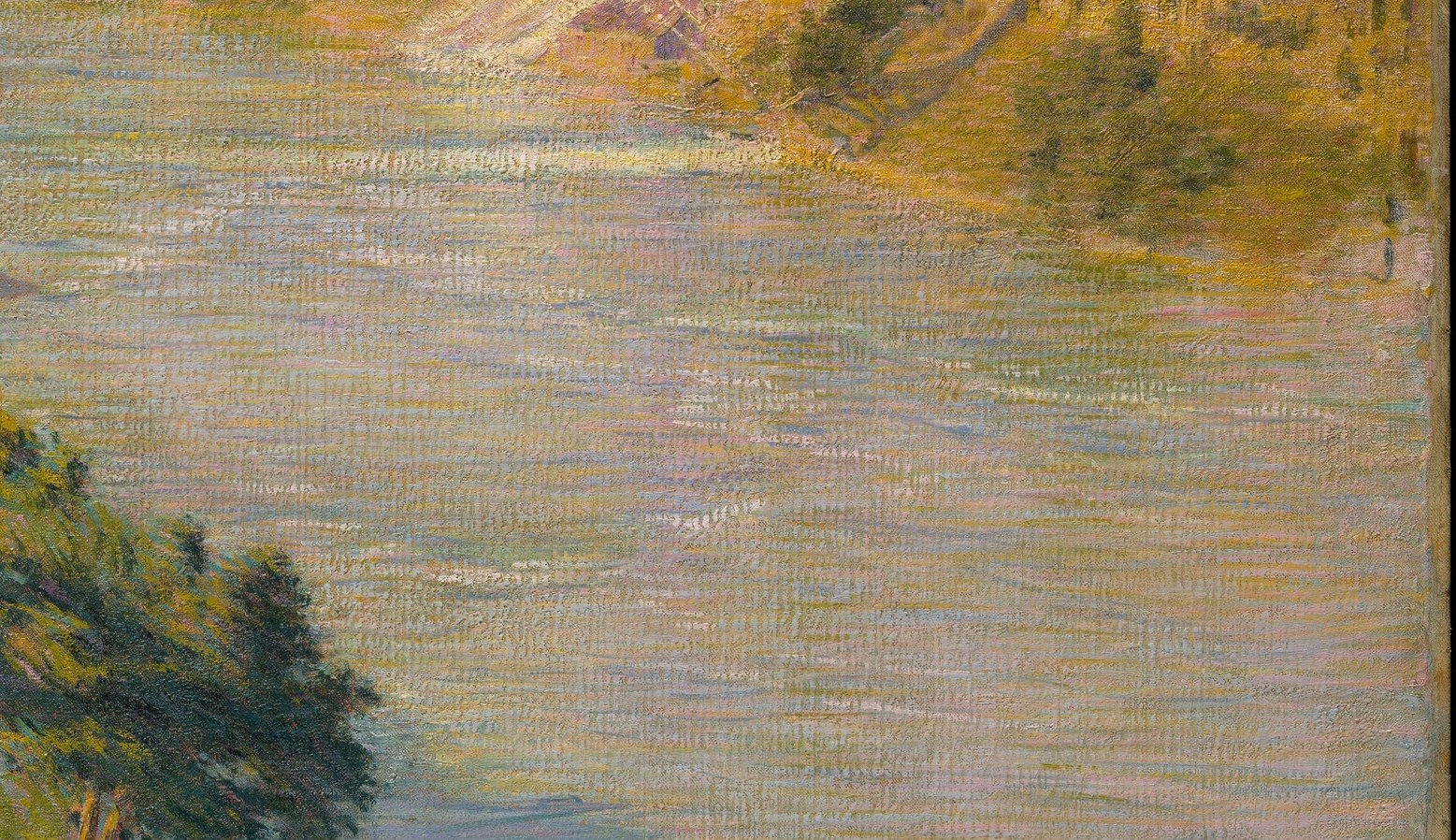
Hale was a Boston painter, a teacher, and a writer, part of the American Impressionist generation that studied light and atmosphere through direct observation. He applied the paint thickly here, in visible, scraped-on strokes, with muted greens and blues punctuated by warmer tones near the horizon. The work shows his eye for how atmosphere dissolves hard edges, the sky and the spray above the falls merge without a clear boundary.
He was looking at Niagara not as untouched wilderness but as a contemporary landscape, one where nature and human construction coexisted. What do you notice first on the far shore after the water releases your eye?
Details
Transcript
Most paintings of Niagara cut out everything but the water. Hale left in the hotels. By 1902, the rim of the gorge was crowded with tourist accommodations. A faint bridge spans the upper middle distance. Railways had been bringing sightseers here for decades. He framed the whole scene through these dark foreground trees. The wild and the built, held in one quiet composition.