Pears by Manet, Edouard
Manet's "Pears," painted in 1880, at the National Gallery of Art, Washington D.C., isn't just a simple still life; it's a masterclass in capturing texture and light with astonishing economy.
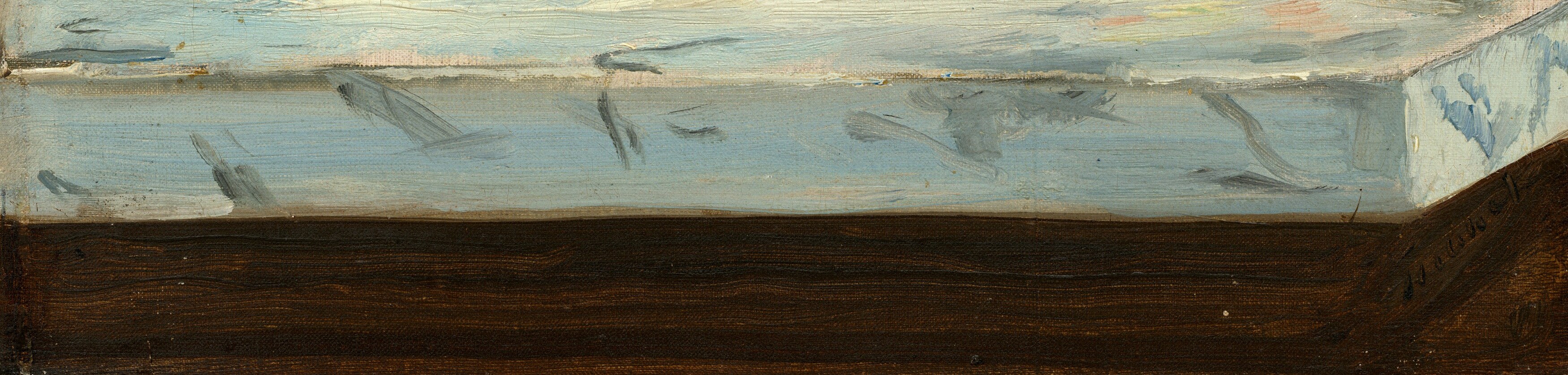
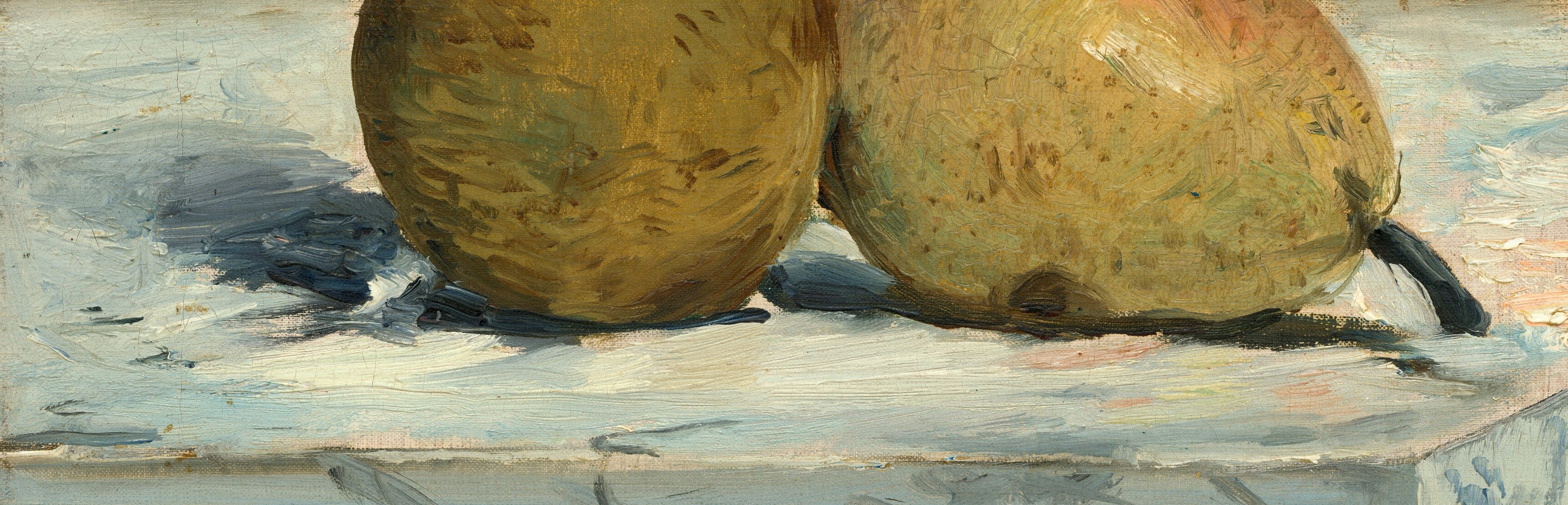
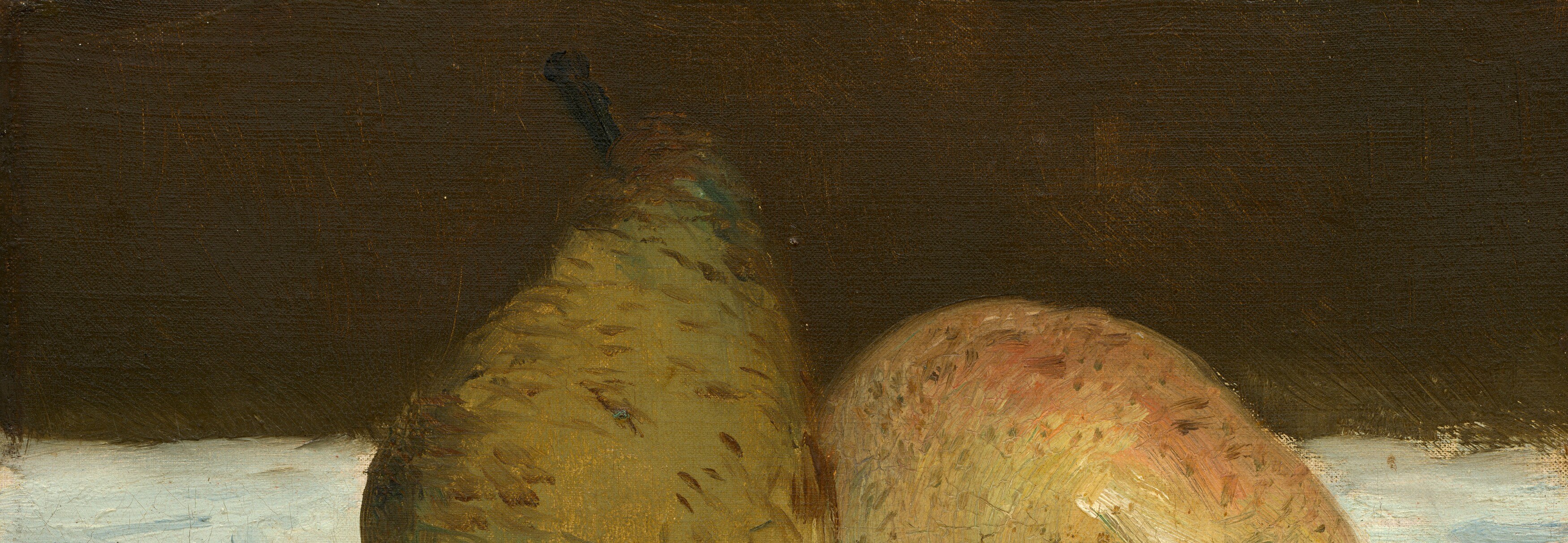
Look closely at how the painter brings these everyday objects to life. Notice the soft highlights on the fruit and the almost tactile quality of the dark pear stems. But the true feat is in the table, where broad strokes of blue suggest solid form, and a few quick dashes of white create the impression of a linen tablecloth.
Created toward the end of his life, this painting showcases Manet's innovative approach, bridging Realist observation with Impressionist sensitivity. He used dark backgrounds and sharp light, a style influenced by his love for Spanish art, to make colors pop and surfaces gleam.
It's a painting that teaches us to see the extraordinary in the ordinary, achieved with a boldness that still feels fresh today. What unexpected details do you notice?
Details
Transcript
This painter used simple subjects to explore light and texture. He captures the soft glow on these pears with quick, confident strokes. But the real magic is in the painting of the table. He renders the solid edge with broad, almost abstract blue tones. And the tablecloth texture, with just a few strokes of white paint. It's a trick of light and brushwork that feels strikingly modern.