Madonna and Child by Jacopo Bellini
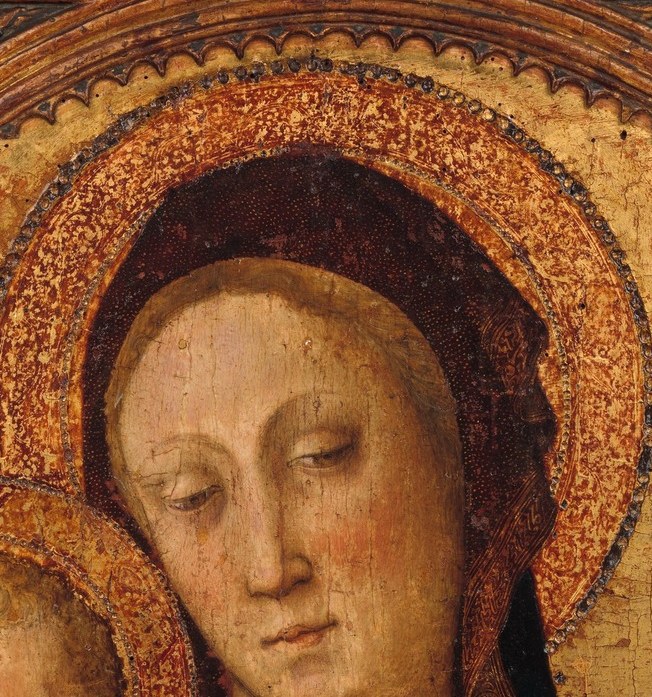
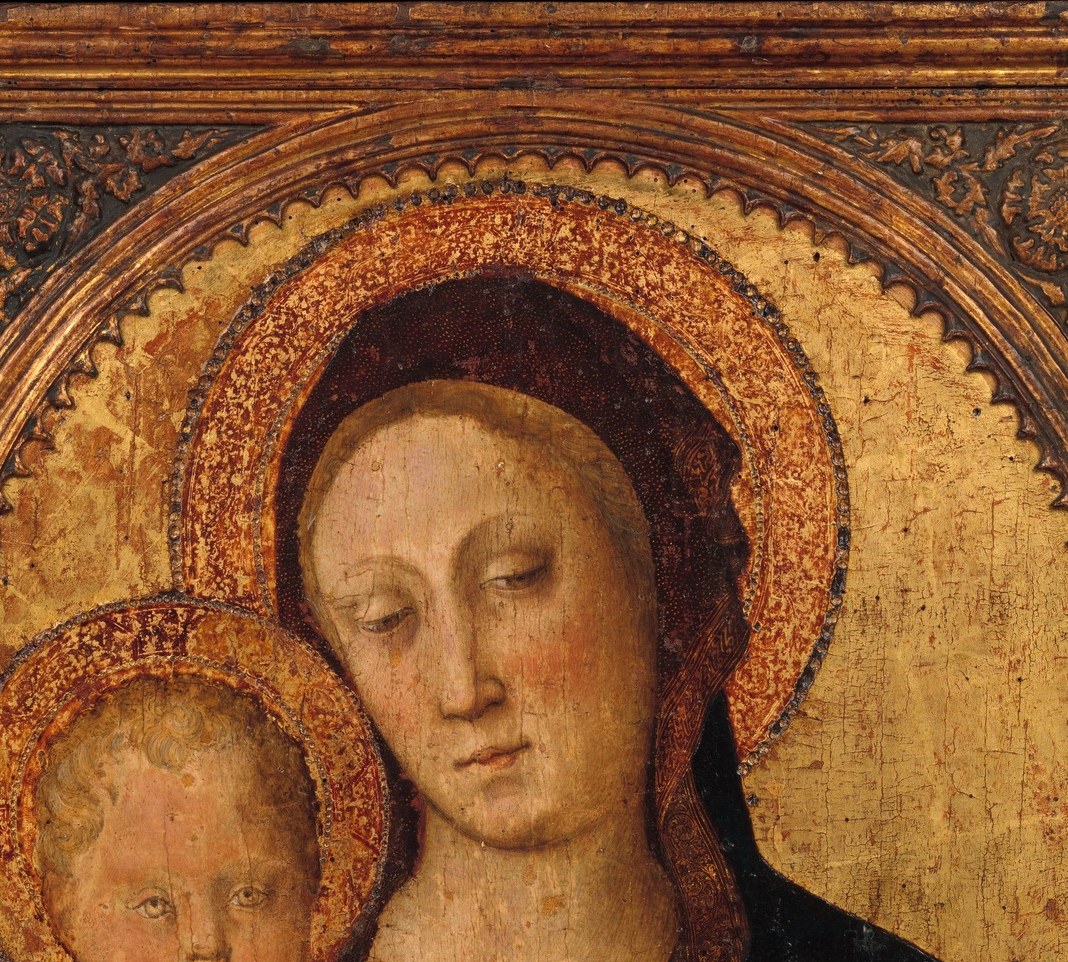
Jacopo Bellini's Madonna and Child, painted around 1440, is one of the rare surviving panel paintings by the man who essentially founded the Venetian Renaissance. Few finished works by his hand remain today, which makes this tempera panel in a private collection an exceptionally important document. Bellini's true legacy survives in his sketchbooks, now in the British Museum and the Louvre, which reveal his obsessive study of perspective and architecture. But this painting shows him applying those revolutionary ideas to an ancient, sacred subject.
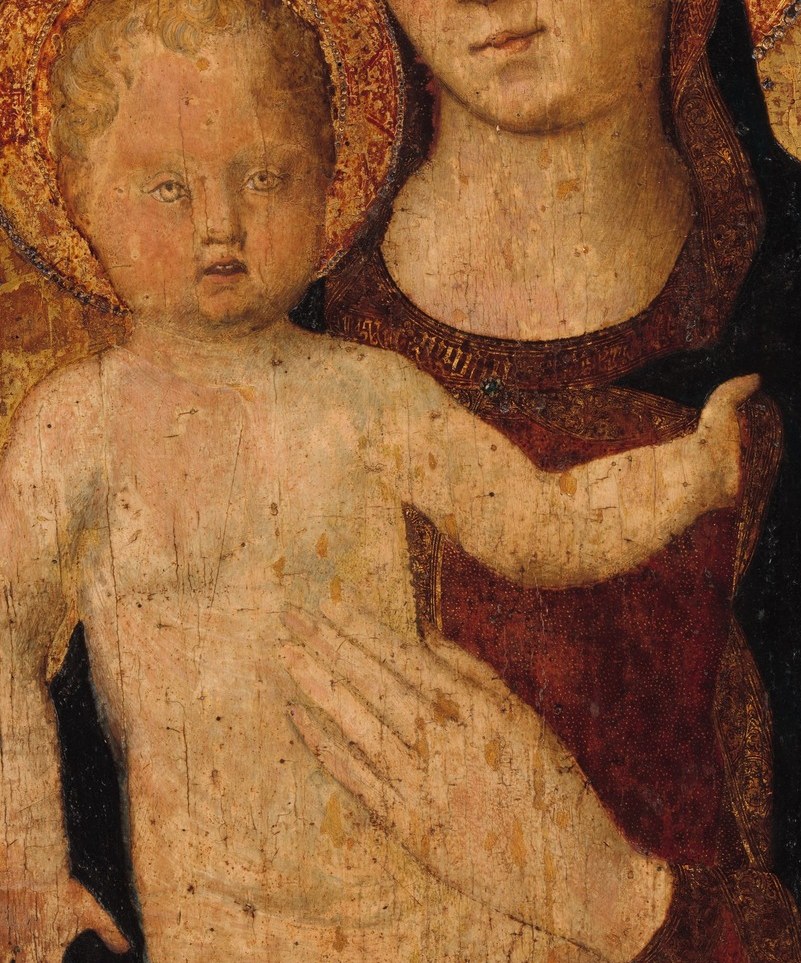
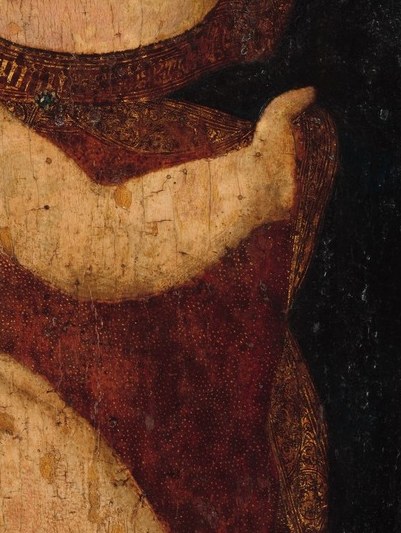
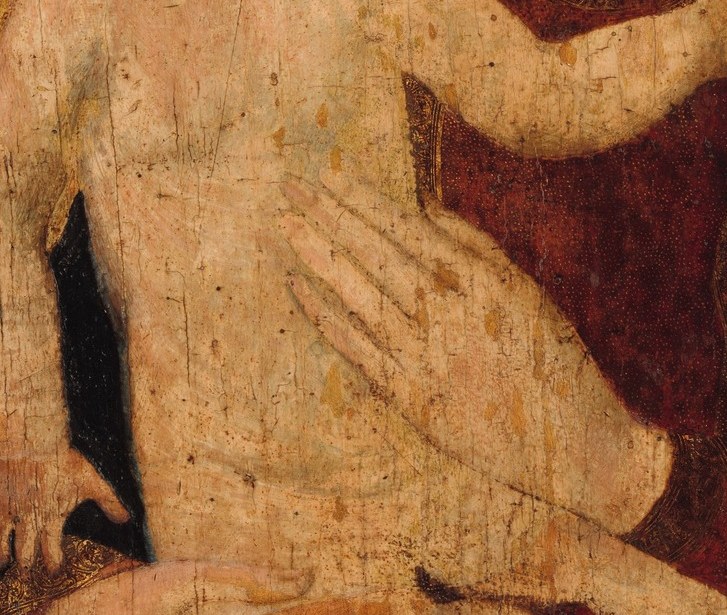
Look at the Christ Child's right hand. The fingers are pressed against Mary's dark mantle in a gesture of genuine, clinging intimacy. This is not a stiff Byzantine blessing, it is a small child gripping his mother. That single detail signals Bellini's break from the rigid, distant icons that dominated Venetian churches at the time. The infant's unclothed body makes the same argument: the divine is not abstract, but fully, vulnerably human.
Bellini trained his sons Gentile and Giovanni, and his son-in-law Andrea Mantegna. Giovanni would carry Venetian painting to its luminous peak, but Jacopo laid the intellectual foundations: perspective, naturalism, and a human warmth that still feels immediate almost six centuries later. The golden halo and gilded background honor tradition, but the hand clinging to the dark blue mantle is the future.
What do you notice more in this painting: the sacred gold, or the very human child?
Details
Transcript
She seems infinitely gentle. A universal mother. But in 1440s Venice, tenderness was not enough. Bellini was competing with gold-leaf icons that felt distant and rigid. So he gave the holy child the body of a real, unclothed infant. And watch his right hand. It clings. A child gripping his mother. That clinging hand was a theological earthquake. Divine love made graspable.