Saint Ursula with Two Angels and Donor by Gozzoli, Benozzo
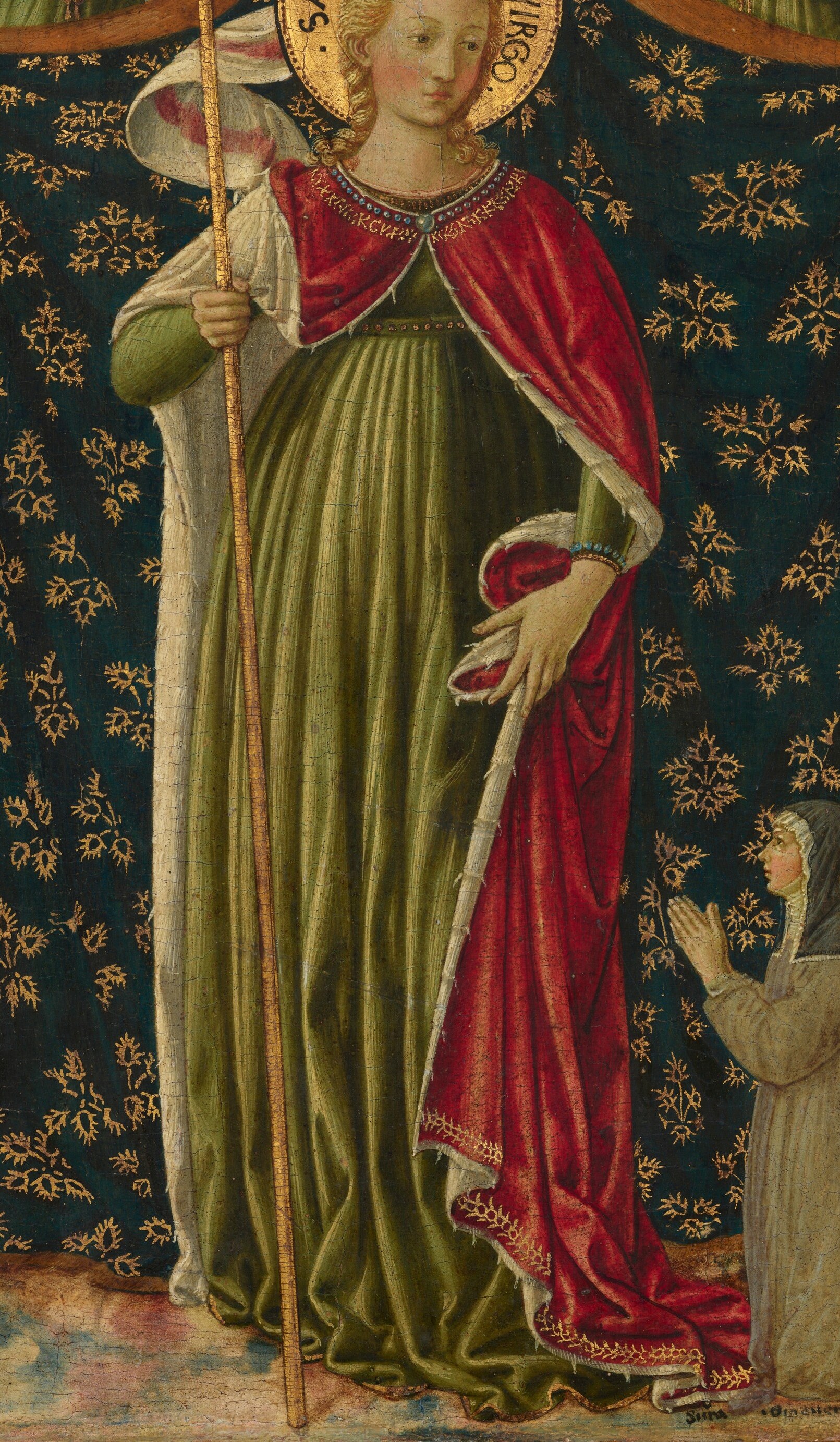
Benozzo Gozzoli painted "Saint Ursula with Two Angels and Donor" around 1458, and the whole composition radiates from a single, vanishingly small gesture. This is a tempera-on-panel devotional work, likely commissioned for a private chapel by the very man you see kneeling in the corner.
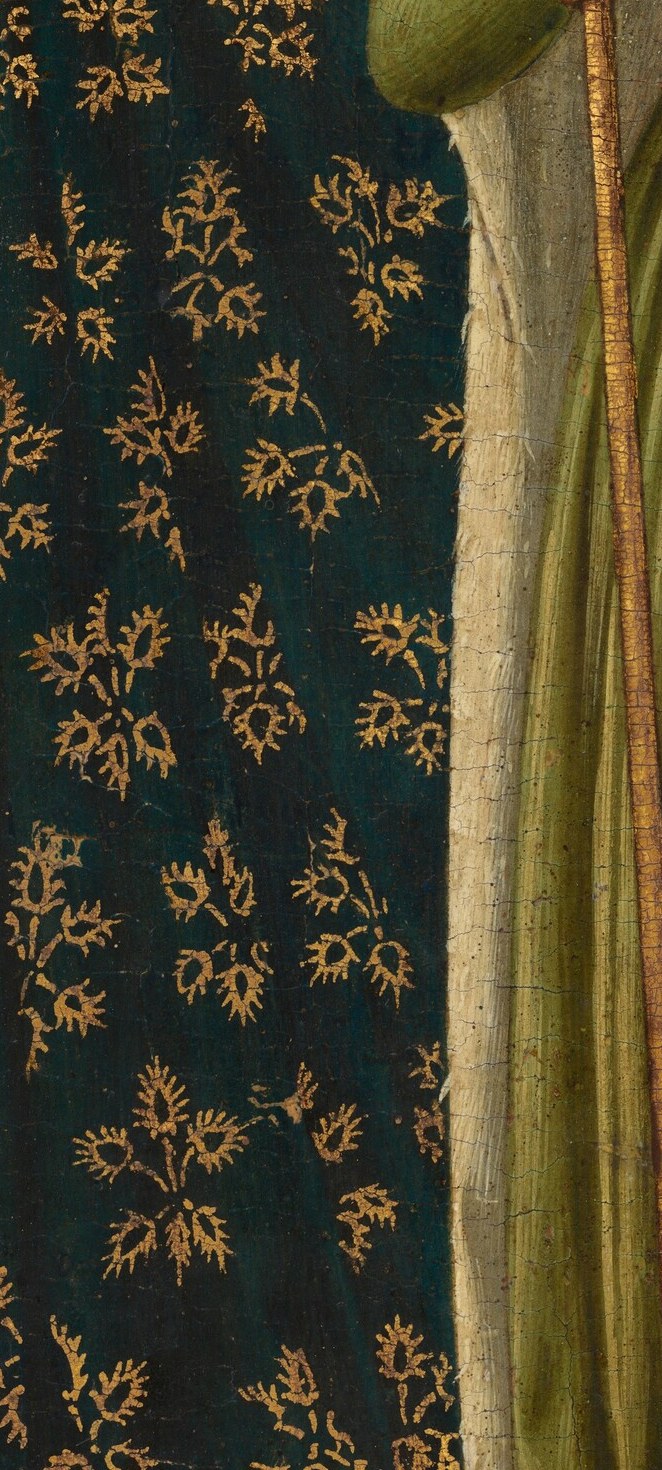
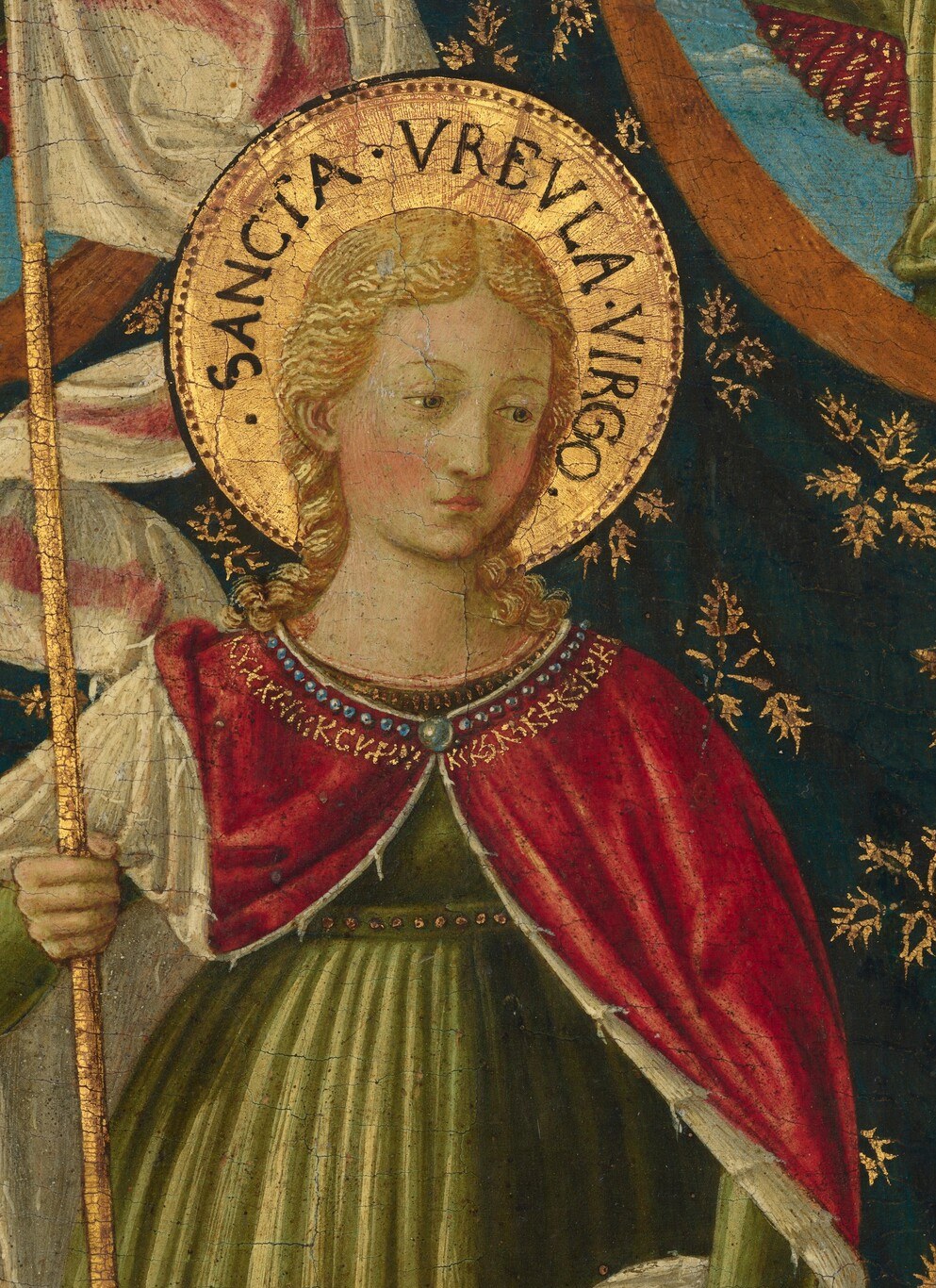
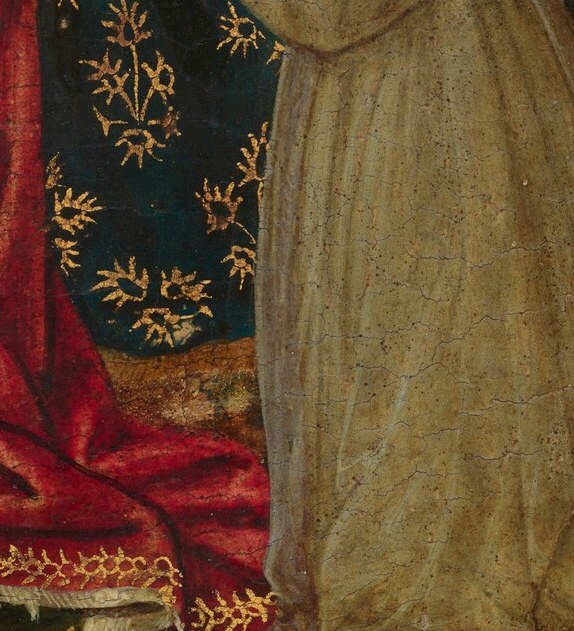
Let your eye travel. The saint fills the panel, monumental and serene, her gilded halo burning against a patterned teal ground. Gozzoli, a pupil of Fra Angelico, gives her a red mantle modeled with hatched strokes of tempera that glow like crushed velvet. Two angels flank her, their multicolored wings a direct inheritance from manuscript illumination, holding a white banner inscribed with her name. The martyr's palm in her hand is the symbolic key to the whole scene: Ursula was a Christian princess killed for her faith.
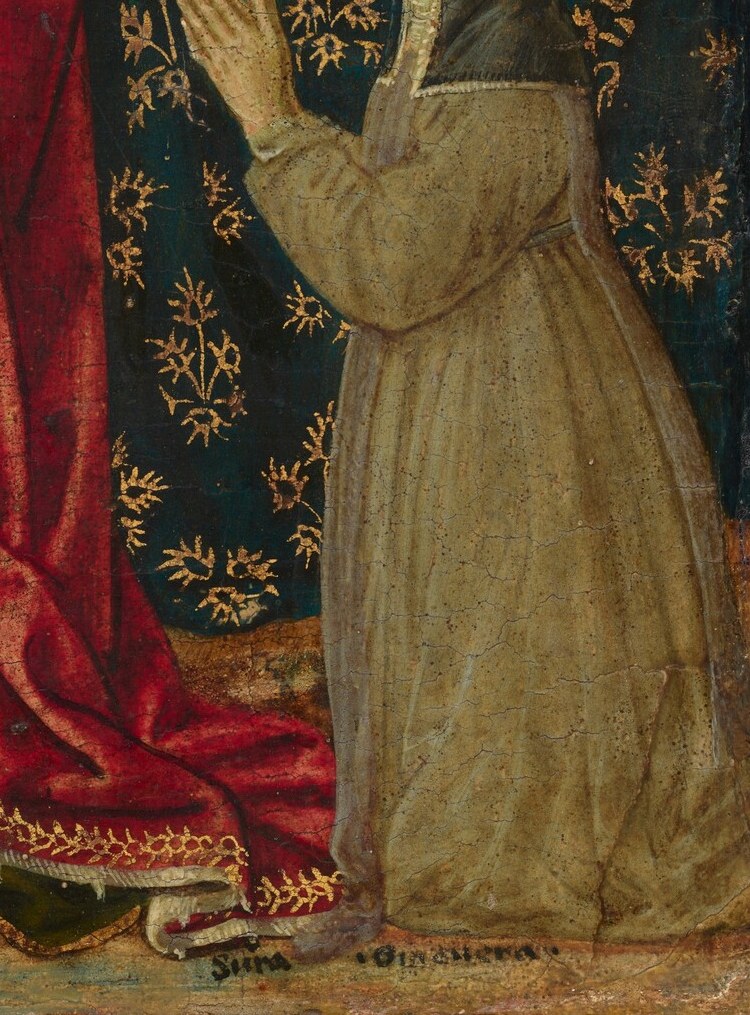
Now find the bottom right corner. Rendered at roughly one-fifth the saint's height, a tiny donor kneels in strict hierarchical scale. His face is upturned, his hands clasped. We do not know his name. But his presence tells us this painting was a transaction as much as a devotion, a paid petition for intercession, a prayer for his soul set permanently before the saint. In the early Renaissance, a donor's inclusion was an act of piety and self-preservation, a way of being seen by God forever.
The picture keeps its secret quietly. Every time someone looks at Saint Ursula, that small anonymous man gets exactly what he paid for: to be noticed, and to have his prayer stay alive a little longer.
Details
Transcript
She fills the room like a visitor from another world. Saint Ursula, towering in red and gold. The martyr's palm tells us she died for her faith. And angels hold a banner so we know her name. But look down here. Right in the corner. A real person. Kneeling, hands pressed together. This whole picture was his plea, painted into permanence. More than five centuries later, he has never stopped praying.