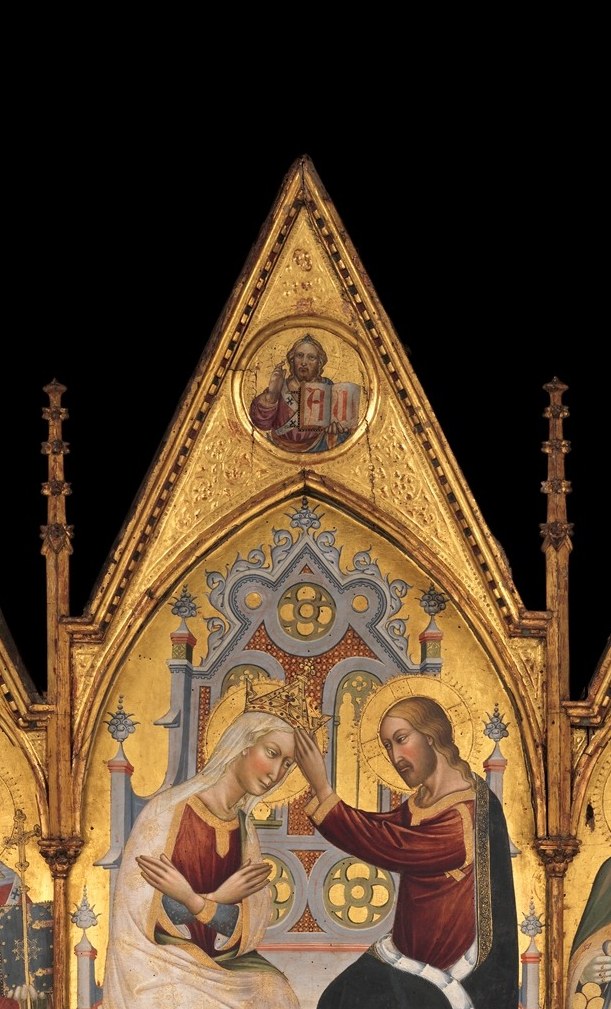
The Coronation of the Virgin, and Saints by Giovanni di Tano Fei
Giovanni di Tano Fei painted this Coronation of the Virgin for an unknown Florentine church in 1394, and the contract it was made under still exists. A local banker named Francesco di Marco Datini commissioned it, and his meticulously kept ledgers record the price: 55 gold florins. For a panel of this ambition, painted in egg tempera on wood with extensive punched gold, that sum placed it squarely in the upper tier of altarpiece commissions in late-medieval Florence.
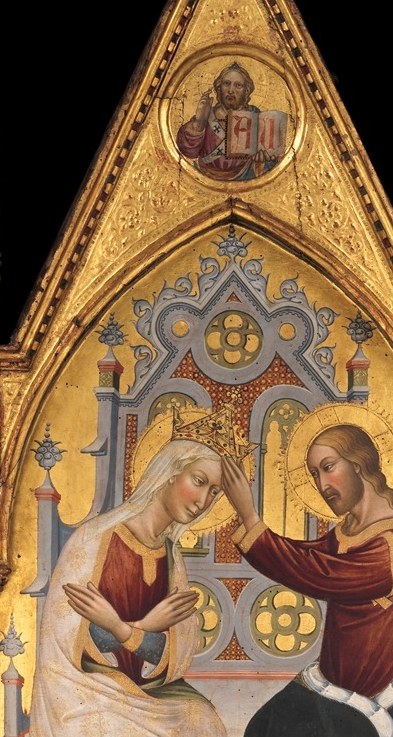
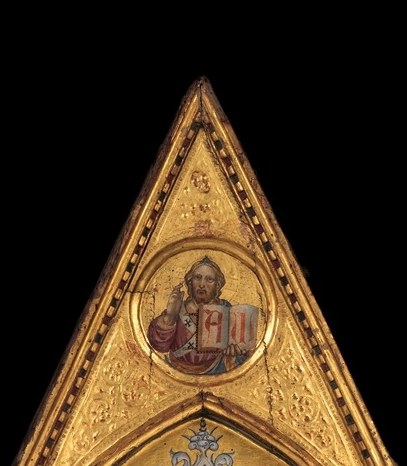
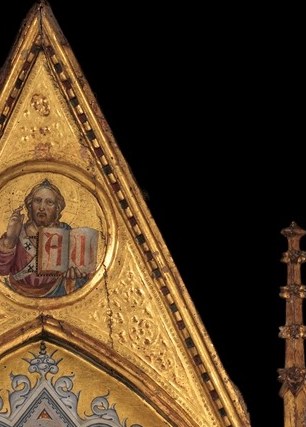
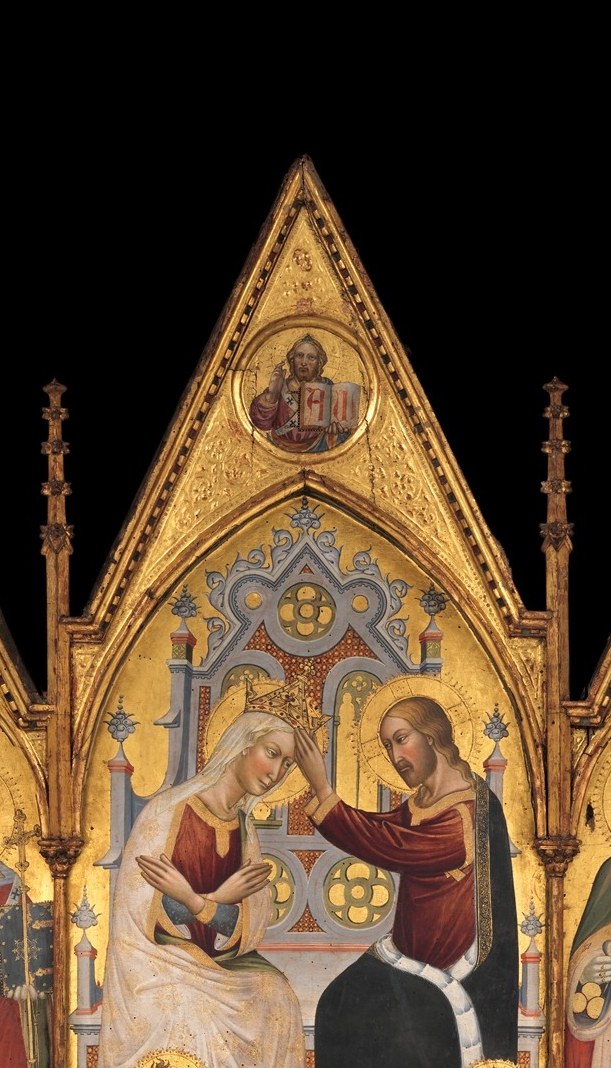
Look at the central scene. Mary kneels, head inclined, and the only physical connection between the divine and the human is at the hands and the crown itself. Above her, a figure bears the golden orb: the globus cruciger, an ancient symbol of sovereignty over the world. The flat gold background is not empty. It is tooled and stamped with patterns that catch candlelight, making heaven tactile.
The saints flanking the coronation are not generic. In an altarpiece of this period, the outermost figures were chosen by the patron. The saint on the far left wears a white monastic habit; the one on the far right likely names the church it was made for. Their identities are locked in the details a closer look might still reveal.
For 55 florins, a Florentine banker bought eternity. The painting is now at the Lindenau Museum in Altenburg.
Details
Transcript
Florence, 1394. A banker pays for an altarpiece. The contract survives. So does the price. Mary kneels to receive the crown. The only contact: hands and crown. Behind her, a golden orb: Christ rules the world. All of heaven, stamped into gold leaf.