Soldier Playing the Theorbo by Jean Louis Ernest Meissonier
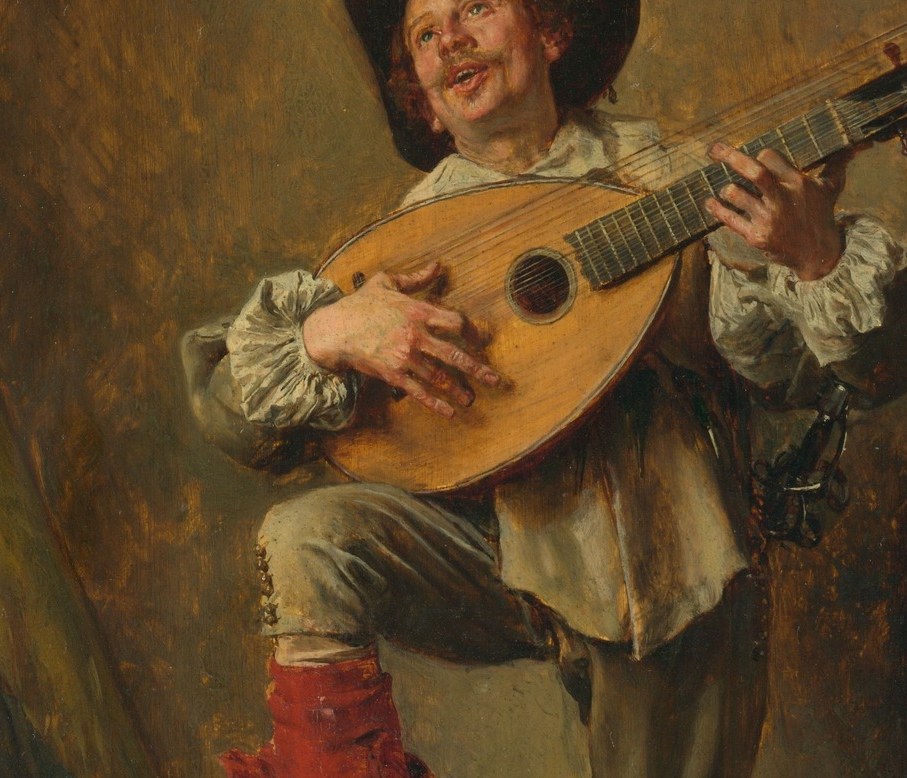
Soldier Playing the Theorbo, painted by Ernest Meissonier in 1865, puzzled the very audience that had made him one of the most successful artists of the Second Empire. Meissonier built his reputation on meticulous, action-packed scenes of Napoleon's campaigns, so a quiet, solitary musician felt like a deliberate departure. The painting lives at the Metropolitan Museum of Art in New York.
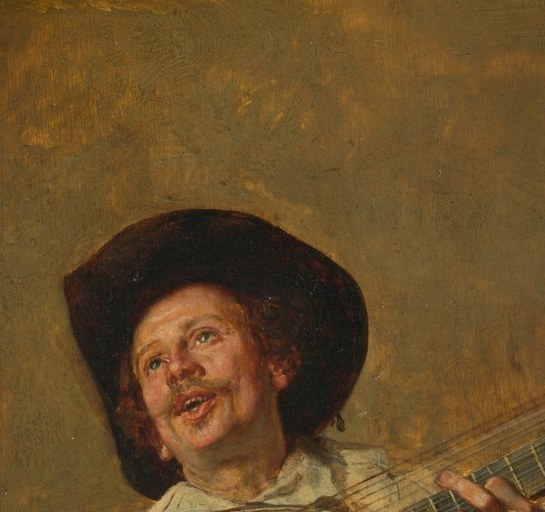
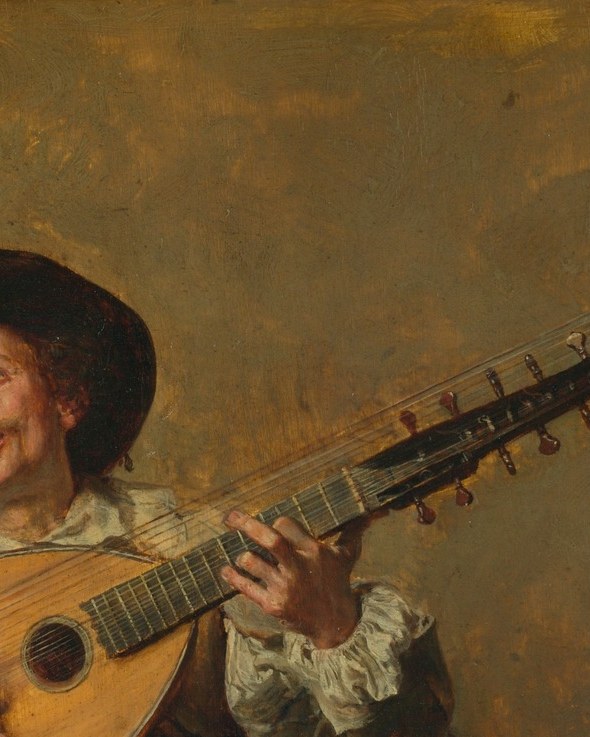
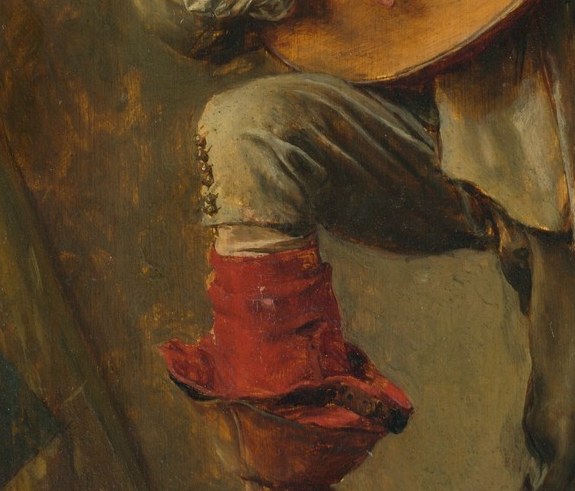
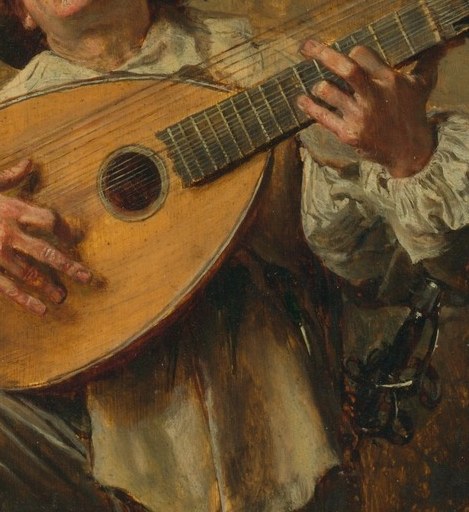
Look at the soldier's face, laughing, open-mouthed, caught mid-song. Meissonier paints him in a moment of unguarded pleasure, not military gravity. The theorbo itself is a statement: a rare, cultivated instrument whose double-neck silhouette and forest of tuning pegs are rendered with fanatical precision. Every stitch of the embroidered doublet, every lace edge, stands up to the closest inspection.
Meissonier worked small, often on panels you could hold in your hands, yet his realism was so exacting that the English critic John Ruskin famously examined his paintings through a magnifying glass and marveled at the manual dexterity. This canvas, from 1865, shows the artist stepping away from battlefield smoke to explore what happened in the quiet hours between campaigns.
A man known for painting empires in conflict paused to paint one soldier, alone, making music. Perhaps that was his most radical move.
Details
Transcript
A French soldier, lost in music. The painter was famous for Napoleon's battles. So when he showed this, the critics were confused. He painted it small. You could hold the canvas in your lap. Yet every stitch, every peg, every gut string is legible. Ruskin studied him with a magnifying glass and found no flaw.