山本梅逸筆 四季山水図|Landscapes of the Four Seasons by Yamamoto Baiitsu
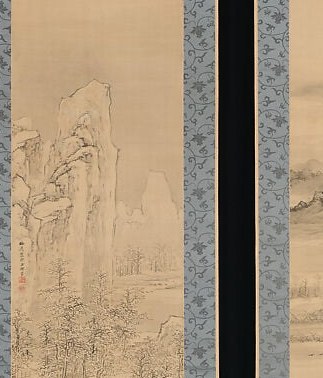
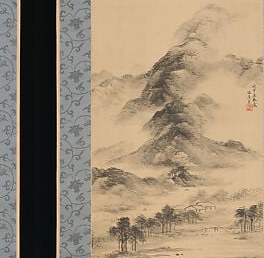
Yamamoto Baiitsu's 'Landscapes of the Four Seasons' (1848) is a set of four hanging scrolls, depicting a single rocky valley as it transitions through spring, summer, autumn, and winter. Created late in the artist's life, this work is a masterful synthesis of Chinese literati traditions and Japanese sensibility.
Each scroll captures a distinct seasonal mood: the emerging life of spring, the lush density of summer, the warm tones of autumn, and the austere quietude of winter. Look closely at the winter scroll, where minimal brushwork and significant blank space convey profound depth and atmosphere.
Baiitsu, a Japanese artist active from 1783-1856, painted this series in his seventies, drawing on decades of intense study. His sophisticated approach demonstrates a mastery of suggestion over explicit detail, a hallmark of East Asian landscape painting. The rhythmic arrangement of peaks and waterways guides the viewer's eye across the continuous narrative.
This series showcases Baiitsu's ability to adapt rigorous ink techniques to a decorative format, creating a timeless contemplation of nature's cyclical changes. Which season do you find most compelling?
Details
Transcript
This is one continuous landscape, seen across four seasons. Yamamoto Baiitsu painted this series in 1848, in his seventies. Spring arrives with a towering, misty peak and a waterfall. Summer brings a full moon over a solitary, resilient tree. Autumn colors a mountain village, hinting at human life. But winter is rendered with striking, delicate restraint. His mastery of blank space suggests vastness and quietude.