Mademoiselle Marie Dihau (1843–1935) by Edgar Degas
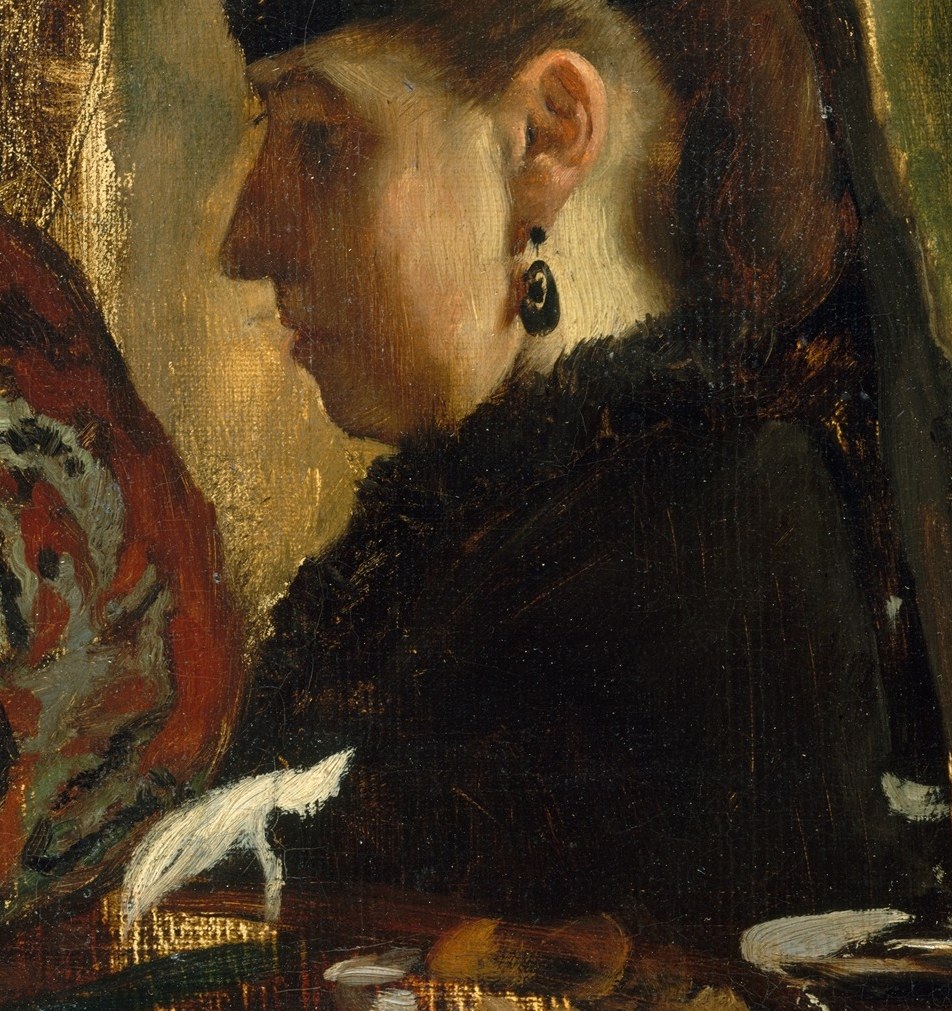
This is 'Mademoiselle Marie Dihau,' an 1867 portrait by Edgar Degas, held at The Metropolitan Museum of Art. It depicts a seated musician in profile, but its true subject may be what Degas refused to do.
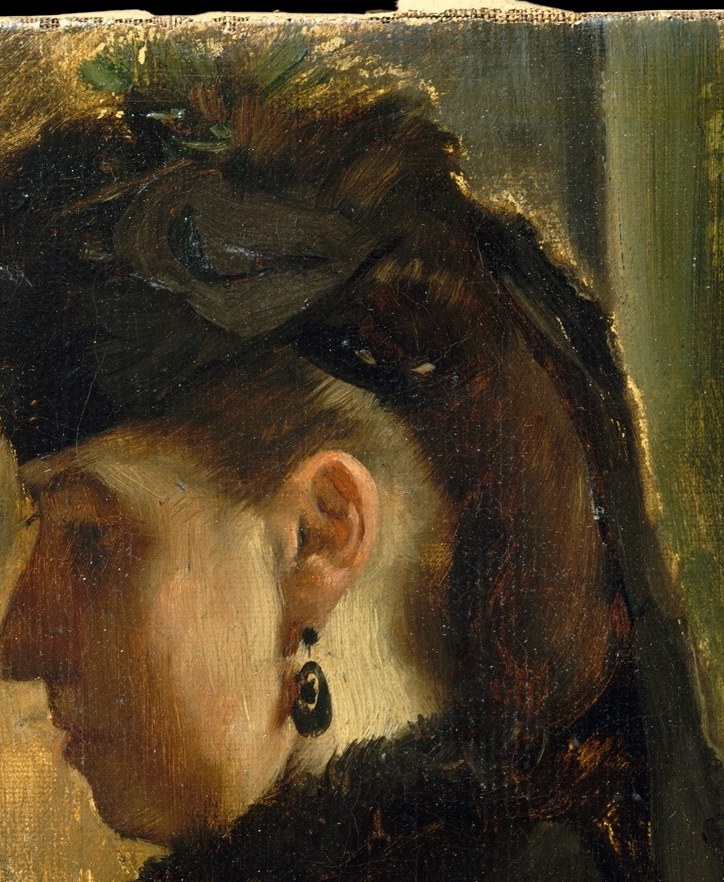
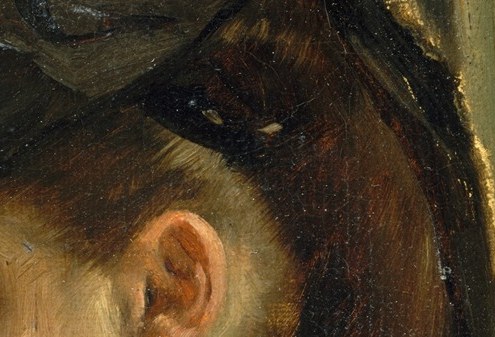
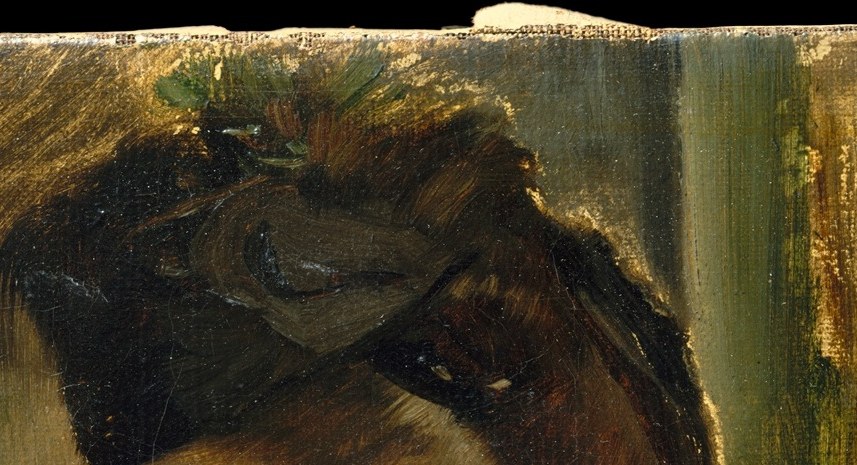
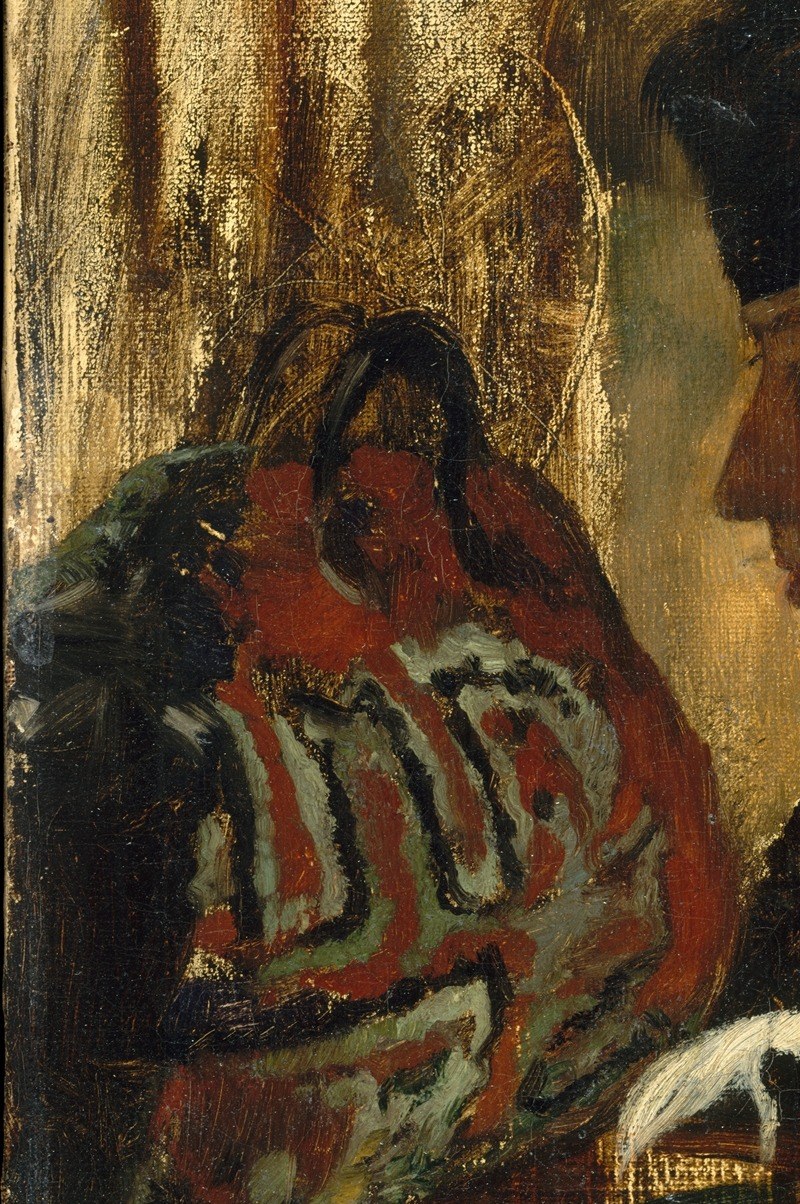
Look at the loose, visible brushwork on her dark patterned dress and the muted, almost sketch-like background. The paint handling is deliberately raw and unrefined. Marie's gaze is averted downward, denying the viewer the direct engagement that was standard for formal portraiture of the era. A small plate and a pair of white gloves sit on a surface in the foreground, rooting the scene in everyday intimacy rather than staged grandeur.
Degas was only 33 when he painted this, having abandoned legal studies and intensive Old Master copying to join the circle of Édouard Manet. He was trained by an Ingres disciple to prize fine drawing above all, yet here he chose loose, textured strokes and a private, interior mood. The approach was so far from academic polish that early viewers felt it bordered on insolent.
The painting stands as a record of a friendship (the Dihau siblings were family friends) and a young artist testing how much he could strip away before a portrait stopped being a portrait.
Details
Transcript
In 1860s Paris, a portrait was supposed to flatter. This one does not. Marie Dihau was an accomplished musician and singer. Now look at how Degas painted her dress. Broad, raw strokes. The critics called it unfinished. He denied her any meeting of the eyes. He trained under Ingres, who said: draw many lines. Here, he broke almost every rule his teacher held sacred.