_Roses de Nice_ on a Table by Fantin-Latour, Henri
Henri Fantin-Latour's *Roses de Nice* on a Table, painted in 1882, is a beautiful example of the artist's dedication to floral still life. This oil on canvas, housed in a private collection, showcases his remarkable ability to capture the delicate textures and subtle colors of flowers.
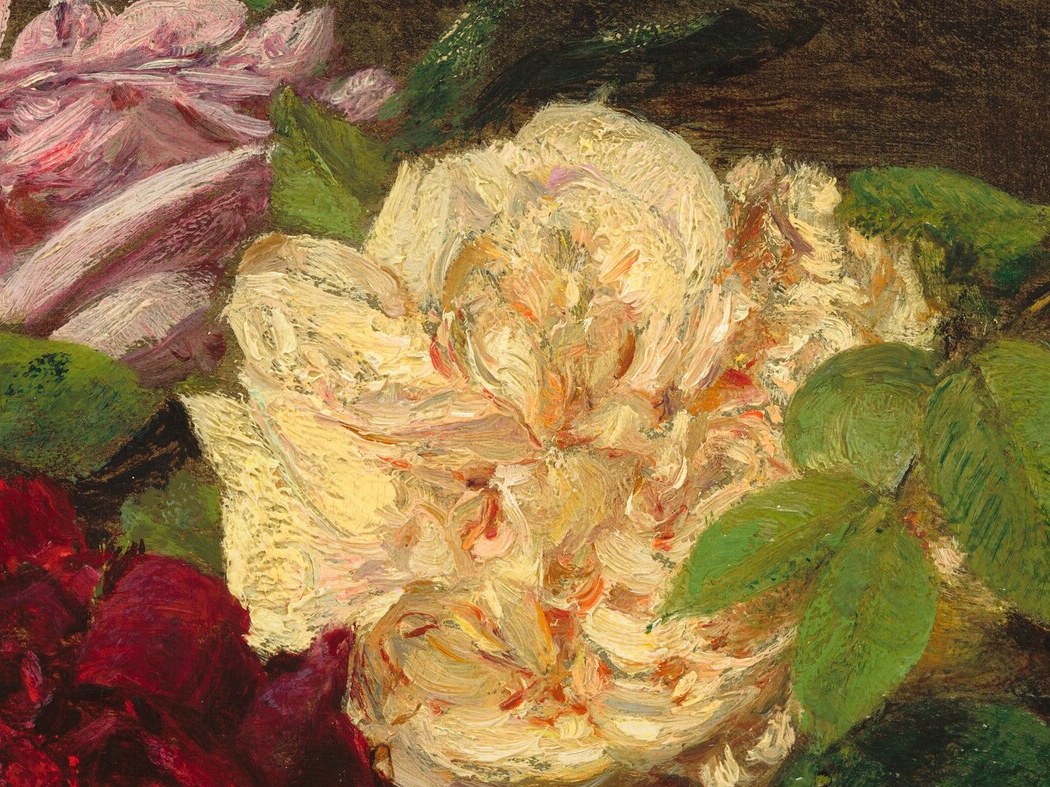
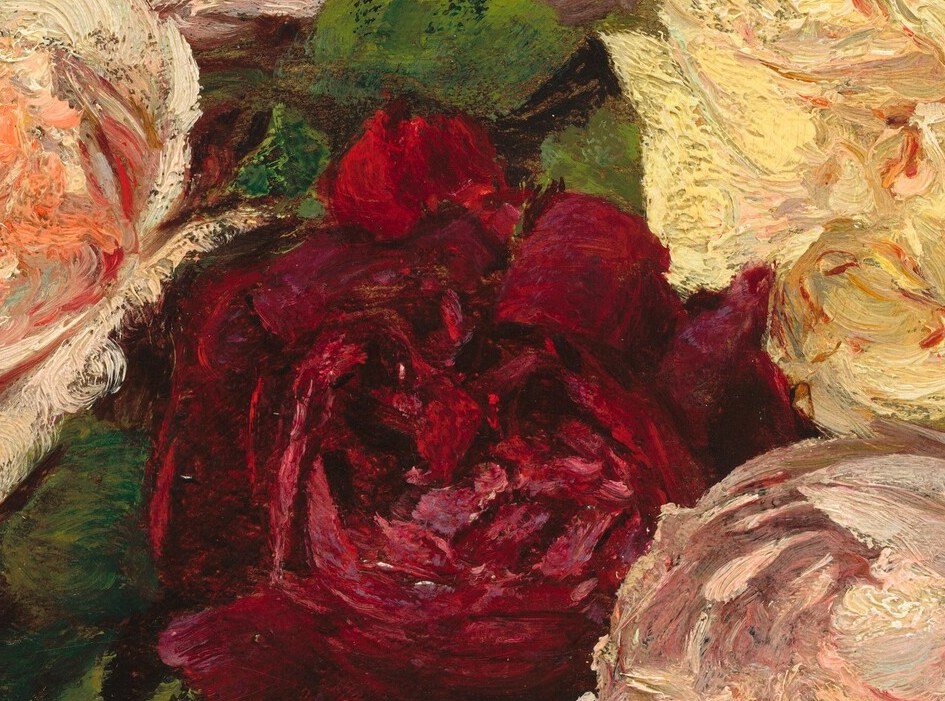
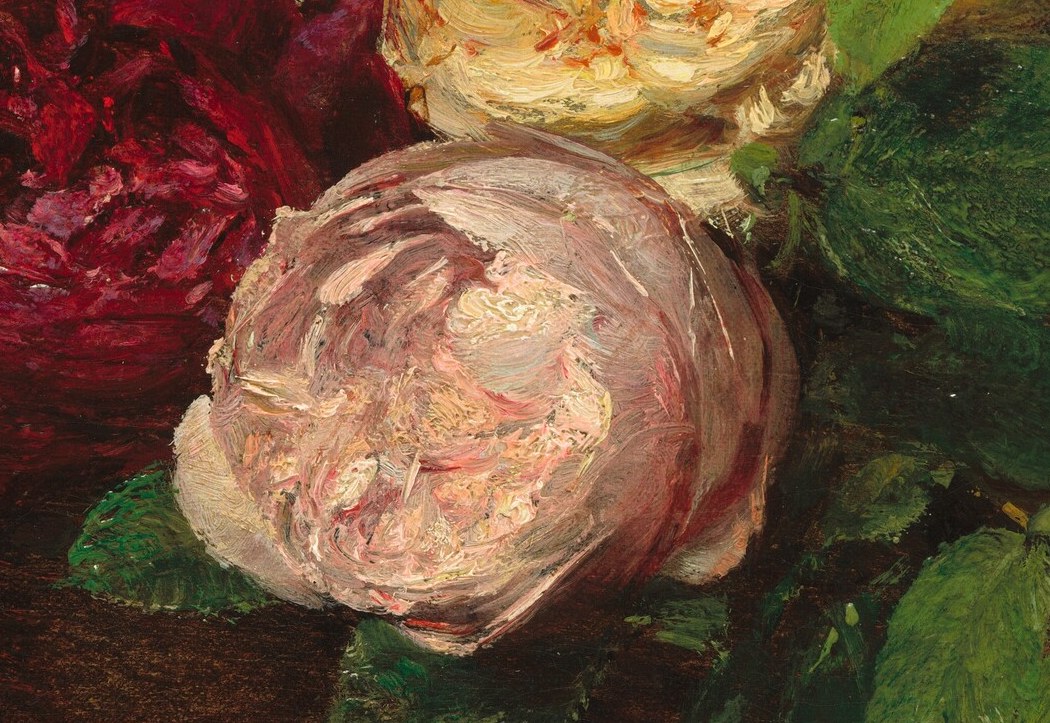
Fantin-Latour was celebrated for his meticulous approach to botanical subjects. Look closely at the impasto technique, where thick paint creates a nearly three-dimensional quality in the petals, especially noticeable in the rich reds and soft yellows. Even small details, like a fallen petal, are rendered with care, adding to the painting's quiet intimacy.
Active in Parisian artistic circles during the late 19th century, Fantin-Latour's work bridged the gap between traditional realism and emerging modern movements. His floral pieces, while seemingly simple, reveal a profound observation of nature and a masterful command of paint.
What details do you notice first in this arrangement?
Details
Transcript
This painter was celebrated for his flower paintings. He was a master of capturing texture and light. Notice the thick impasto paint, almost three-dimensional. Even a fallen petal gets careful attention. Fantin-Latour’s technique defined an era of painting. It’s a quiet study of delicate beauty.