Central Panel of a Triptych by http://www.wikidata.org/.well-known/genid/bed56ef3e8fb434aeb74391f0e4be4bc
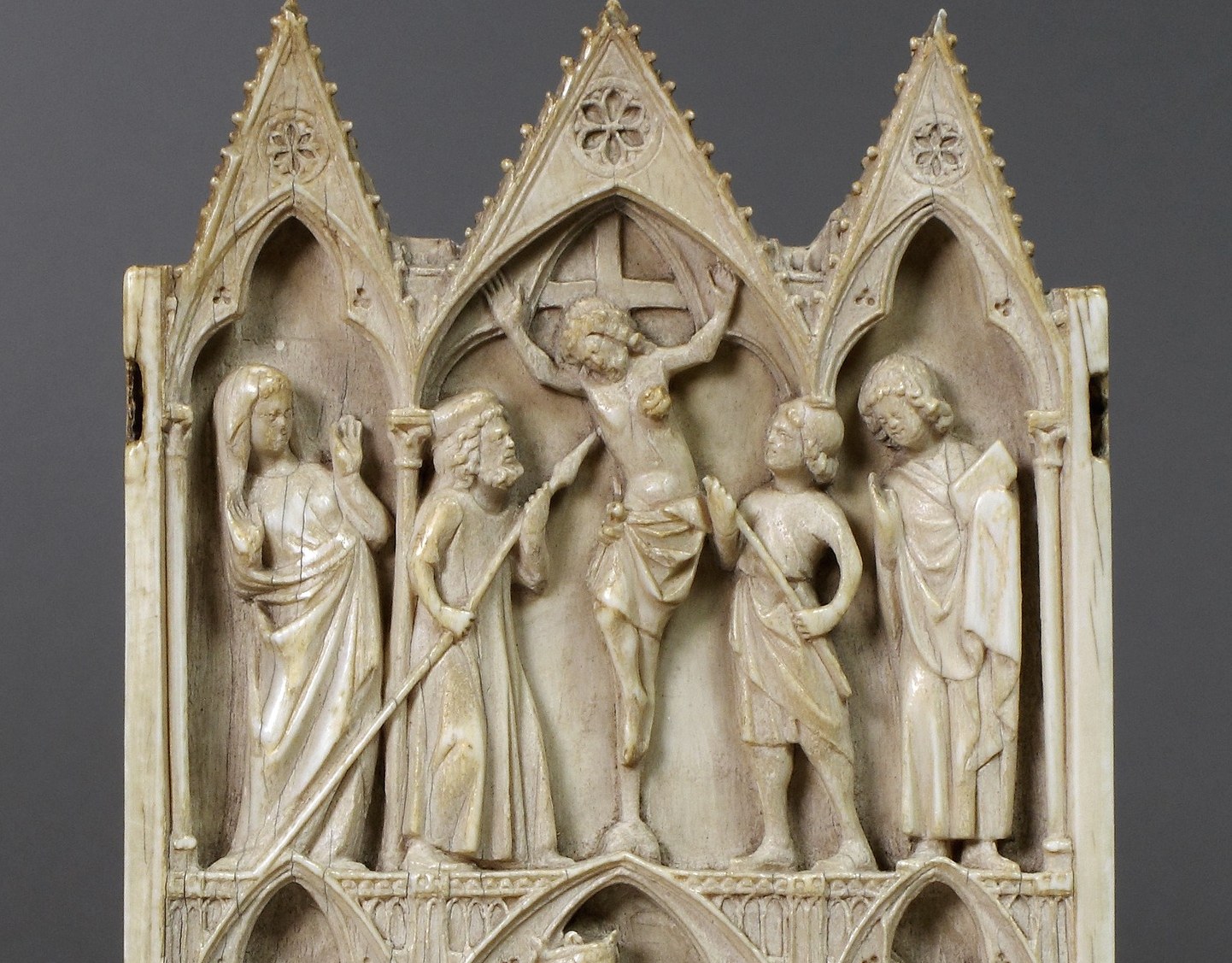
This is the central panel of a Gothic ivory triptych carved near Paris around 1280.
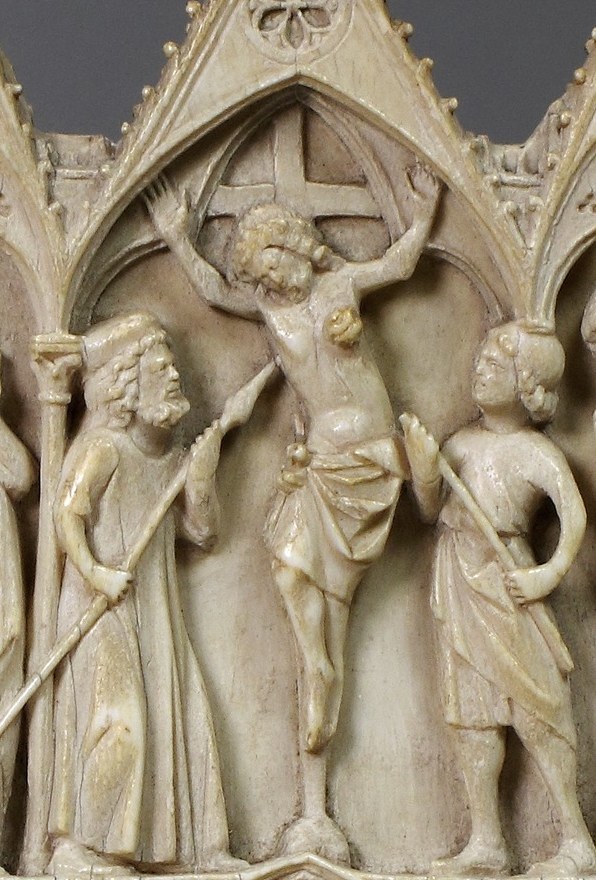
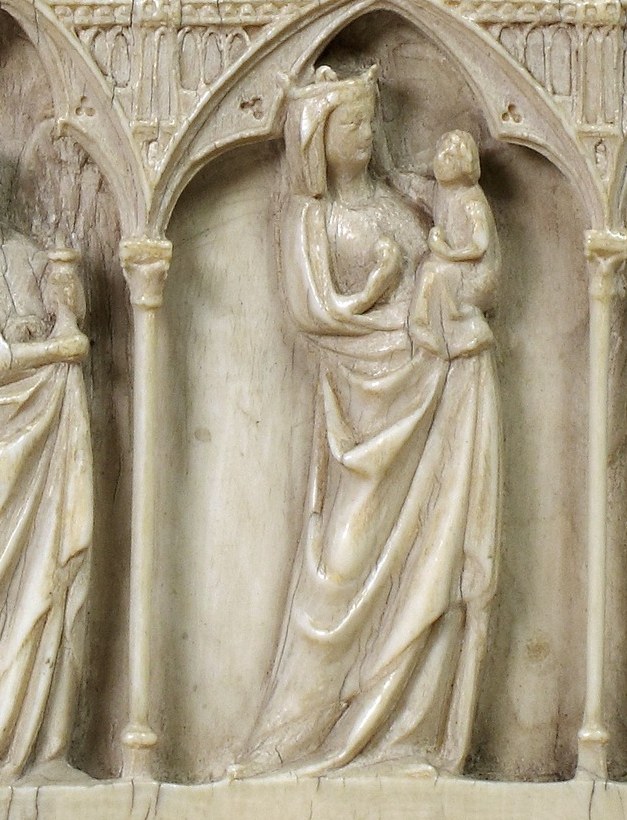
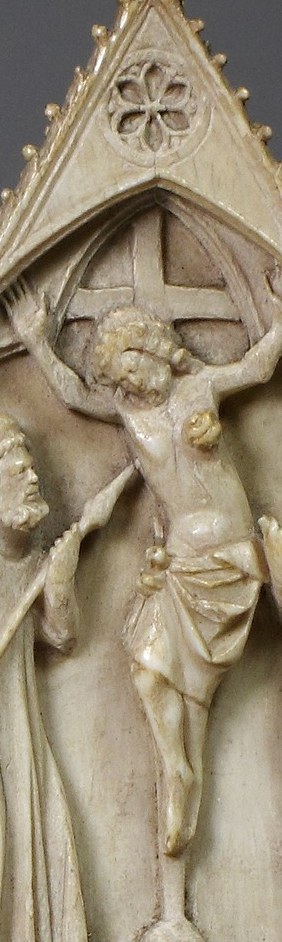
The carver stacked two registers into a single vertical composition. In the upper tier, Christ carries the cross, surrounded by haloed figures. Directly below, the Virgin Mary cradles the Christ Child. The cross shaft itself runs the full height of the panel, piercing both scenes so that the instrument of the Passion literally becomes the architecture sheltering the infant Christ.
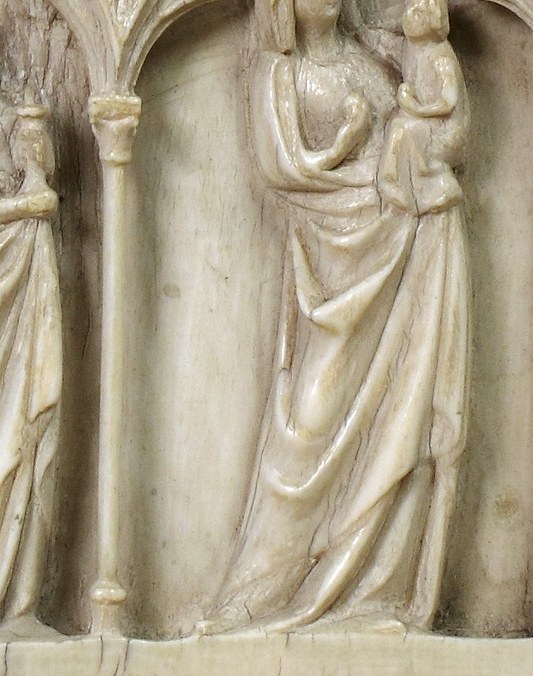
Carved from a single piece of elephant ivory, the panel was meant for private devotion. The cascading drapery folds of the Virgin's robe are a stylistic fingerprint of the French Court Style of the late 13th century. This was a luxury object, small enough to hold, designed to collapse the beginning and the end of Christ's earthly life into one meditative glance.
The theological message is precise: the Incarnation and the Passion are not separate events. The body the Virgin holds below is the same body that will hang on the cross above. The panel refuses to let you see one without the other.
Details
Transcript
Two stories, stacked one above the other. Above: Christ bears the cross toward his death. Below: the Virgin holds the Christ Child. The ivory carver made them one continuous shaft. The cross-beam above becomes the Virgin's canopy below. Carved near Paris around 1280, for private prayer. The code: his death and her motherhood are the same story.