Portrait of a Woman by Jan van Ravesteyn
This is Jan van Ravesteyn's *Portrait of a Woman* from 1635, now at The Metropolitan Museum of Art. She is unidentified, which is not unusual for Dutch Golden Age portraiture, but the painting is a quiet masterclass in control: of social presentation, of technique, and of what the painter chose to make visible only to those who look hard enough.
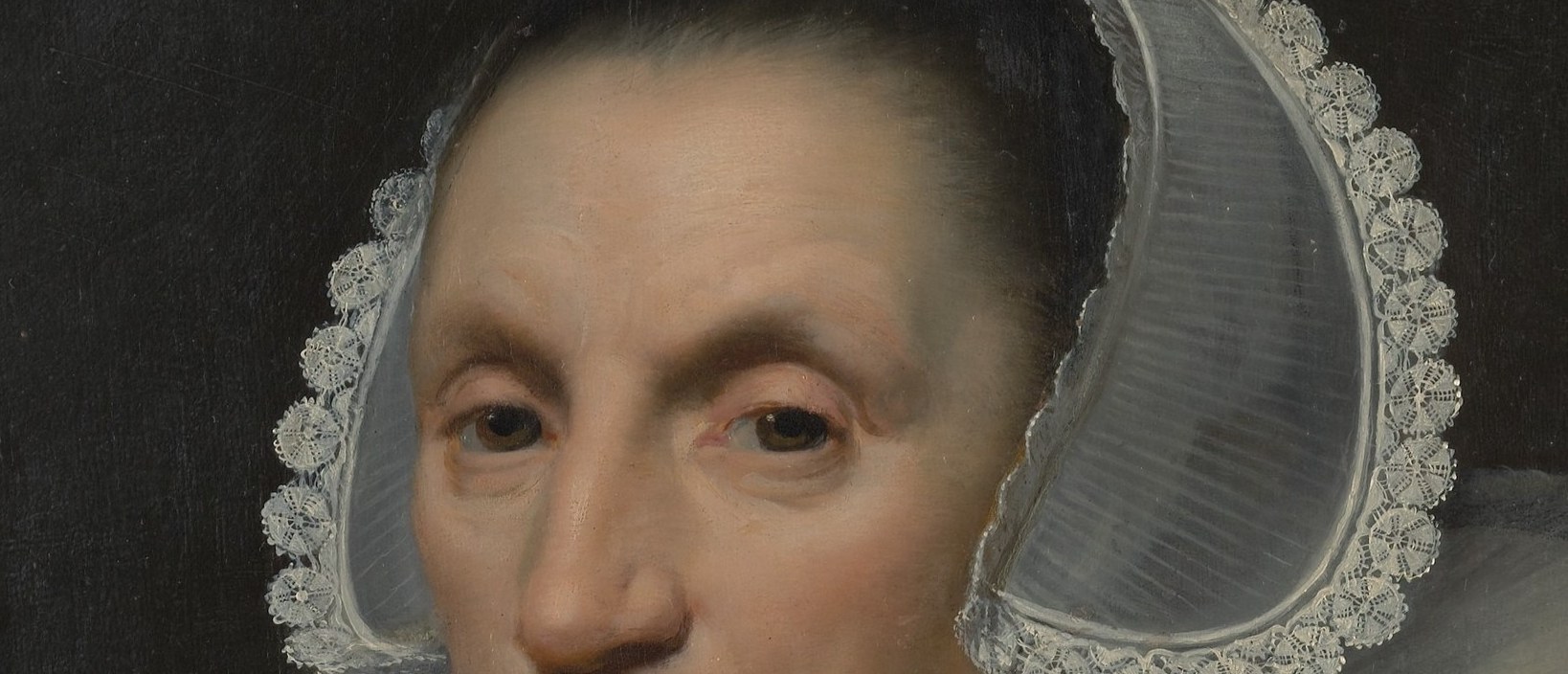
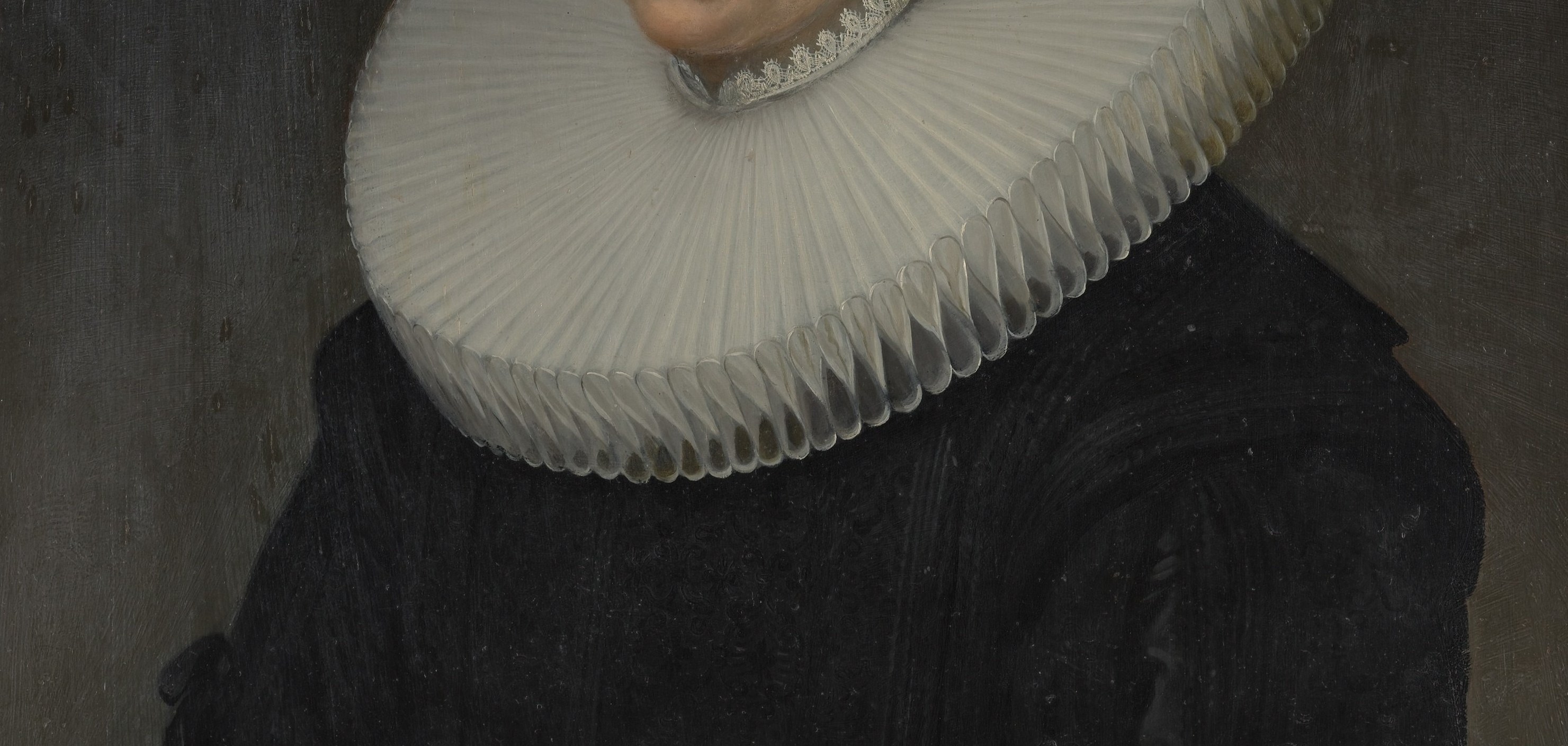
At normal viewing distance, this is an image of severe dignity. The sitter's direct gaze, the starched geometry of her ruff, the plain dark ground, all of it insists on decorum. But press in closer. The edge of her lace cap resolves into a distinct, repeated weave pattern, a documentary record of the actual textile rendered in translucent glazes over dark ground. The ruff is not a single mass of white but dozens of individually shadowed folds, each one a small solved problem in light.
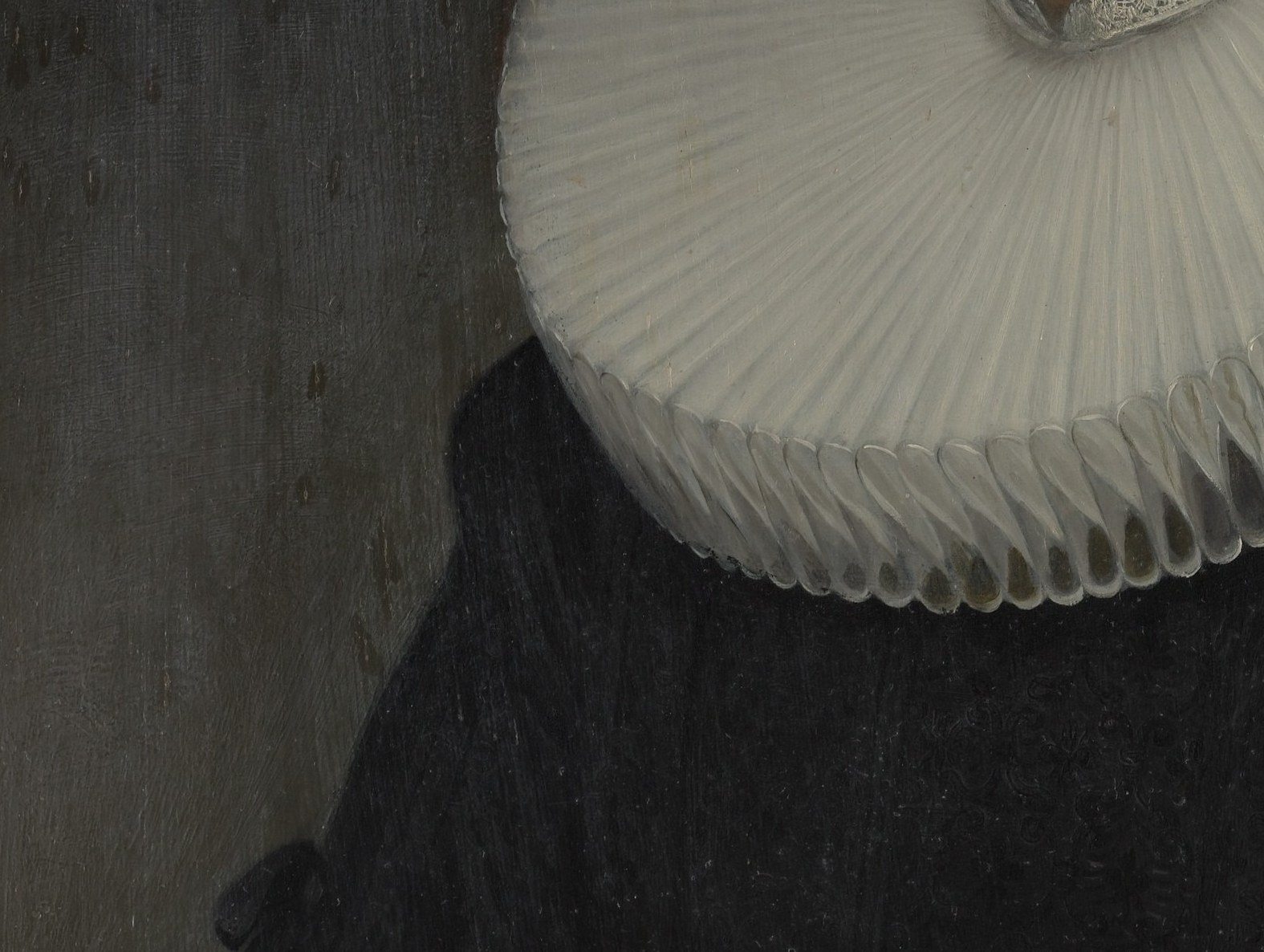
Then there is the background. What reads as a uniform void is in fact a warm, thin wash through which the brown preparation layer of the canvas still breathes. It is a telltale sign of 17th-century Dutch panel technique, preserved here because van Ravesteyn knew exactly when to stop.
Van Ravesteyn served the court in The Hague for decades, painting the people who ran the Dutch Republic. This woman's name is lost, but the painting still performs its original job: it makes you feel she is someone you should not interrupt.
What detail do you notice first, the gaze, the lace, or the darkness behind her?
Details


Transcript
A woman, severe and self-possessed, looks straight at you. This is Dutch court portraiture of the 1630s. Status was a performance. The artist painted for the court in The Hague. His name: Jan van Ravesteyn. Her ruff is a showpiece of white-on-white painting, dozens of individually lit folds. Now look at the edge of her lace cap. Come in closer. At close range, the individual pattern of the lace weave becomes visible. And here in the dark background, warm brown bleeds through the thin black paint. A 17th-century canvas, breathing just beneath the surface.