The Tiber River with the Ponte Molle at Sunset by Asselijn, Jan
View the artwork: The Tiber River with the Ponte Molle at Sunset →
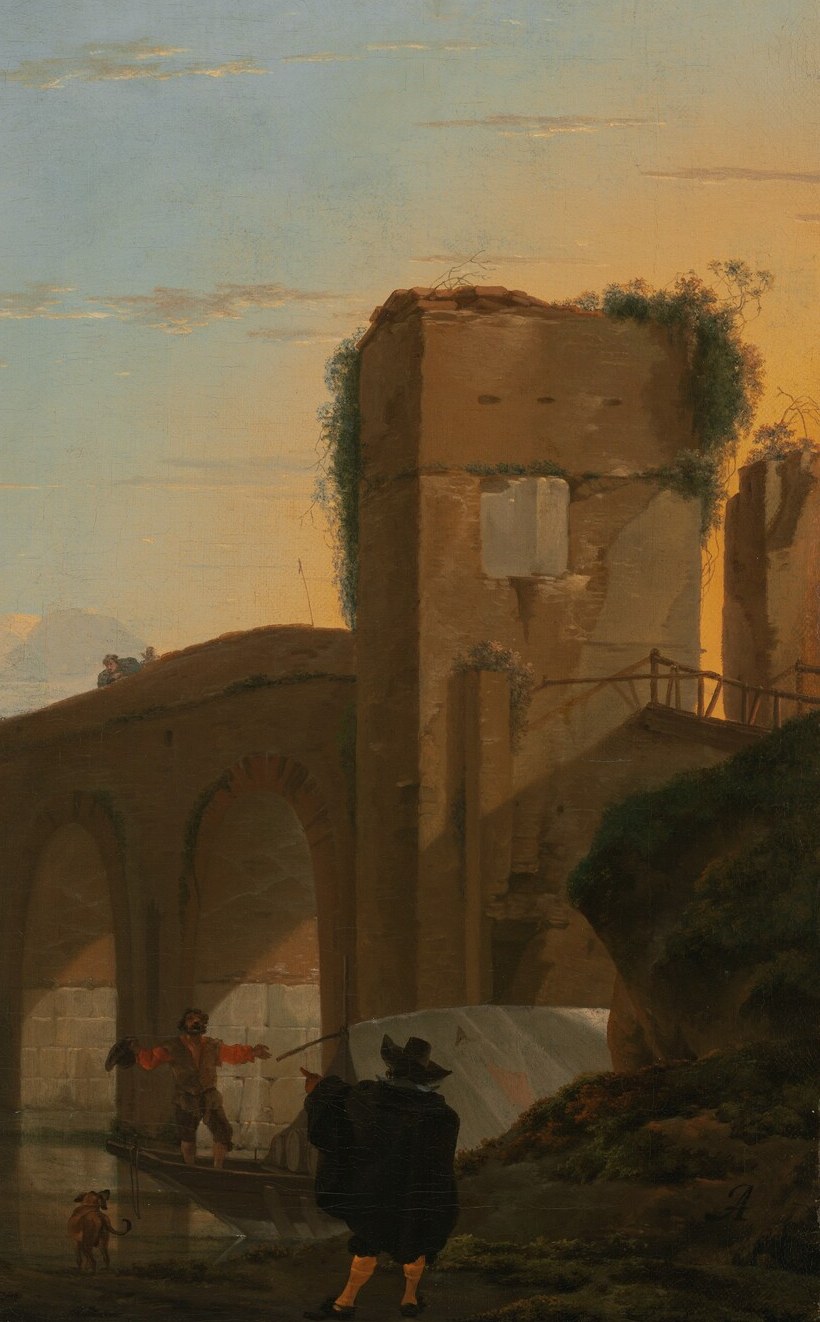
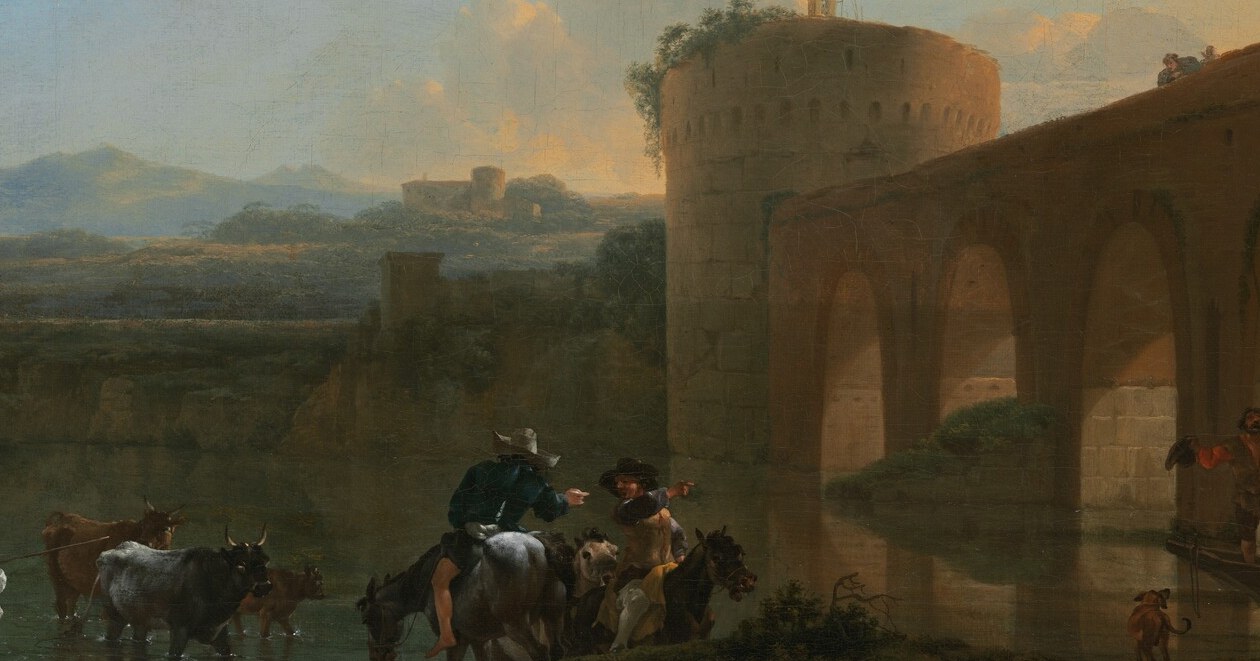
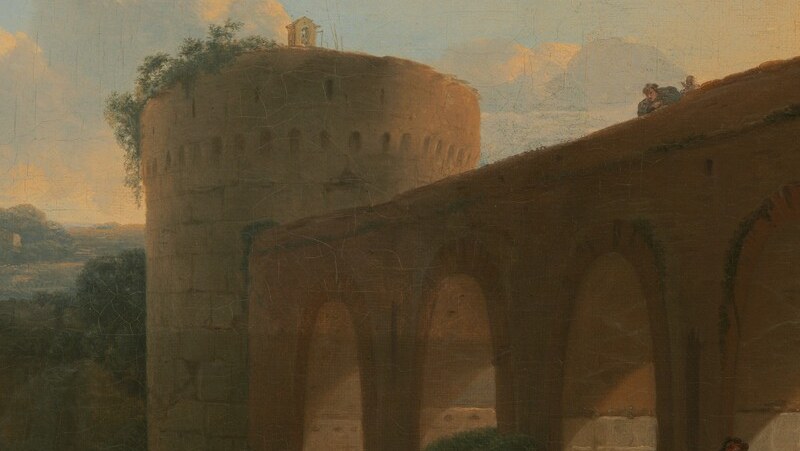
This is Jan Asselijn's 'The Tiber River with the Ponte Molle at Sunset', painted around 1650, and it hangs in the National Gallery of Art in Washington. It is a landscape built on a practical joke of scale: your phone shows you a beautiful sky and a big ruin, but the painting itself is alive with small, specific people and a vanishing horizon you have to work to see.
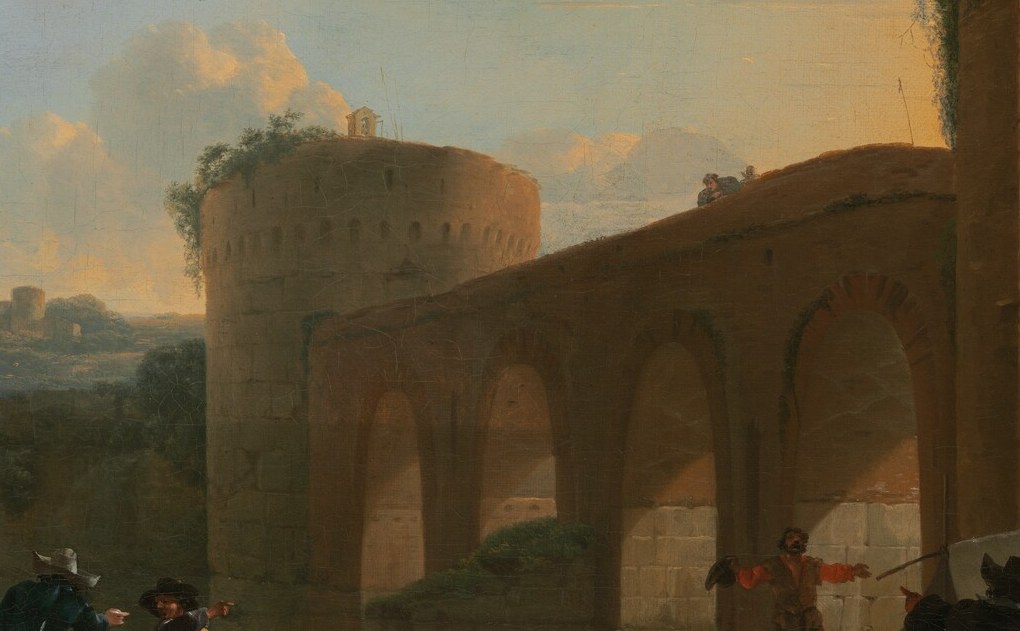
The first thing to look for is the bridge. Those tiny figures crossing the Ponte Milvio are the giveaway. This was not a broken antique backdrop, it was the main road north out of Rome, still carrying travelers, carts, and livestock. The bridge had stood since 312 AD, when Constantine fought the Battle of the Milvian Bridge. Asselijn painted it as a working crossing in evening light.
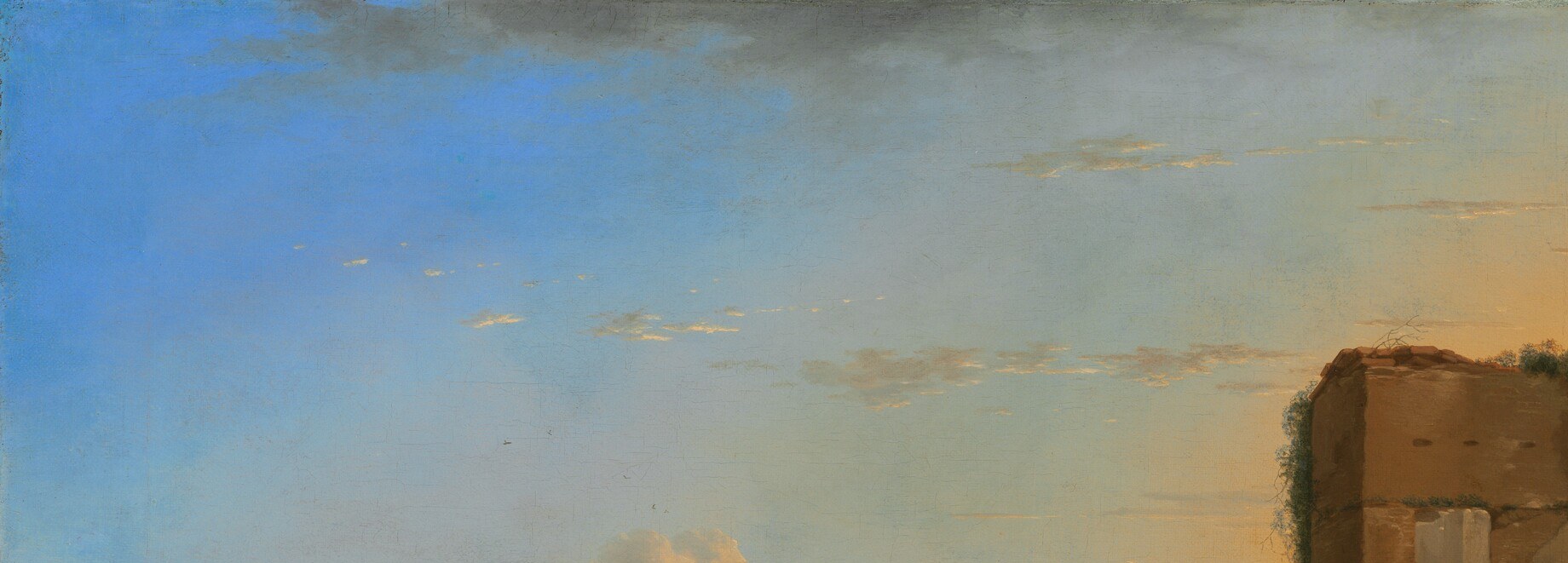
Asselijn was Dutch but spent his prime years in Rome absorbing the Italianate landscape style. He learned to dissolve distance into haze and to treat sky as the main emotional engine of a scene. Here the pinks and creams of the sunset eat up nearly half the canvas, and the warm stone of the tower glows against the shadow of its own base.
Once you find the bridge figures, push your eye farther left to the faint hills on the horizon, they are so soft they nearly merge with the sky. That is the actual Roman campagna, not a riverbank but a wide valley receding into nothing. The painting keeps its best secrets at the edges.
#arthistory #dutchgoldenage #janasselijn
Details
Transcript
A Roman sunset, half the canvas given to sky. The bridge is 1,300 years old here, Ponte Milvio, still standing. The painter was Dutch, but he left Amsterdam for Rome. Now look at the bridge deck. Count the travelers. In 1650, this was no ruin, it was a working crossing. And way back here, the Apennine hills, almost sky.