Paradiesgärtlein by Upper Rhenish Master
View the artwork: Paradiesgärtlein →
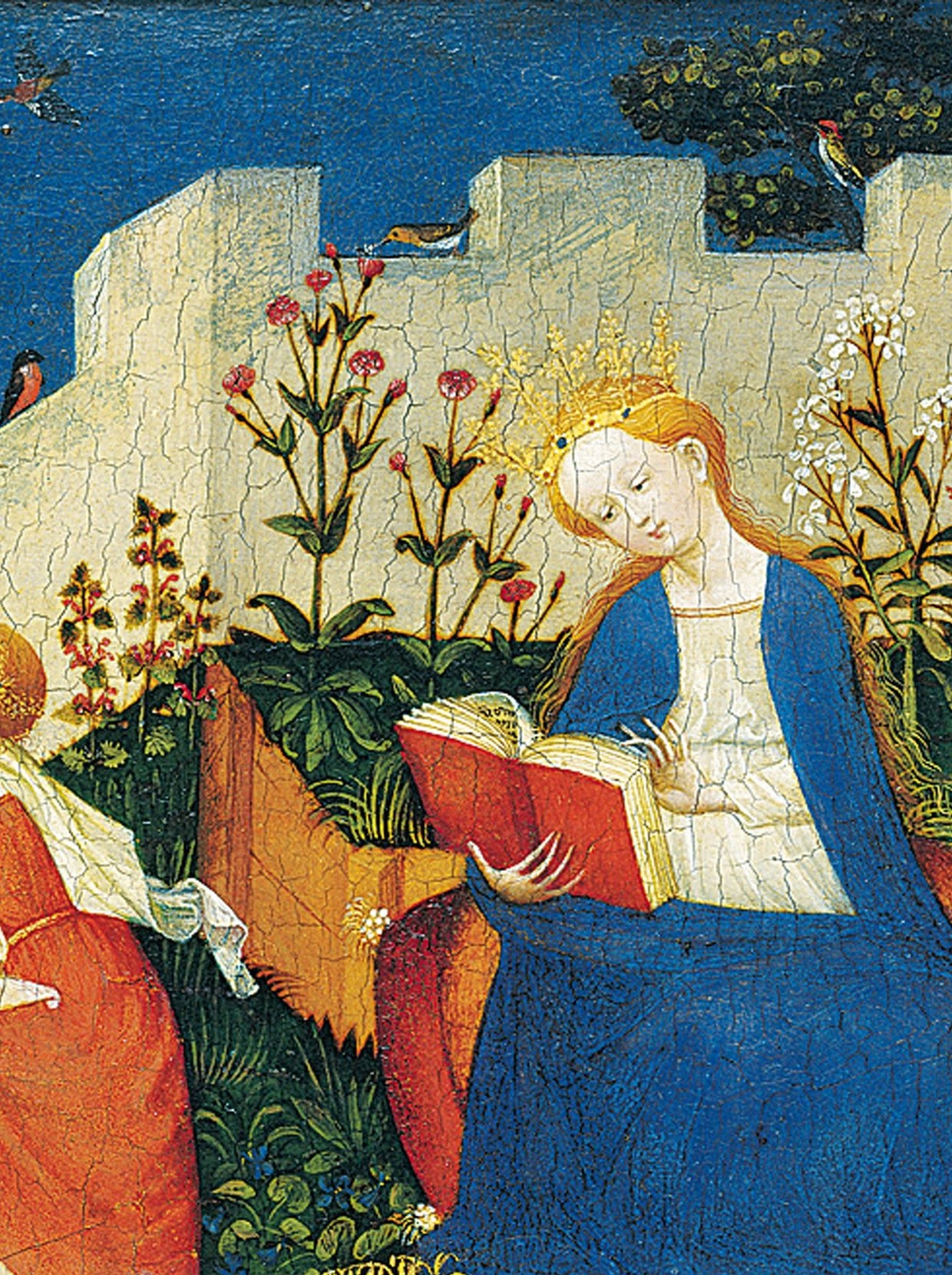
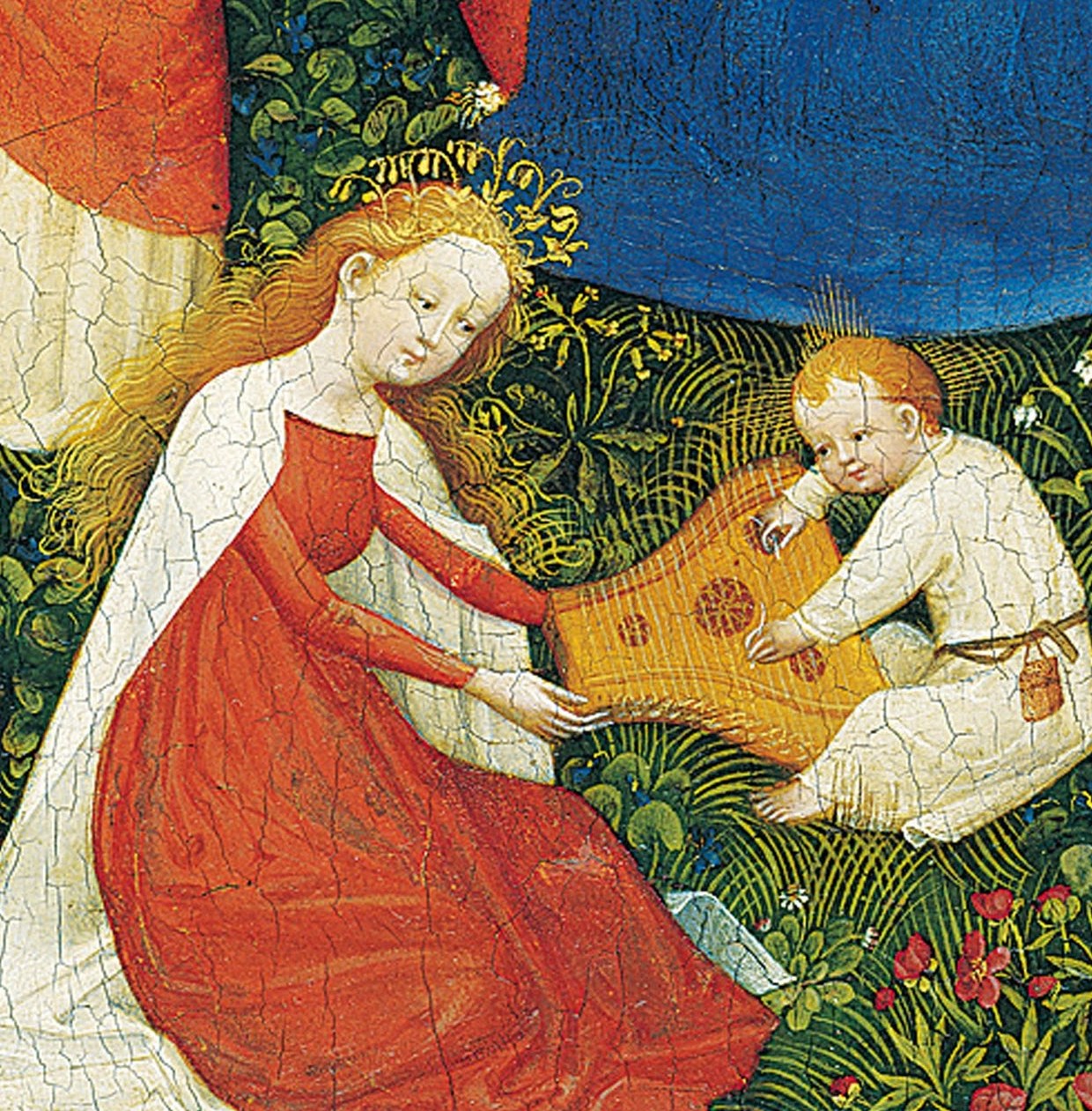
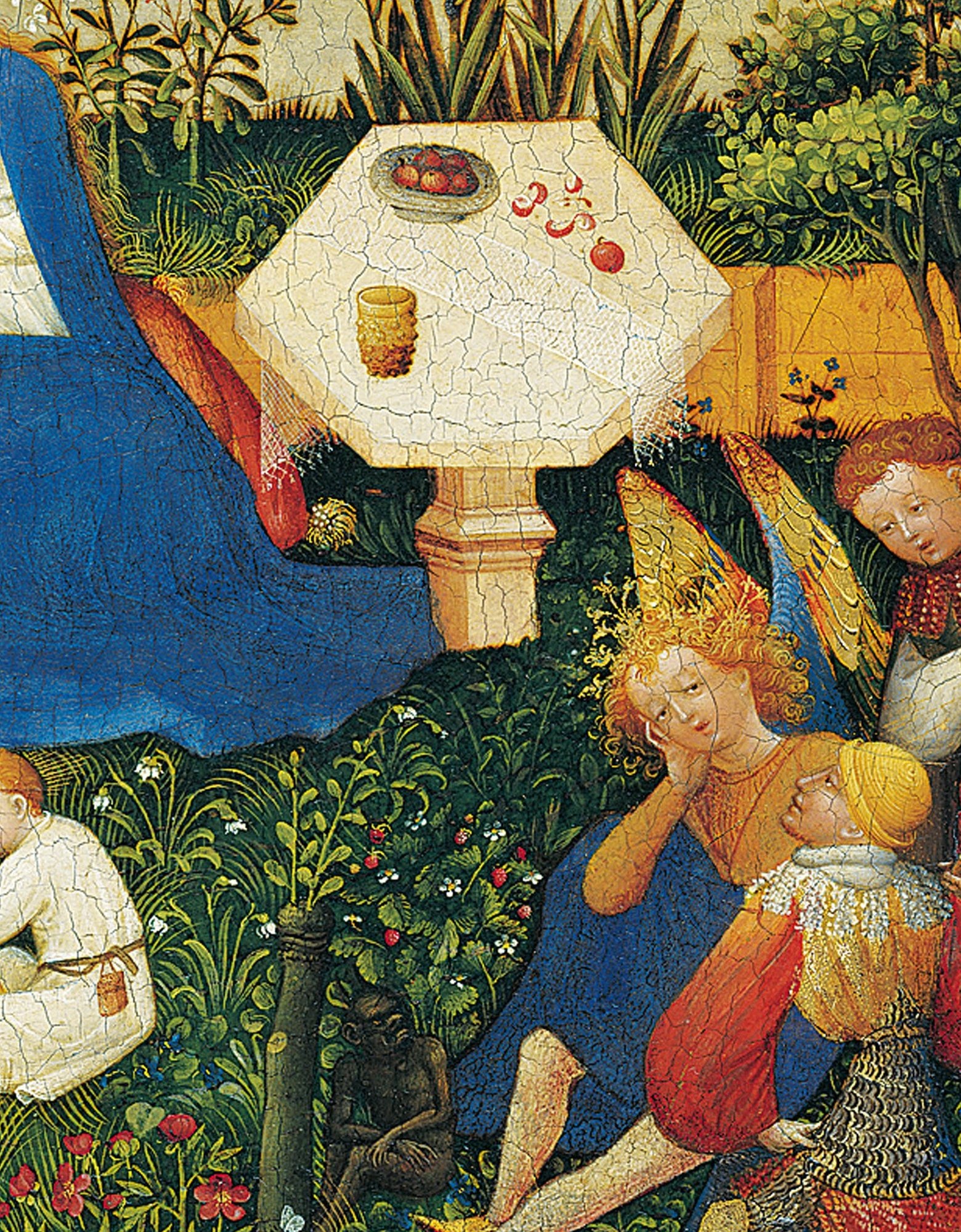
This is the Paradiesgärtlein (Little Garden of Paradise), painted around 1410 by an unknown artist now called the Upper Rhenish Master. It lives at the Städel Museum in Frankfurt, on permanent loan from the Historical Museum, and it measures just 26 by 33 centimeters. That small panel contains something extraordinary: twenty-four identifiable plant species and twelve individual bird species, each painted with a naturalist's precision decades before anyone else in Europe was doing it.
The painting is a hortus conclusus, a closed garden symbolizing Mary's virginity. The Virgin sits in the upper left corner reading a red book, not at the center as tradition demanded. Saints Dorothy, Barbara, Cecilia, George, and others are scattered across the grass. But the real subject is the garden itself: irises, peonies, roses, strawberries, each chosen for symbolic weight and rendered with a botanist's eye.
Art historians believe the painter worked in Strasbourg around 1410-1420. Two other panels are attributed to the same hand, but this small garden remains his masterpiece. The detailed observation of flora and fauna was so unusual for the International Gothic period that it anticipates the Northern Renaissance's empirical turn by a generation. The birds alone, goldfinches, titmice, bullfinches perched along the wall and in the left tree, are painted small enough to miss, yet detailed enough to identify.
Before you scroll past, find the birds. They're still sitting on the wall, 600 years later, waiting.
#arthistory #gothicart #medievalart
Details


Transcript
A garden. A wall. A sky built for saints. The wall is a promise: nothing impure enters. Now look above it. Not heaven. Botany. Twenty-four plant species grow here, and each one is identifiable. Iris for sorrow. Peony for paradise. Rose for love. And perched on the wall, painted small enough to miss: birds. Twelve birds. Goldfinch, titmouse, bullfinch. A field guide in paint. No one in Europe painted nature this way. Not for another generation.