Artwork
Paradiesgärtlein
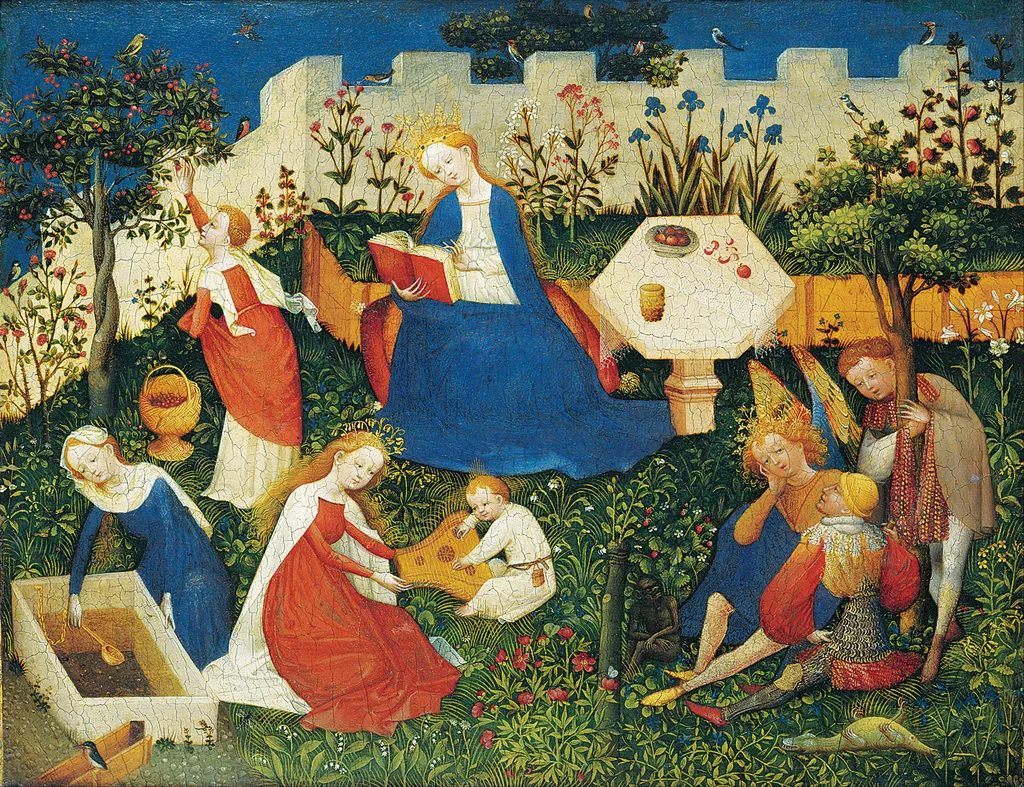
Paradiesgärtlein is a mixed painting by Upper Rhenish Master. It dates from 1410 and is held in the collection of the Städel Museum.
About this work
Technique & Style
The work remains in good overall condition, though it exhibits minor retouching on the sky and small losses affecting details like cherries and fingers.
Created circa 1410, the Paradiesgärtlein is a panel painting executed in a mixed technique on a slightly convex oak panel measuring 26.3 by 33.4 centimeters. The artist employed egg tempera and oil paints, utilizing leaf silver and gold leaf for specific elements. The background sky features an original layer of azurit beneath ultramarine, while the artist initially simulated a gold ground using silver leaf covered with a yellow glaze.
The support shows signs of thinning, with the right edge retaining its original painted border adorned with powder gilding over older gilding traces. The work remains in good overall condition, though it exhibits minor retouching on the sky and small losses affecting details like cherries and fingers. Some plasticity in red and blue shadow areas has been lost due to past overpainting, and portions of the oil gilding and silvering have worn away.
History & Provenance
The panel titled Paradiesgärtlein was executed circa 1410 by the Upper Rhenish Master, an anonymous painter working in mixed technique on a 26.3 × 33.4 cm oak panel. It was created as a devotional image within the hortus conclusus tradition, depicting the Virgin Mary in a garden of symbolic flora and fauna. After its execution the work entered the collection of the Historical Museum of Frankfurt, where it remains today; since 1921 it has been on permanent loan to the Städel Museum, which now displays it. The painting’s dating is based on stylistic analysis and documentary evidence placing its inception around 1410.
The Paradiesgärtlein is owned by the Historisches Museum der Stadt Frankfurt (Historical Museum Frankfurt) and has been on view at the Städel Museum (Städelsches Kunstinstitut) in Frankfurt am Main as a permanent loan since 1921. The small panel, measuring 26.3 by 33.4 centimetres, is displayed there alongside the museum's broader collection of Old Master paintings. Beyond its ongoing installation at the Städel, the work has been reproduced and discussed in regional catalogues of the institution's holdings, including Esther Gallwitz's 1992 volume Kleiner Kräutergarten: Kräuter und Blumen bei den Alten Meistern im Städel, which treats the painting within the Städel's botanical iconography series.
The Städel's own digital collection features the work under the English title "The Little Garden of Paradise," reflecting its continued accessibility to researchers and the public through the museum's online resources.
Context
The panel, executed circa 1410 in mixed technique on oak by the Upper Rhenish Master‑2), exemplifies the ‘hortus conclusus’ tradition while placing the Virgin reading a book in the upper left corner, a composition described as distinctive within the ‘Mary in the rose bower’ type‑4). Art historical scholarship emphasizes its pioneering naturalism: at least twenty‑four plant species and sixteen bird species are identifiable, and the work merges the soft German Gothic style with meticulous observation of nature‑5). Its placement in the Städel collection and scholarly attention to its iconography and technique have made it a reference point for studies of late‑Gothic internationalism and the symbolic use of garden imagery‑5).
Overview
The painting known as Paradiesgärtlein (Garden of Paradise) is a panel created around 1410 by an anonymous artist, conventionally identified as the Upper Rhenish Master. Executed in a mixed technique, this work depicts a serene gathering within a verdant enclosure. It represents a significant early example of the "Mary in the rose bower" genre, characterized by its detailed portrayal of a sacred scene amidst a richly naturalistic setting.
Subject & Meaning
The composition centers on a woman in a red gown, presumably the Virgin Mary, cradling a child, surrounded by various figures who stand or kneel. This assembly takes place within a vibrant garden, enclosed by a low stone wall under a clear blue sky. The scene is replete with symbolic elements typical of the "Mary in the rose bower" tradition, suggesting a sacred space of contemplation and divine presence, where earthly and heavenly realms converge.
Own this work as a print
Artist & collection
Artist
The Upper Rhenish Master is a Notname given to an anonymous painter active around 1410–1420, probably in Strasbourg.

- Virgin of the Rose Garden
 Nativity
 Virgo inter Virgines
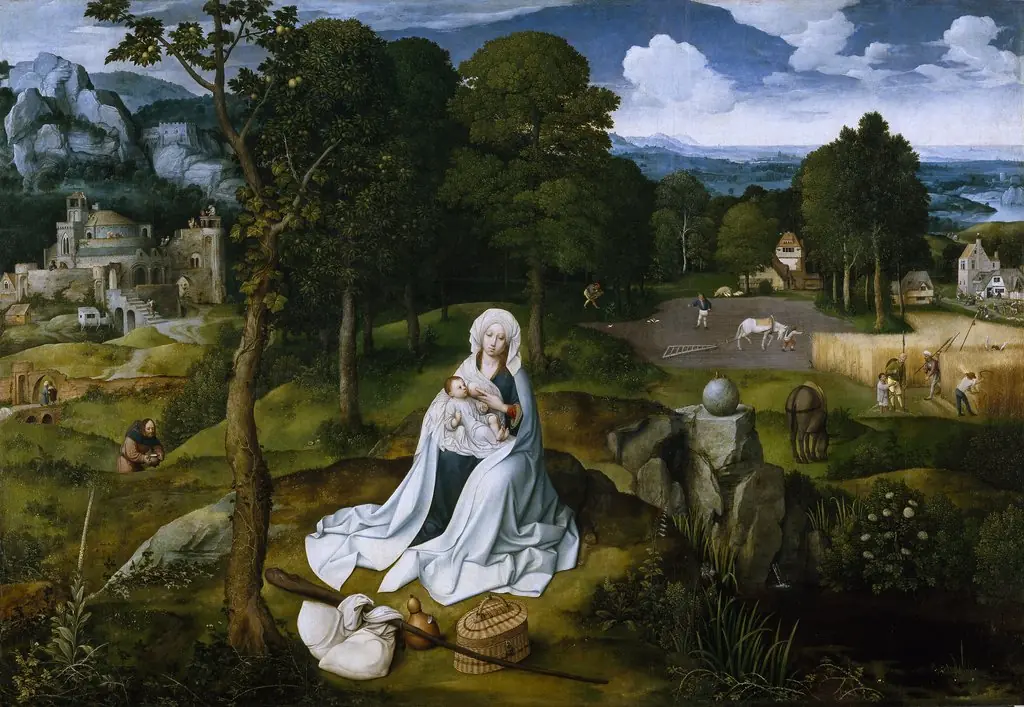 Rest during the Flight to Egypt
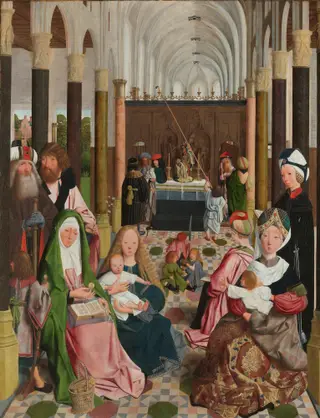 The Holy Kinship
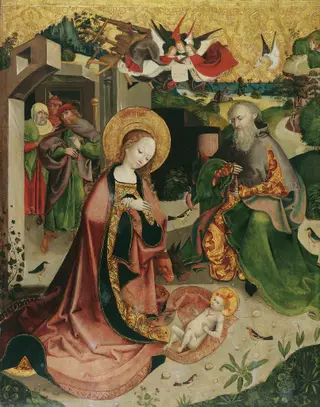 Geburt Christi
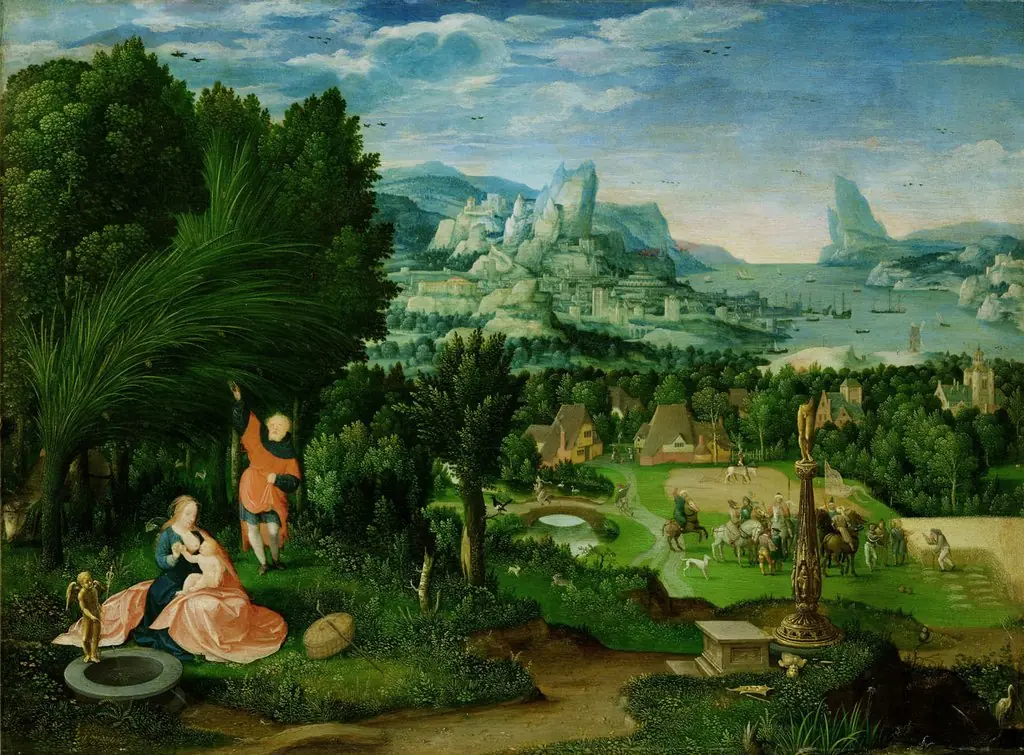 Landscape with the Rest on the Flight into Egypt
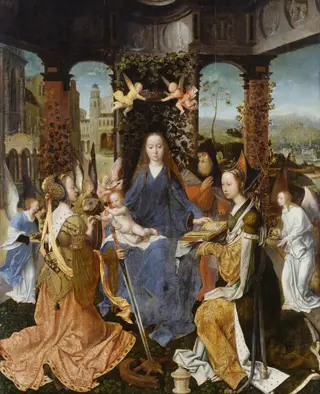 The mystic marriage of Saint Catherine
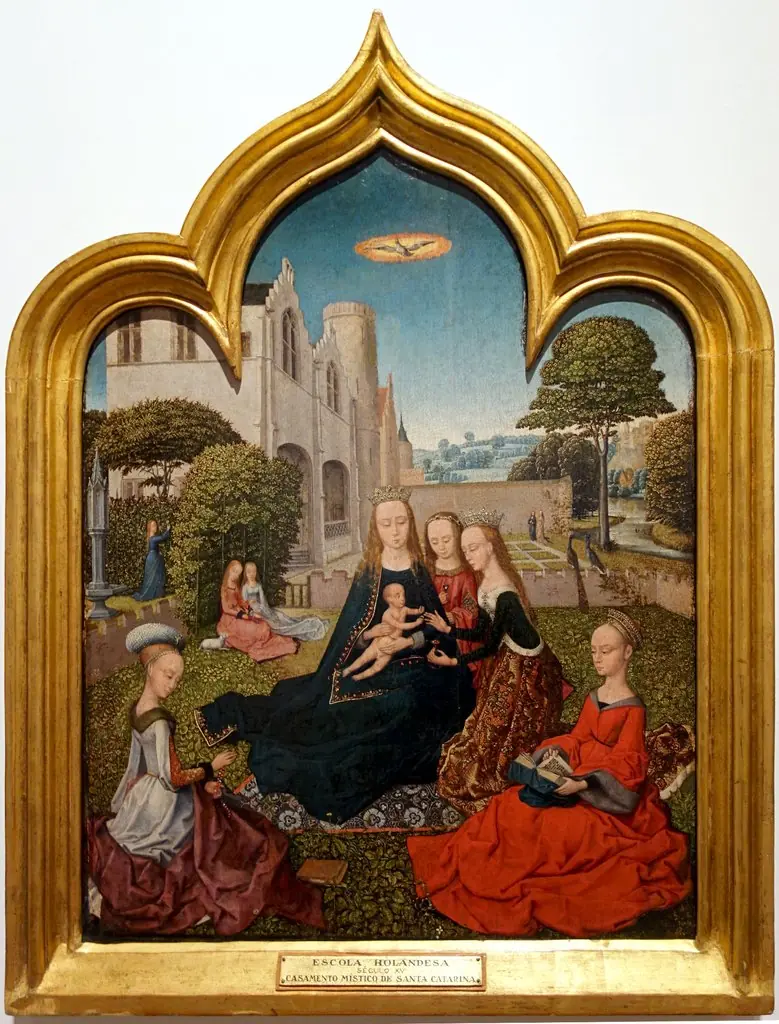 The mystic marriage of St. Catherine
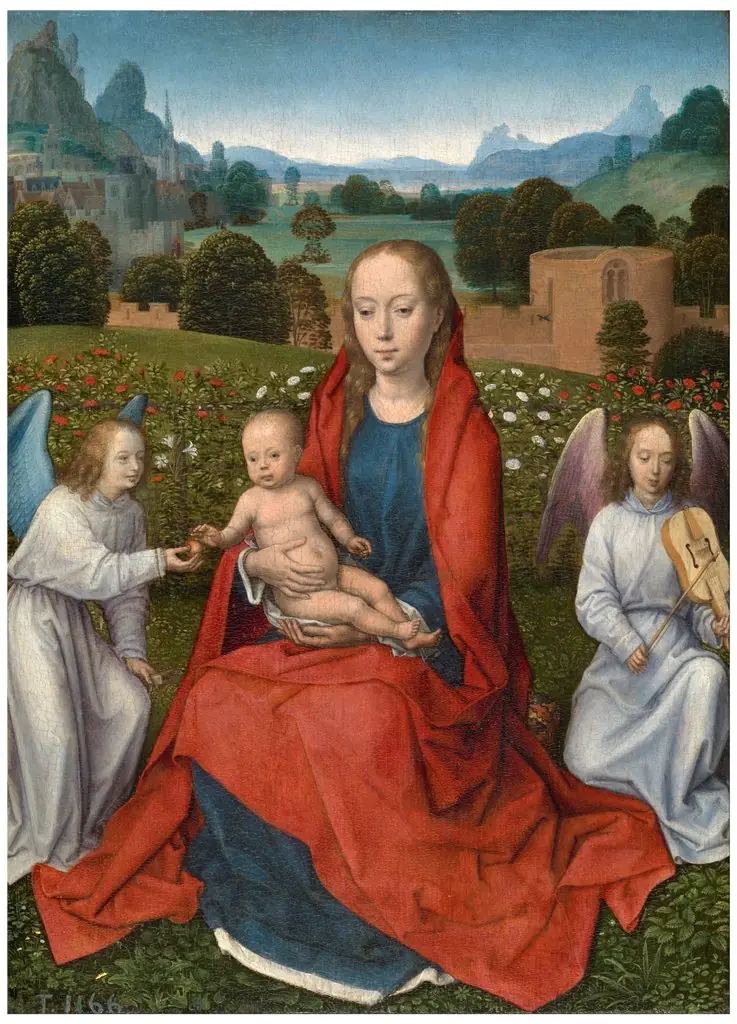 Virgin and Child with two angels
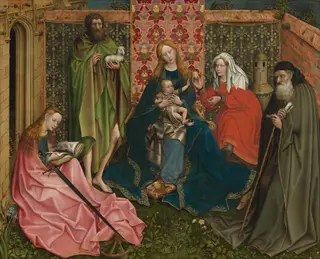 Madonna and Child with Saints in the Enclosed Garden
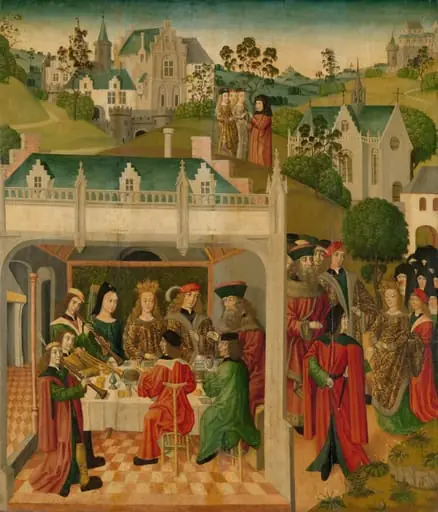 Wedding Feast of Saint Elizabeth of Hungary and Louis of Thuringia in the Wartburg, inner left wing of an altarpiece made for the Grote Kerk in Dordrecht
 Saint George and the Dragon
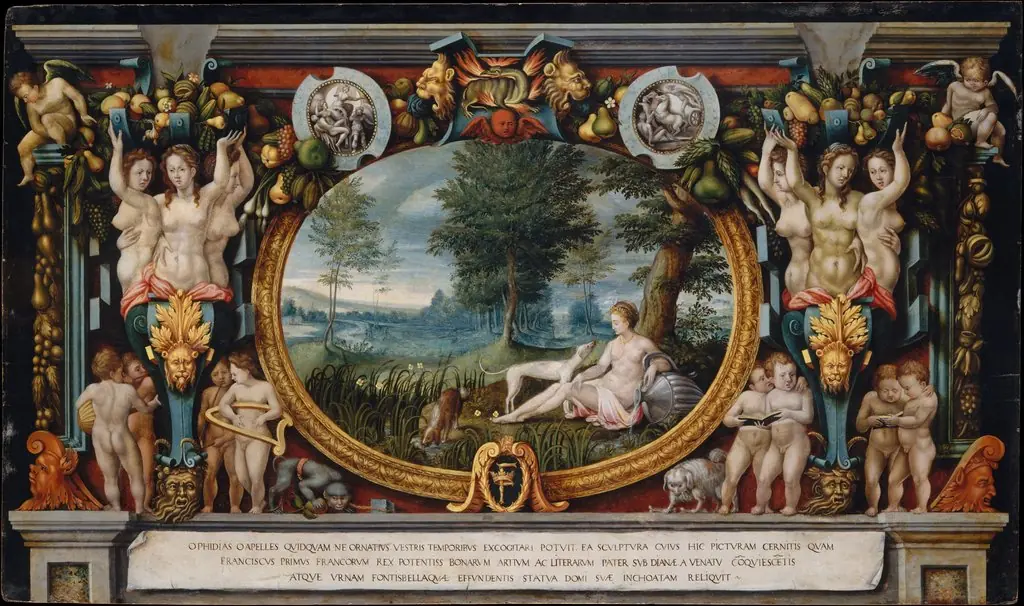 The Nymph of Fontainebleau
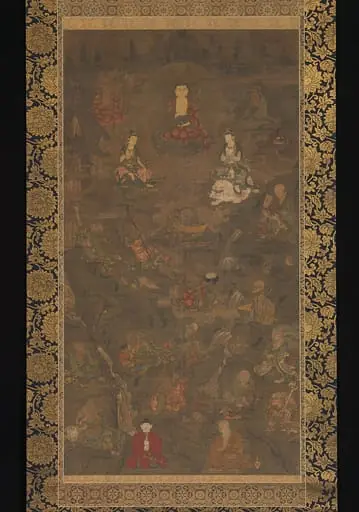 釈迦三尊十六羅漢像|Shaka (Shakyamuni), the Historical Buddha, with Two Attendant Bodhisattvas and Sixteen Arhats
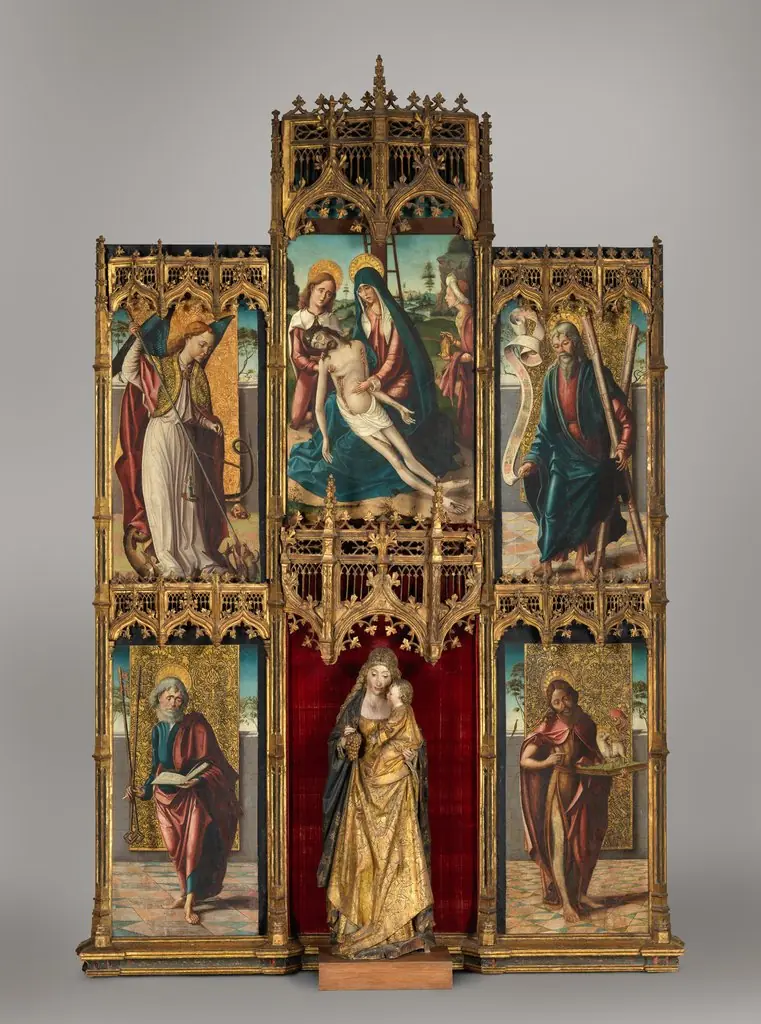 Virgin and Child with the Pietà and Saints
 Untitled
 Saints Peter, Martha, Mary Magdalen, and Leonard
 Saint Michael and the Dragon
 明 /清 佚名 李公麟 偽款 龍王請齋圖 卷|Buddhist luohans crossing the sea to the palace of the dragon king